











































Vaccine Coverage and Determinants of Incomplete Vaccination in Children Aged 12-23 Months in Dschang, West Region, Cameroon
University of Rome (Russo, Miglietta, Vullo); Istituto Superiore di Sanità (Pezzotti, Stefanelli, Rezza); University of Dschang (Biguioh, Sobze); Dschang District Hospital (Mayaka)
"Information and attitude towards immunization should be strengthened with adequate vaccination education programmes, in order to favour this evidence-based intervention."
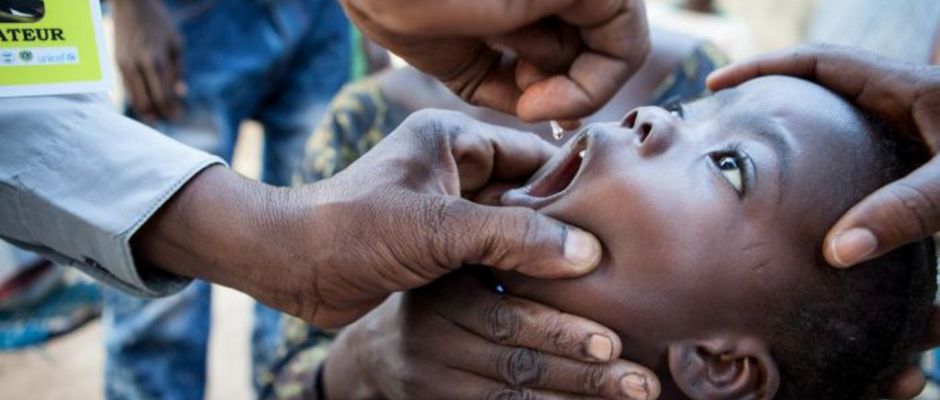
This study was performed in Dschang (West Region, Cameroon), during an October 2013 polio outbreak in order to estimate the immunisation coverage among children aged 12-23 months, to identify determinants for incomplete vaccination status, and to assess the risk of poliovirus spread in the study population. Oral polio vaccine type 3 (OPV-3) coverage data reported from the study may represent an indicator for the risk assessment of wild poliovirus (WPV) spread in the study area.
Several factors are associated with poor vaccination coverage in resource-limited countries. A multilevel analysis involving 24 African countries showed that breaks in childhood vaccination are linked, at the contextual level, to high community illiteracy rates, high country fertility rates, and living in urban areas, while, at the individual level, they are linked to the economically poorest households, uneducated parents, parents with no access to media, and/or with low health seeking behaviours. The rationale behind the present study is that, in Africa, where inadequate immunisation coverage with increased risk of vaccine-preventable disease (VPD) outbreaks remains a problem, more detailed and comprehensive information at district level could be helpful to develop and implement appropriate strategies for improving immunisation coverage.
To that end, a cross-sectional household survey was conducted in November-December 2013, using the World Health Organization (WHO) two-stage sampling design. An interviewer-administered questionnaire was used to obtain information from consenting parents of children aged 12-23 months. Vaccination coverage was assessed by vaccination card and parents' recall. Chi-square test and multilevel logistic regression model were used to identify the determinants of incomplete immunisation status. Statistical significance was set at p<0.05.
Overall, 3,248 households were visited and 502 children were enrolled. Complete immunisation coverage was 85.9% and 84.5%, according to card plus parents' recall and card only, respectively. All children had received at least one routine vaccination, the OPV-3 coverage was >90 %, and 73.4% children completed the recommended vaccinations before 1 year of age. (The researchers say that the estimated OPV-3 coverage is reassuring in relation to the ongoing polio outbreak.) The univariate association between the study variables and the children immunisation status showed, among other things, that children of parents who had good knowledge and positive attitude towards immunisation, who received regularly information on vaccinations, and who had a good opinion of Dschang immunisation services, were more likely to be fully vaccinated (p<0.01).
In the final multilevel logistic regression model, factors significantly associated with incomplete immunisation status were: retention of immunisation card (adjusted odds ratio (AOR): 7.89; 95% confidence interval (CI): 1.08-57.37), lower mothers' utilisation of antenatal care (ANC) services (AOR: 1.25; 95% CI: 1.07-63.75), being the 3rd or later born child in the family (AOR: 425.4; 95% CI: 9.6-18,808), younger mothers' age (AOR: 49.55; 95% CI: 1.59-1,544), parents' negative attitude towards immunisation (AOR: 20.2; 95 % CI: 1.46-278.9), and poorer parents' exposure to information on vaccination (AOR: 28.07; 95% CI: 2.26-348.1).
In order to improve immunisation coverage, the researchers suggest strengthening ANC services, reaching out to younger parents and families living far away from vaccination centres, using appropriate communication strategies, and improving parents' information and attitudes towards immunisation. On the latter, as in other studies from Nigeria, Niger, and India, despite parents' poor vaccination knowledge score in 50% of the cases, the majority of interviewed parents (84.5%) had a positive attitude toward immunization. Overall, only parents’ positive attitude and regular information received remained significantly associated with complete vaccination in the final multilevel model. Concerning these aspects, it is noteworthy that the father of the index case of the polio outbreak recorded in the West Region in Cameroon (October 2013) was a political leader and pastor who, despite his good education level and high economic status, was strongly opposed to vaccination, and his children had never been vaccinated.
BMC Public Health (2015) 15:630. DOI 10.1186/s12889-015-2000-2. Image credit: Cameroon Traveler
- Log in to post comments