










































Using the Web to Strengthen Community Radio in Bolivia
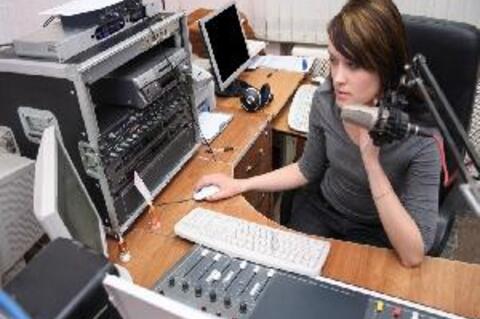
This project is inspired by Cernadas' conviction that "a network of stations fulfills a fundamental unifying function in regards to suburban and rural radio journalists. They are professionals with little journalism training but strong will who usually work in areas that are distant, and sometimes isolated, from the urban centers, and who have few professional tools and techniques to develop their work. A digital platform that combines them would make it possible to offer in only one portal all the information pertaining to a determined geographic location, benefiting its population and better informing what is happening in these small towns and communities, poorly represented in the mainstream media."
The initial stages of the project draw on interpersonal communication: training workshops designed to equip radio journalists in rural and suburban areas with tools and skills that will enable them to develop quality local news programmes. Working in collaboration with the group of 20 stations and affiliates within the department of Santa Cruz that are part of Grupo Fides (hereafter, "Fides Santa Cruz"), Cernadas is offering a series of training workshops. The first, held at the beginning of April 2009, emphasised basic radio journalism skills. Cernadas developed training material to respond to real journalistic problems, not just theoretical ones. (Click here to access a manual (Spanish language) that Cernadas created with step-by-step instructions for Bolivian radio journalists on how to produce quality broadcast stories.) It was expected that subsequent workshops would cover specific topics, such as health and education, and the digital skills necessary to build the website to be developed for Fides Santa Cruz.
In the second part of the process, a digital platform - a portal - will be created to enable the participating journalists to access other stations' content and to share experiences, especially on subjects of interest to the community. This will be a challenge because the majority of these journalists do not have internet access; alternative solutions being explored include data transmission via cellular phone or via the satellite network that serves these stations. Ultimately, however, Cernadas envisions a portal that combines text, photo, and sound, and where each region would have a link to share local information. Journalists will begin by learning to post weekly news stories to be stored in the platform and then shared by participating stations.
Cernadas explains: "We can imagine, for example, the usefulness of a platform of this kind during the recent dengue epidemic that happened in Santa Cruz. Instead of each station covering the story separately, the stations can join efforts and offer a more complete overview of the epidemic's occurrence, prevention, and sanitary recommendations....A platform of this kind is a necessary counterpoint to radio that, by definition, is a fleeting medium."
Updates and further details on the process are available in Cernadas' blog.
Media Development.
According to Cernadas, in Latin America, radio - especially rural radio - is facing huge challenges. Most journalists outside the big cities in Bolivia have not had specialised training. This is compounded by limited resources. At the end of the April workshop described above, "Hugo Áñez, a journalist that owns a small radiostation in the close village of San Ramon, complained because he didn't have the money to buy a satellite dish; some minutes later, in the middle of the street, he found one that some neighbour had thrown away. He immediately entered the house to close a deal about the precious dish. That's how things work here. Lots of imagination with few resources to keep running what, for many communities, is their only means to keep themselves informed: the radio." As more people access information digitally, Cernadas says, radio stations are seeking new ways to organise and broadcast content, despite a struggling infrastructure in many areas.
"Project in Bolivia Aims to Integrate Rural and Suburban Radio Stations", posted June 10 2009, by Mónica Bentivegna, IJNet Spanish Editor - forwarded to MediaMentor, Digest Number 3425, June 16 2009; and ICFJ website, August 26 2009.
- Log in to post comments