











































Using Health Data for Decision-making at Each Level of the Health System to Achieve Universal Health Coverage in Ethiopia: The Case of an Immunization Programme in a Low-resource Setting
University of Gondar (Tilahun, Teklu, Endehabtu, Gashu, Mekonnen); World Health Organization (Mancuso); Ministry of Health, Addis Ababa, Ethiopia (Mekonnen)
"The more we ignore data use, we can't understand its benefit then we don't care about its quality." - respondent
For evidence-based decision-making, there is a need for quality, timely, relevant and accessible information at each level of the health system. Limited use of local data at each level of the health system is reported to be a challenge for evidence-based decision-making in low- and middle-income countries (LMICs), including Ethiopia. Data from the Ethiopian Demographic and Health Survey reports generally show vaccination coverage to be lower than that reported in the routine service statistics of the Ministry of Health, which raises questions on data quality and the reporting of problems in the health system. The weak use of data can be attributed to a high degree of fragmentation across multiple parallel information subsystems, lack of community engagement, and severely constrained information system infrastructure and human resources. This study aimed to address the underlying implementation barriers and facilitators of immunisation health data quality and use in the Wogera and Dabat districts of North Gondar Zone, northwest Ethiopia.
Between January and September 2017, the researchers interviewed 21 key informants, which included community representatives, data producers, data users, and decision-makers from the community to the regional level. They also reviewed documents including facility reports, district reports, zonal reports, and feedback in supervision from the district.
Respondents reported that the use of data for decision-making was low at all levels of the health system, especially at the district level. The majority of respondents expressed concerns about the quality of the data being used for decision-making. All health facilities and health offices have a performance monitoring team (PMT), but such teams were not always functional. Awareness gaps, lack of motivating incentives, irregularity of supportive supervision, lack of community engagement in health report verification, and poor technical capacity of health professionals were found to be the major barriers to data use. In terms of data quality, health information technicians reported problems with false reporting, mainly in the form of inflated reports, which affect evidence-based decision-making. The study also revealed that there are no institutional or national-level regulations or policies on the accountability mechanisms related to health data.
The study revealed that community engagement in local decision-making was limited to annual planning and performance evaluations. The community-level Health Development Army (HDA) programme was found to be a strong community engagement approach that can be leveraged for data verification at the level of community data. The HDA is a network of unpaid women volunteers that falls under the supervision of health extension workers, with the aim to promote health and prevent disease through community participation and empowerment.
Other suggestions include capacity-building of health workers and PMTs, introducing incentives, engaging the community in data verification, introducing accountability mechanisms, and developing community data quality monitoring tools and supervisory mechanisms.
In conclusion, the culture of using routine data for decision-making at the local level was found to be low. Considering that respondents agreed that using data/information for decision-making can improve data quality at all levels, practices need to revamped in an effort to achieve this.
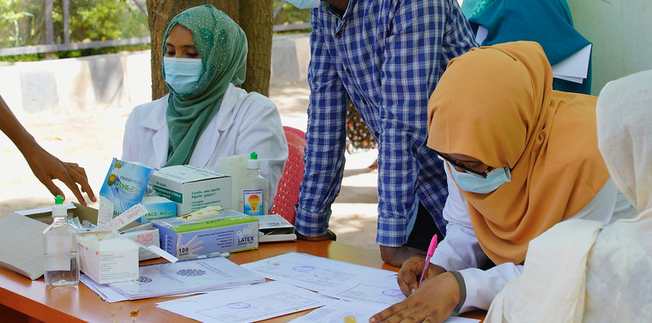
Health Research Policy and Systems 19: 48 (2021). Image credit: @UNICEF Ethiopia/2021/Tewodros Tadesse via Flickr (CC BY-NC-ND 2.0)
- Log in to post comments