










































Trust, but Verify: Factors Affecting Media Trust in Bangladesh
Hong Kong University (Settles); University of Liberal Arts, Bangladesh (Ahmed)
"Building trust is a complex process that involves many factors that include but are not limited to reporting quality."
This research study by the Media Resources Development Initiative (MRDI) was conducted to develop a foundation for understanding audiences' attitudes and behaviour around media trust in Bangladesh. In a complex environment that has undermined news media trust in Bangladesh, the study is meant to benefit news outlets, news managers, media development professionals, the advertisement industry, and international development agencies with an active interest in media engagement in Bangladesh.
The findings are based on: a media trust survey undertaken with over 1,000 participants on media usage and attitudes and behaviours around media trust; focus group discussions with media users; and interviews with media professionals from print, online, and television news organisations across Bangladesh. The results of each of these study methods are discussed in the report, preceded by a general discussion around media trust at a global level.
Overall, the research finds that factual quality reporting in news is only one factor that determines media trust. For Bangladesh's news media users, trust is based on a complex mix of factors, including tradition, availability, personal economics, and personal relationships - among many others. As explained in the report, "When the news is important to users - often a very personal decision, Bangladesh news users have well established brands and verification patterns that give them confidence in news facts reported. They are a group of "trust, but verify" news users. The challenge in the current media turmoil is ensuring that these techniques are supported, expanded, and not undermined." This research is offered as a support for understanding the main issues and potential implications.
More specifically, the report highlights the following key findings:
Media usage and fake news behaviour: Bangladeshi news consumers consider themselves both regular recipients of "fake news" and well prepared to determine what is credible and what is not. Over three-quarters of news users were confident in their ability to recognise and deal with "fake news" items. Focus groups with news consumers in this same period also suggested that the amount of "fake news" has increased in part due to the COVID-19 pandemic.
Media trust: Focus group participants had indicated that all news was suspect. The quantitative research showed just how much doubt news consumers had about different types of news. Across the ten types of news surveyed, respondents uniformly found all types most likely to be only "somewhat trustworthy", the middle point on a five-point scale. News consumers tended to find news that lends itself to live video presentation, such as "news on natural disasters", breaking news, and sports news, more trustworthy than other types. News associated with local reporting tended to fare less well. News users found local news, agricultural news, and news on market prices to be less trustworthy. Rural news users, who accounted for 76% of respondents, tended to find most news categories marginally less trustworthy than their urban peers, and these three "local" categories were found to be much less trustworthy.
Internal and external influences on media credibility: Bangladesh news consumers have decades of experience with corporate or government ownership/control of news media. The research looked at external and internal influences and the role news users expect they play in news reporting. Over one in four news users saw the government's impact on news reporting to be either overwhelming or significant, substantially more than the impact of advertisers. Among internal influences, the research looked at the financial and political interests of editors, reporters, and media owners. Among total respondents, the political interests of media owners were seen as on par with the role of government in news reporting. These points together underscore the impact the government and political influence has on news reporting and the broad recognition of this role among Bangladesh's news consumers.
Media literacy and the 2018 Digital Security Act (DSA): Bangladeshi news consumers' lack of awareness about the mechanics of the news industry appears to include the potential impact of the DSA, which is being followed more aggressively by the Bangladesh government in an effort to remedy the influx of "fake news", on news reporting. News users were not broadly aware of DSA. According to the survey, less than one in three were aware of the law. This awareness did vary with the respondents' level of education. Over half (55%) of respondents with some university experiences were aware of the DSA. Among those respondents who were aware of DSA, many found the law to be beneficial, making Bangladesh media stronger by reducing the amount of fake news. These DSA-aware respondents also acknowledged that the law would impact news reporting on some government-related stories and would be a special burden on reporters.
Based on the results, the report offers several recommendations, which in brief are:
Reward quality and build platform - First, industry-wide programmes should be developed to encourage and reward high-quality, journalistically sound digital news reporting. These programmes should start with focused training on digital reporting and distribution practices for current and potential journalists at all levels - from high school through mid-career journalists. Second, a national-level online journalism association to promote quality business and reporting practices could help with training and national recognition, especially for high-quality online reporting.
Support fact-checking - As the amount of low-quality digital "news" content grows, traditional "trust, but verify" techniques will begin to fray. Developing tools and techniques to support existing verification behaviour will increasingly be necessary.
Enhance transparency of media industry - News users agree that transparency in news reporting, particularly around the role of politics and government, and journalism methods contribute to news trust. News organisations should begin to build on this understanding by enhancing the transparency around reporting decisions impacted by either government laws, such as DSA, or other advertiser or ownership considerations.
Support campaign in media - DSA's impact on news reporting appears to still be hypothetical to the minority of news users who are even aware of the law. To raise awareness of DSA, the news industry should develop a campaign to link internal decisions related to DSA directly to the quality and thoroughness of the news provided. In many ways, a DSA awareness campaign would be one aspect of the larger effort referenced above to make government, advertiser, and political influence on news reporting more transparent.
Multi-tiered training - Bangladesh's media industry will need to adopt a multi-tiered effort of training, acknowledgement, and encouragement to promote news reporting and news media that enhances media trust. This effort will need to provide a special focus on digital journalism, as well as local news reporting and media. The solutions will require steady micro-actions and improvements over a long period of time.
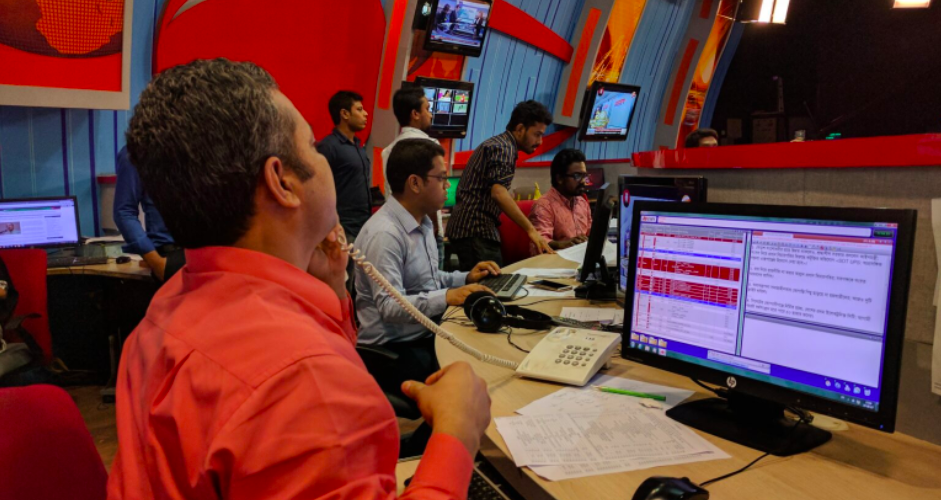
Email from Hasibur Rahman to The Communication Initiative on February 18 2022. Image credit: David Brewer/Fojo Media
- Log in to post comments