










































Trends in the Newsroom 2020: Amplifying Women's Voices
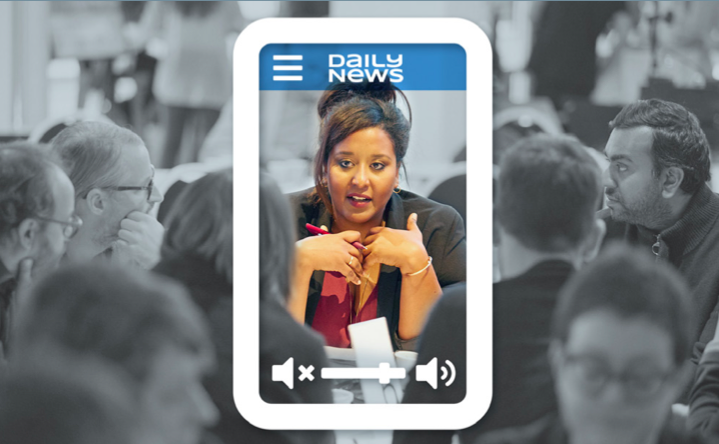
"If newsrooms fail to reflect women as equals, both in their own working space and in the content they produce, they will be perpetuating stereotypes and reinforcing gender inequality."
This publication stresses the importance of gender transformation in the media and gives guidance on how to address gender imbalance in the newsroom and in the content that is produced. Through a series of interviews and case studies, it offers ideas and tools that media outlets can use, without extra resources, using simple measurement tools and driven by a commitment to make a difference. The report was published by the World Association of Newspapers and News Publishers (WAN-IFRA), in partnership with Women in News (WIN), as part of WAN-IFRA's annual Trends in the Newsroom series.
The report begins by looking at why news organisations need to elevate women's voices, what is stopping newsrooms from achieving balance, and how to improve gender balance in content. As explained in the report, "The media, as a prism through which society sees itself, has the potential to shape what we think about, what we believe, and what we do. That is why decisions taken in the newsroom around gender are of importance, not just for the news product and its reputation, but for society at large."
The following are some of the key takeaways as highlighted in the report:
- Change initiatives are sprouting up: Forward-thinking news organisations have embraced programmes to increase representation and gender balance in their content and in their newsrooms. They have done so because it is the right thing to do and because it makes business sense. But their initiatives are overshadowed by the scale of the imbalance worldwide.
- Women are still much less represented than men: Despite making up more than 50% of the world's population, women are, on average, seen, heard, and read in the media only 25% of the time. They are significantly underrepresented in top management positions in newsrooms and receive fewer bylines than men.
- Increasing gender balance isn't just a moral imperative: There is reason to believe that gender balance makes business sense. Case studies from news organisations are showing the value of increased loyalty and deeper engagement when people relate to the content and feel represented in stories.
- Gender parity in the newsroom impacts content production: Having women commission, write, and create content alongside men, across all categories and topics, can introduce an automatic gender lens. Improving gender balance at the executive level, thus giving women equal opportunity to influence the news agenda, will likely create more diverse and inclusive products.
To work towards improving gender balance in content, the publication looks at a number of approaches that news organisations can deploy, many of which are flexible, simple, and cost-effective. For example, it looks at using gender-fair language, tracking sources in news output, and improving the representation of women as news sources. The report offers a number of tracking tools and methods, guidance on how to avoid gender stereotyping when writing copy, and a list of women expert databases to help diversify news sources.
To help with ideas and to inspire action, interviews with the following change-makers are featured:
- Nina Goswami, BBC Creative Diversity Lead and journalist: She has been one of the driving forces behind the corporation's 50:50 Project, an initiative aimed at boosting the number of women contributors in content.
- Emily Ramshaw, CEO and co-founder of The 19th: She left her role at a respected newspaper to start a new news organisation for women focused on American politics.
- Kavita Devi, editor-in-chief of Khabar Lahariya, India: She discusses the changes the online site for readers in rural India has brought - not only in the lives of its journalists but in those of the people it reaches.
Case studies of how media organisations have sought to amplify women's voices include:
- Financial Times [FT], UK [United Kingdom] - Tracking Gender Balance: This case study looks at some of the FT's methods to track gender balance in content, such as JanetBot, a machine learning tool that uses facial analysis software to identify the gender of people in FT images. The FT has also been experimenting with bots to track the number of women and men contributors featured in stories to help journalists achieve a more balanced split.
- Amedia, Norway - The Business Impact of Gender Balance: After investigating its own output, media company Amedia discovered a gender imbalance in its content. They used natural language processing techniques, which enabled them to automate the process of identifying and counting the number of women and men mentioned in its content.
- South China Morning Post, Global - Increasing the Visibility of Women: With a series of company-wide initiatives, the South China Morning Post is making a concerted effort to boost women's readership and increase the visibility of women across all of its products. For example, the SCMP launched a campaign asking readers, partners, and external contacts to nominate women experts via an online form promoted via direct outreach, social media, and newsletters.
- ARA, Spain - Creating Engaging Content for Women: At ARA, a Catalan daily newspaper, three journalists launched ARA Feminismes, an initiative aimed at creating and distributing content with a focus on gender perspectives.
Women in News website on February 14 2022. Image credit: Gordon Steiger
- Log in to post comments