











































Tips for Running Public Awareness Campaigns in Africa
DW Akademie
"How do we make people care about an issue or make an important and meaningful change in society? This is where public awareness campaigns can play a crucial role in changing people’s hearts and minds."
From DW Akademie’s ongoing cooperation with the Media Institute of Southern Africa (MISA), this booklet profiles eight public awareness campaigns conducted in African countries, giving an overview of how the campaigns were designed and implemented and outlining the lessons learned.
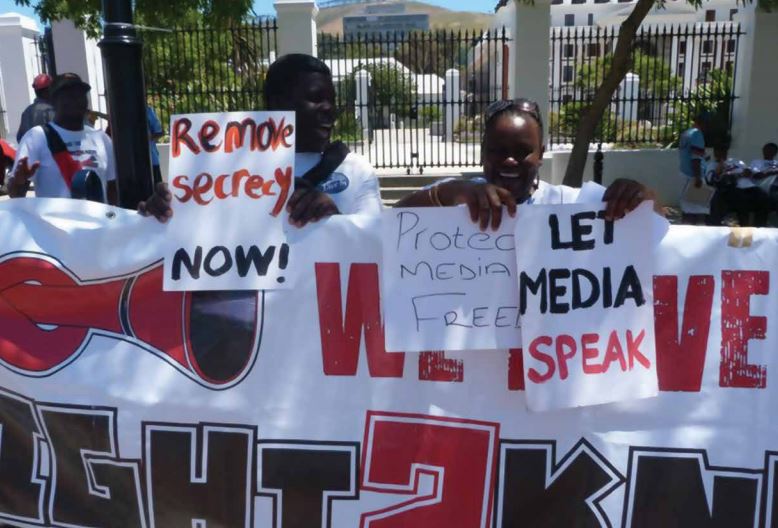
DWA looked for campaigns either run by organisations or individuals in Africa, or focusing on African countries. The booklet has information from people working on campaigns that were diverse "in the way they were created, organized and funded – from large organizations with considerable resources and formal structures to volunteer-led coalitions with limited funding." Case studies include: #KeepItOn from Access Now; Right2Know from a consortium of NGOs; African Declaration on Internet Rights and Freedoms, also from a consortium of NGOs; #BringBackOurGirls from diverse volunteers; Take Back the Tech! from the Association for Progressive Communications; Web Rangers 1from Media Monitoring Africa; #LipaKamaTender from Kenya Medical Practitioners, Pharmacists and Dentists Union; and Kony 2012 from Invisible Children.
Each campaign is analysed according to what it is about, how did it come about, how was it planned and executed, what were some challenges, what does it do well, and key takeaways. For example: #KeepItOn was developed to keep governments from shutting down internet access, especially during election campaigns. It highlights the right to access to information and free speech online. It includes online petitions, a reporting (of shut downs) system, and online and offline visuals from videos to graphics, posters, and stickers. "Lush, an international cosmetics company...created a special bath product to go with the campaign. Profits from sales of the product were donated to Access Now. Lush also promoted the campaign in their stores and on the Lush website." Access Now created the materials with partner input and then "relied heavily on its partner organizations to share and distribute the materials." Challenges include maintaining a supporter mailing list, due to privacy rules; coordinating aspects of the campaign; and deciding the end goal - creating global principles or laws for specific countries. Success came from understanding local reasons for shut downs, preparing extensively for the campaign launch, and crediting and valuing partners, as well as mainstream media.
Key insights from the case studies include:
"Understand the issue and what you want to achieve
– Take time to understand and engage with the issue you want to campaign about.
– Don’t start planning your campaign until you know the issue inside out.
– Be precise and define what you want to achieve before you launch.
Make sure the topic is a concern for people outside of your organization
– Campaign on a topic that people understand and that is of growing concern to people’s lives.
– If the topic isn’t an issue for others in the community, then you will have problems generating interest in, and support for, your campaign.
– If your message can feed off a general feeling of concern already within your community, you’ll have a better chance of getting support. In fact, it could become the symbolic cause that channels people’s emotions.
Involve the target group in campaign planning
– Design the campaign together with members of the community you want to target.
– If you are campaigning on behalf of a marginalized group, try to get this group to play an active part in the campaign. If this isn’t practical, involve the group as much as you can.
Use language and media used by your target group
– Make your message simple so that it’s understood by ordinary people.
– Use the media and platforms most commonly used by your target group.
– Use real stories from ordinary people as a powerful way to illustrate your point.
– A cheeky provocative slogan can help get people’s attention.
Make it easy for the target group to participate
– Provide a few options for people to support your campaign.
Don’t overwhelm them
– Make it obvious how people can support the campaign and easy to do so.
Use mainstream media and networks to amplify your message
– The mainstream media can be a big help in getting the message across.
– Time your actions to coincide with moments when the media
are focused on the issue you are campaigning about (such as World Press Freedom Day).
– Reach out to your existing networks to help amplify your campaign.
– Use community members as multiplicators.
Be accurate
– Check any information carefully before you release it. Inaccuracies can be used to undermine the legitimacy of the campaign, especially if it’s a controversial topic.
Be flexible about the campaign plan
– Once your campaign is up and running, listen to feedback and be prepared to make changes to improve the campaign.
– If you can see your campaign is getting a lot of interest or support, scale it up quickly.
Make sure you can sustain the campaign over the planned period
– Running an ongoing campaign through a loose coalition or group of volunteers is difficult to sustain.
– Even if your campaign is planned so that different partners or chapters work autonomously, organizing and coordinating this centrally can ease communication and workflows.
– Be aware that you often need a range of skills in a campaign, from web design to fundraising.”
Communication for Development network website, April 6 2019. Image credit: Right2Know
- Log in to post comments