










































#TibaNiSisi ("We Are the Cure")
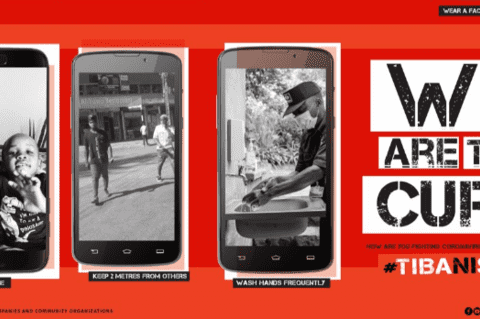
"This initiative is a homegrown blueprint for the particular challenges presented by COVID-19 in Kenya and other developing countries."
Safe Hands Kenya is a coalition of businesses and community organisations that have come together to address COVID-19 in Kenya by delivering soap, hand-washing stations, and masks. Realising that it is not enough to provide these tools - people need to know how to use them, and must actually want to use them - the alliance of companies created a nationwide communication campaign to drive new hygiene-related behaviours. Launched in April 2020, #TibaNiSisi, or "We Are The Cure" in Swahili aims to motivate all Kenyans to play an active and leading role in protecting vulnerable community members through good hygiene practices.
The Tiba Ni Sisi campaign puts the emphasis on what we can all do - simply and for free - to protect our own health, to prevent the spread of the virus, and to help save lives. It informs people about practical and immediate measures they can take, while also persuading people that individuals can make a difference and encouraging everyone to take personal responsibility in stopping the spread of COVID-19.
Over and above the behavioural change issues, the campaign is working to cut through the fear, addressing the misinformation and myths that surround the management of COVID-19, such as whether alcohol can cure coronavirus (as advocated by former Nairobi Governor Mike Sonko) or antibiotics can be used to treat the coronavirus (the resounding answer: no, they cannot).
Village Creative, a member of the Safe Hands Kenya coalition, developed a creative approach that uses colourful visuals and language to stand out as a strong, compelling call to action without using scare tactics. It is designed to motivate user-generated content so people can share stories of how they are adopting the mantra "We are the cure" and demonstrating "I am the cure". People who visit #TibaNiSisi's website can test their knowledge through quizzes; they can engage with the campaign's social media links [Facebook page; Twitter feed; YouTube channel], where they are asked to:
- Stop the spread: Protect yourself and others from the virus - through simple behaviour identified through campaign graphics.
- Join the cause: Help get the word out - such as by engaging with the hashtag #TibaNiSisi.
- Show the world how you are being the cure - such as by branding your current Facebook profile picture to show what actions you are taking to stop the spread.
Community partnerships have been key to getting the messages across by using WhatsApp and local activations - from skateboarding to music. #TibaNiSisi has also uncovered a range of new influencers, respected in their communities, who have modelled the behaviour and spread the message that "We are the cure". These include trash collectors, graffiti artists, and former prisoners who have turned their lives around. The campaign has also engaged subject matter experts like Doctor Masika (virologist from Nairobi University) in doing instructional videos, as well as more traditional social media influencers in Kenya, such as Collins Injera, Olympian and Rugby 7s star, and well-known musicians, disc jockeys (DJs), stand-up comedians, and artists.
#TibaNiSisi has also been promoted using 30- and 90-second TV and radio spots, with a promotion on Ghetto Radio, a large Kenyan Sheng station (a mix of Swahili and English). In addition, the campaign consists of print ads, songs, educational animations, and instructional videos for use on social media, with a focus on proper hand-washing, mask usage, and do-it-yourself (DIY) hand-washing stations. The brand has also been used on t-shirts, masks, posters, leaflets, hand-washing stations, and co-created art pieces.
The creative team adapted content to events, tailoring messages over Easter and Mother's Day, for example, while also targeting specific messages to vulnerable communities, such as those with disabilities. The team increased media spending on radio stations popular in Eastleigh and Mombasa, where the majority of the country's Muslim population live, due to the spike in cases seen during Ramadan, as people gathered to break the fast each day.
Health
Water scarcity, poor water quality, and inadequate sanitation are not new to communities in Kenya, where 90% of the population does not have access to hand-washing facilities, so preventable diseases continue to spread. In a context where, according to Safe Hands Kenya, people have little faith in the capacity of public health systems, a new pandemic threat with no vaccine and no cure can compound the feeling of inevitability of serious illness and deepen the sense of powerlessness.
Safe Hands Kenya explains that, for people who work one day to buy food the next, asking people to use soap (typically used mainly for washing clothes) to wash their hands after touching any surface that could be infected is a new dimension. Expectations around wearing masks and social distancing are also new. Adapting the messages in communities where social distancing is nearly impossible and working from home is not an option has been key to the COVID response in Kenya. In short, communications has to be part of any response, informing people why and how to use products that are distributed.
The alliance built a geospatial demand and supply allocation map and collectively distributes basic goods - using technology - to small retailers, within reach of all Kenyan households. All members have pledged to uphold 3 key principles: (i) zero margin: this is for impact, not profit; (ii) speed is critical: every day counts; and (iii) last-mile saturation: leave no one behind. In the process, it is hoped that the actions up and down Safe Hands Kenya's supply chain will spur economic activity and act as a stimulus for Kenyan families working within local manufacturing and supply chains.
Safe Hands Kenya believes that #TibaNiSis could have an impact long after the pandemic has subsided, continuing to keep communities safe while also changing behaviour that might reduce other diseases such as pneumonia and diarrhoea that have had such a devastating impact on families and communities.
The Safe Hands Kenya alliance includes technology-based distribution companies, input suppliers, manufacturers, media houses, and community organisations. The full-time project team includes experts across supply chains, user experience, and behavioural change. Click here to view the logos of the Safe Hands Kenya coalition partners. The Village Creative is the key #TibaNiSis implementer.
Emails from Ali Merifield to The Communication Initiative on April 8 2020 and May 29 2020; and "Safe Hands Kenya launches unique approach to combat COVID-19" [PDF],Safe Hands Kenya website, and #TibaNiSisi's website, Facebook page, Twitter feed, and YouTube channel - all accessed on May 29 2020. Image credit: Safe Hands Kenya
- Log in to post comments