










































The Tent Model: Reaching Communities with Personal Communications
USAID
Uganda Health Marketing Group
This 3-page case study describes the AFFORD Initiative's "tent model", which AFFORD's partner, Pulse, used to provide interpersonal health communication in large crowd settings. According to AFFORD, the model was developed when Pulse health road show presenters in Uganda highlighted the difficulties of hearing and interacting with audience members during the large-scale, travelling health shows. Pulse then implemented the tent model in which larger crowds could be broken up into smaller groups, housed in tents, based on age and health topic.
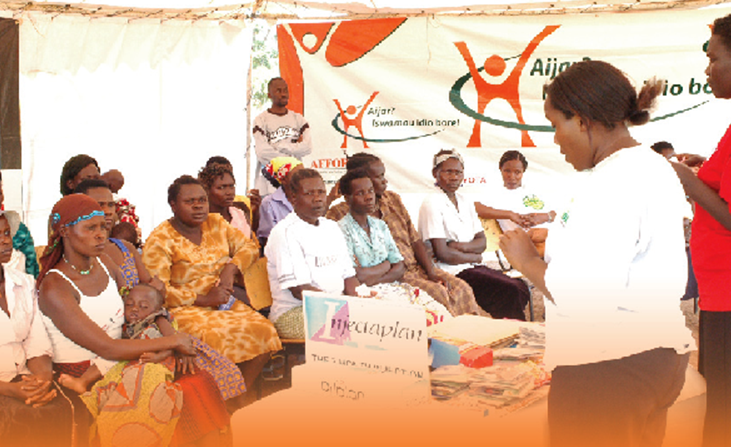
The travelling health shows, which were rolled out by implementing partner Pulse, formed part of AFFORD's the Good Life Show. Originally these shows featured presenters on elevated stages in front of as many as 2,000 audience members. When presenters reported being frustrated at the lack of audience interaction possible, Pulse devised its tent model to break large crowds into small groups. In each tent, presenters open with a skit illustrating key health messages. This skit is followed by a health talk on issues such as malaria, HIV/AIDS, and family planning. This was followed by a question-and-answer period in which audiences were allowed an opportunity to probe deeper into issues or ask for clarification. The start of an entertaining "commercial break" on the main stage then prompts participants to move to the next tent.
Pulse found that the tent format allowed for not only more personal communication, which facilitated dialogue and audience questions, but that better dialogue between presenters and audiences informed moderators about the real barriers and solutions participants face. The tent model also allowed Pulse to divide the audience by age, allowing for the creation of a children's tent. This enabled the organisation to develop age appropriate messaging for children while allowing their parents the space to discuss sensitive issues such as family planning. The tent method was also quick - with roughly 200 people visiting each tent, a community health fair can be conducted in about two hours and involve approximately 1000 people in small-group learning.
At the time of the document's publication, AFFORD and partners were looking to utilise the tent model to scale-up on-site health services, such as voluntary HIV counselling and testing.
JHU-CCP website on October 23 2011
- Log in to post comments