










































Subnational Risk Communication and Community Engagement Implementation Field Guide to COVID-19
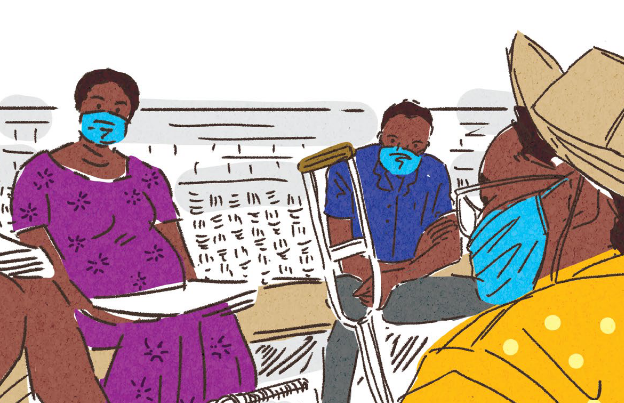
"Essential in all community engagement is a commitment to listening to community concerns, providing recommendations, facilitating choices, demonstrating empathy, including affected communities in decision-making processes, and establishing alliance around common goals of protecting all persons."
This field guide provides guidance to community health workers (CHWs), health promoters, and social mobilisers on the implementation of COVID-19 risk communication and community engagement (RCCE) activities at the sub-national level in Zimbabwe. It is the result of a collaboration between the United Nations Children's Fund (UNICEF) Communication for Development (C4D) team and the Ministry of Health and Child Care Health (MoHCC) teams at national, provincial, and district levels.
The guide offers a theory-based and research-driven communication model that seeks to motivate change at individual, community, and social levels. It illustrates how each level of influence can be leveraged to create an enabling environment and community mechanisms to prevent, contain, and mitigate the COVID-19 outbreak while ensuring the continuity of essential services. The socioecological model informs the systematic implementation of community engagement activities - i.e., sensitisation, motivation, and mobilisation of individuals and communities for the prevention and control of COVID-19, whereby community stakeholders have ownership in controlling the spread of the outbreak.
Key strategies for community health structures and change agents outlined in the guide include:
- Ensuring access of the community and individuals to key life-saving information and dialogue to enable them to make informed decisions to protect themselves, their families, and their communities, as well as decisions to adopt health-seeking behaviours; and
- Engaging in active dialogue with community influencers, networks, and stakeholders in preventing the spread of COVID-19 through active listening to community concerns and promotion of awareness on COVID-19 and safe practices.
Following a background that describes the guide and theoretical model that underlies it, the contents focus on topics such as:
- Community roles and responsibilities of community stakeholders (including, for example, local authorities and religious and traditional leaders) on response;
- What COVID-19 is, how it affects one's health, how it is transmitted, and the common signs and symptoms;
- How COVID-19 will be prevented, managed, and controlled at community level (with a focus on the most vulnerable);
- Awareness and education of community members with correct information and key messages on COVID-19;
- Community feedback mechanism (including rumour management at community level);
- Integration of COVID-19 response in routine health service delivery; and
- Monitoring and evaluating community engagement activities.
Ten annexes examine in more depth at issues including continuity of care messages and approaches for addressing stigma in the communities; Annex 10 is a COVID-19 resource package with links to many related COVID-19 communication documents.
76
UNICEF Zimbabwe website, April 8 2021.
- Log in to post comments