










































Socio-Cultural Impediments to Health Communication Research: A Study of the Polio Immunisation Campaign in Sokoto and Kaduna States in Nigeria
Ahmadu Bello University
This study investigates some of the socio-cultural, economic, and political factors that have complicated polio campaigns in northern Nigeria (Kaduna and Sokoto states), using the framework of the knowledge-gap hypothesis.
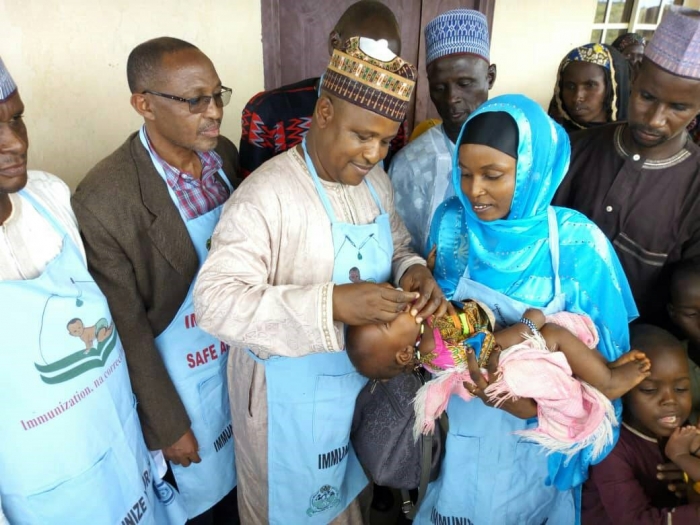
Author Cosmos Ikechukwu Eze explains that, within the larger Global Polio Eradication Initiative (GPEI), the polio eradication initiative began in Nigeria in 1996 with a mass polio immunisation campaign for children under the age of 5 in northern Nigeria, which can be regarded as the hotspot of polio viruses in Nigeria. However, starting in 2003, the immunisation campaign was met with substantial resistance, which partly stemmed from the fear that the oral polio vaccine (OPV) is contaminated with anti-fertility hormones and HIV virus, or that it could cause paralysis in children. Intense scepticism due to rumours and the consequent refusal of some parents to immunise their children led to official suspension of immunisation campaigns in Kano state; consequently, in 2008, northern Nigeria was reported as having the highest number of confirmed polio cases in the world. Ultimately, according to Eze, lack of trust was responsible for the failure of the polio immunisation campaigns in Nigeria in 2003.
From the perspective of the challenges of polio immunisation in urban and rural Nigeria, Eze contends that it is important to look at health communication campaigns, because these are mechanisms for taking the messages of immunisation to the people. Eze describes a health communication campaign as the art and technique of informing, influencing, and motivating individuals, institutions, and the public about health issues through strategic and targeted communication efforts. There are instances where health workers have been driven away on the suspicion that they are agents of some multinational bodies falsely accused of spreading contaminated vaccines. Communication is a persuasive tool that could be used purposely to alter the behaviour of the recipients in the direction desired by the communication source.
Eze cites Mboho and Iwokhagh (2006), who have mentioned the importance of churches, schools, opinion leaders, and parents in health campaigns. They observe that information obtained from the media is often incomplete, inaccurate, and perhaps not convincing enough.
Furthermore, researchers have stressed that health promotion programmes should not only demonstrate cultural sensitivity but also should use culturally relevant symbols to communicate the message. The concept of cultural sensitivity has been classified into two distinct dimensions: surface structure and deep structure. Surface structure refers to the extent that health resources match the intended population's social and behavioural features and appearances, while deep structure reflects how the cultural, social, and psychological environment and historical factors influence health behaviours differently across racial and ethnic populations.
Eze examines other socio-cultural and environmental factors that challenge health communication campaigns, including polio campaigns. If properly addressed, these challenges (e.g., Islamic resistance to OPV) can also be turned to advantages: Linking health messages to religion or spiritual themes, or using religious elements on messages, may be appropriate motivation strategies. This can be done through manipulation of social effects such as linking health behaviours to specific Biblical/Koranic commandments or using the norms of the faith as a source of positive or negative sanctions.
Advanced by Tichenor, Donohue, and Olien in 1970, the knowledge-gap hypothesis is concerned about the inequalities that exist among a given population with regard to information accessibility. It also explains how social structure affects communication process. As media output grows in a given society, so will the knowledge gaps between privileged and underprivileged social group decrease. The theory maintains that increase in media output, rather than even out differences between the information-rich and the information-poor, actually accentuates those differences, since those at higher socio-economic levels acquire information much faster and much more easily than those at the lower levels.
Guided by that theory, the present study used a semi-structured questionnaire to gather primary data from 200 parents/guardians purposively selected from Kaduna and Sokoto states. Qualitative data were also gleaned from 4 focus group discussion (FGD) sessions comprising 10 participants (parents with children between 1-5 years old) in each study area.
The regression results show that language barriers, religious beliefs, traditional values, and urban/rural background affect polio immunisation campaign research in northern Nigeria. The t-test results show no difference between the 2 states on the nature of the effect.
Eze recommends that health interventionists/promoters should engage health practitioners, religious leaders, opinion leaders, traditional leaders, polio sufferers, and parents in the fight against socio-cultural impediments to polio campaign research. He also suggests that health interventionists use advocacy in the form of involvement of prominent and influential leaders, social mobilisation with respect to an intensified ward communication strategy, compound meetings, sensitisation meetings, the volunteer community mobilisation network, and programme communication through various channels as their campaign strategies in northern Nigeria.
The Nigerian Journal of Communication (TNJC), Vol. 15, No. 1, June 2018. Image credit: ReliefWeb
- Log in to post comments