










































Silencing Hate: How to Report Migration and Counter Hate Speech Against Migrants and Refugees
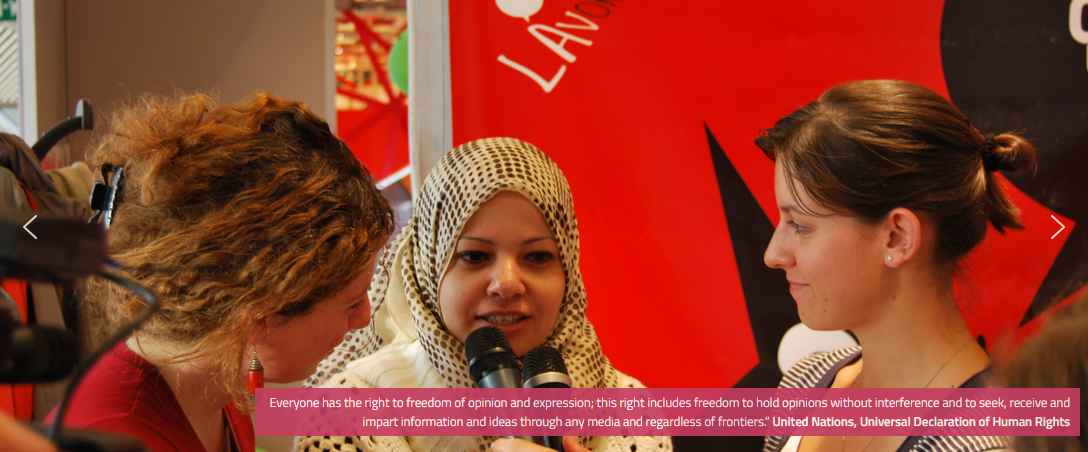
"Hate speech and unprofessional reporting on migration issues is perpetual and constant in many media outlets and online platforms. One of the most urgent tasks...is to prevent the spread of hate and to fight back by reporting and campaigning in [an] ethical, inclusive and professional way."
This module has been developed to support journalists, journalism students, and civil society activists to combat hate speech against migrants and refugees. In particular, it seeks to help the media play a role in challenging hostility and prejudice, encouraging social solidarity, and helping to promote understanding and empathy with others.
The publication was developed by the Silence Hate: Changing Words Changes the World project, which had as its objective to help combat and prevent online hate speech against migrants and refugees by developing new and creative counter-narratives. A significant part of project activities included building the capacity of the media to better report on migration issues. The project, which took place from January 2018 to December 2019, was implemented in Belgium, Cyprus, Greece, Italy, Poland, and the United Kingdom (UK).
As explained in the guide, "The importance of including 'others' in the media coverage is more urgent than ever before. Technological development and digitalisation of the media led to better accessibility of publishing and broadcasting platforms for everyone. Today anyone, including racist and extremist groups, can have their media. Also, there is a rise of ultra-right groups and movements in Europe. Those far-right groups are especially unwelcoming towards 'others' such as refugees and migrants arriving from the conflict and war zones or from economically impoverished regions. That is why there is a need to include migrants in the media coverage, tell their stories in an accurate and balanced way and campaign for their rights.
Civil society activists, journalists and those who are getting educated and trained to become media professionals, should show better understanding of 'others', their perspective, their views and their lives. They should reach out to the minorities and marginalised groups, report about the communities that slip and get forgotten or misportrayed, give migrants a voice and tell their stories without influencing the narrative by prejudices and discriminatory approach."
The examples, tips, advice, and guidelines collected in this module were developed during and after a media camp organised by the Silent Hate project in London, UK, in 2018. Organisations, as well as journalists and campaigners around the project, developed tools and principles encouraging more inclusive and more responsible journalism, more balanced and accurate stories and articles about migrants and refugees, and more professional publications and broadcasting pieces.
The module consists of the following units, which all include exercises for students:
- Unit 1. Introduction
- Unit 2. Reporting Diversity, Reporting Migration - looks at the need for professional and responsible media to practice inclusion and ethical reporting on migration and offers some key principles to guide journalists.
- Unit 3. Ethical Issue of Reporting Migration - offers guidance on how to interview migrants and refugees.
- Unit 4. Countering Hate Speech Online - offers good practices examples and rules for countering hate speech online based on the Get the Trolls Out! project.
- Unit 5. Mobile Journalism - discusses several rules of "MoJo" (mobile journalism), including tips on taking photographs, filming, editing, and sharing videos on social media.
- Unit 6. Campaigning Against Discrimination - offers guidance on creating partnerships been civil society organisations and the media to work together on campaigns against discrimination.
- Unit 7. Resources
20
Media Diversity Institute website on December 11 2020. Image credit: Silence Hate
- Log in to post comments