











































Shaping a Strategy to Introduce HPV Vaccines in Uganda
PATH
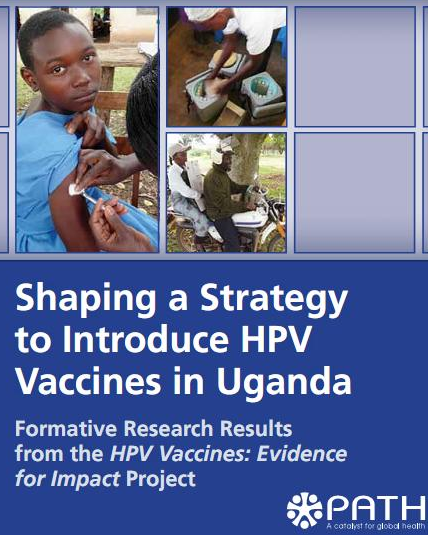
This 25-page document presents results from formative research from PATH's HPV Vaccines: Evidence for Impact project in Uganda. PATH is working with ministries of health and other country partners to develop strategies for introducing vaccines against human papillomavirus (HPV), the primary cause of cervical cancer. According to the report, effort is required to prepare health systems and communities to accept and embrace any new health technology, including new vaccines. The formative research sought to identify the health systems and policy context that will affect HPV vaccine introduction, as well as beliefs, values, attitudes, knowledge, and behaviours related to cervical cancer, HPV, and vaccination. Overall, PATH found that people in diverse contexts are supportive of action to address cervical cancer, in spite of concerns and obstacles that will need to be addressed.
While cancer is widely understood as a serious and often fatal disease, knowledge and awareness of cervical cancer are limited, even among health workers. Although approximately half of all adult respondents said they had heard of cervical cancer, when asked directly what it was, almost none could provide more information when encouraged to elaborate further. Some health workers could list common risk factors for cervical cancer, and a few knew of strategies to detect cervical cancer early. Most reported that there are inadequate facilities for screening and treatment. Overall, outside of trained health staff, there was little or no awareness of the ability to detect cervical cancer early through screening. There is a general perception that cervical cancer is sexually related. Respondents correctly noted that early sexual debut and presence of an sexually transmitted infection (STI) might increase the risk of developing cervical cancer. However, almost no one in the study mentioned HPV as the primary cause of cervical cancer, leading to widespread speculation as to how women become sick with this disease.
Across districts, children (both in and out of school), parents, community leaders, and national leaders, have a good understanding of vaccination and its benefits, perceiving it to be for disease prevention and protection. Yet, in spite of an overall positive attitude toward vaccination, both children and adults reported fears regarding vaccination. Children in particular expressed concerns about side effects of vaccines, with an emphasis on pain, swelling, and bleeding. Most gynaecologists interviewed were aware of the HPV vaccine and wanted more information. In every district and at the national level, however, most respondents had not heard of the HPV vaccine. When given basic background information by the researchers on the vaccine's intended age group, doses, and schedule, most participants were positive about the vaccine. The need and desire for more information was universally expressed across all groups of study subjects.
Along with vaccine delivery strategies, communication and advocacy strategies tested in Uganda's demonstration project include the following elements, developed from the results of the formative research:
Uganda's HPV vaccine communications strategy: key elements
- Disseminate accurate information to address currently low levels of knowledge about cervical cancer, HPV, and the HPV vaccine, using local terms and languages.
- Develop messages that build on positive perceptions of vaccination and recent successes in reducing the burden of common childhood diseases.
- Raise awareness about vaccination safety measures, including training health workers to administer the vaccine and manage side effects at schools and other sites.
- Promote understanding that the HPV vaccine has been proven safe and effective in extensive, international clinical trials and is already being provided in many countries.
- Publicise endorsement of HPV vaccination by the Uganda Ministry of Health, health workers, education officials, and other national, district, and community leaders.
- Reach out to "decision-makers" at all levels, as everyone from children to national political leaders may play a role in deciding whether a child is vaccinated.
The need for an advocacy strategy to inform and mobilise policymakers was reinforced time and again in interviews. To inform this strategy, researchers talked with national, district-level, and local political and programme leaders regarding the role that policy plays in the introduction of a new health technology, and what specific actions would enable policy development in the case of HPV vaccination. Policymakers emphasised that scientific evidence on a number of factors would influence their decision whether to support HPV vaccination. In particular, they noted that the policy development process generally begins with an assessment of the disease burden, establishing the need for a health intervention. One policymaker noted that more information and education is still needed regarding cervical cancer disease burden.
Uganda's HPV vaccine advocacy strategy: key elements
- Develop policy guidelines that set national standards for HPV vaccination and integrate these into an existing policy.
- Partner with the Ministry of Health to generate momentum and leadership from other key ministries and stakeholders at the national level.
- Engage and mobilise district officials and others responsible for implementation.
- Make information available to policymakers - including through the media - on the seriousness of cervical cancer, the vaccine's properties, usefulness, cost, and potential economic benefits.
- Explain how HPV vaccination is consistent with Uganda's health priorities.
The report concludes that vaccine can protect young adolescent girls against infection, but screening is still needed for women who have already been infected with HPV, so precancerous lesions can be detected and treated before cervical cancer develops. Simple and affordable approaches to screening and treatment of precancerous disease are available and feasible to implement in developing countries. Funding and political will are needed, however, to develop and implement comprehensive national cervical cancer programmes and strategies.
Click here to download the Executive Summary.
PATH website on July 29 2012.
- Log in to post comments