











































Scoping Report on Interventions for Increasing the Demand for Voluntary Medical Male Circumcision
International Initiative for Impact Evaluation
This Gates Foundation-funded report by the International Initiative for Impact Evaluation aims to provide guidance for implementers of voluntary medical male circumcision (VMMC) programmes and researchers "in the design of innovative interventions to increase the uptake of MC" in 14 priority countries.
The scoping report reviews the literature of barriers and facilitators of male circumcision (MC) with interventions to date, and then presents evidence about the effectiveness of the interventions and proposes "three categories of interventions where innovations to increase demand for male circumcision may hold the most promise."
Findings from a large group of acceptability studies on VMMC, along with a small set of evaluations, suggest that individual and community barriers include: fear of pain; cost; adverse events and complications such as excessive bleeding; threats to masculinity; age and sexual inactivity; fear that promiscuity will arise from a false sense of security among circumcised males; religious practices; cultural norms; tradition; and ethnic identity. Facilitators of VMMC include: a sense of improved hygiene; a belief in improved performance; or conversely, a belief that MC reduces sexual pleasure. According to the document, peer pressure can facilitate MC, even when the pressure is negative. All types of social, peer, and female intimate partner pressure could take place in peer groups or couple-focused sessions and base themselves on culturally appropriate information and advocacy, which would vary from culture to culture.
"Based on barriers and facilitators identified, we propose a typology of interventions that can be designed in order to overcome these barriers or/and take advantage of facilitators." These can be accessed in table 3 and 4, page 18 of the document. The most commonly found intervention was social and behavioural change communication (SBCC). The document compares and contrasts programme designs with the SBCC standard elements, which are: the vision; a situation analysis; the definition of goals and outcomes; the identification of audiences; key messages; communication channels; and monitoring and evaluation of communication activities. It analyses what key messages address, whether they reach relevant groups, which communication channels show promise, what is the level of exposure to SBCC messages and their influence in its uptake, and what trends in MC are evident during the implementation of the strategies.
The document details SBCC elements by country for Kenya, Namibia, Swaziland, Uganda, and Zambia, including key message content and dissemination strategies. Some of these include:
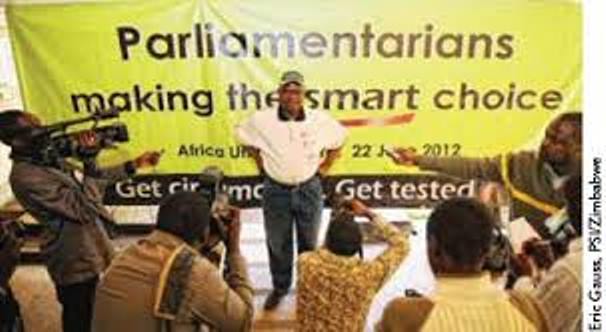
- Targeted advocacy, consisting of identifying and engaging influential "gate keepers", such as policy makers, administrators, celebrities, and community leaders, to promote informed choice regarding MC.
- Mass media, such as: local television and radio drama series; advertising through television, radio, print, and outdoor and mobile media (billboards, cinema, and posters); email campaigns; bulk text messaging; radio and television talk shows; and feature articles within the news media.
- Mid-media, which include: public announcements using loudspeakers; presentations; speeches; special promotional events; posters; and drama group presentations - at such locations as village and town meetings, farmers meetings and funerals, and cultural festivals.
- Interpersonal communications, which include: door-to-door outreach; facilitated discussions in settings, such as workplaces and bars; community dialogues and peer education; and counselling and community events facilitated by trained field workers - supported with print and/or audiovisual materials, in local languages.
National plans are analysed by country for inclusion of SBCC. Use of champions among religious, community, and traditional leaders is part of some national strategies, as is information from peers and female intimate partners.
Among the document's conclusions are the following:
- The analysis of "channels of communication for key messages shows that only Kenya uses a large variety of communication channels...."
- "The apparent effectiveness of current SBCC for MC shows that except in Kenya and to some extent Swaziland, there is little evidence that these activities have an impact on the demand for MC...."
- "For other countries that have developed communication strategies, it appears that key messages do not address fears of individuals in seeking MC. Also, faith leaders, business leaders and community leaders do not seem to play a key role in these communication strategies, even though they may be effective channels for educating populations on the relations among MC, religion and ethnicity."
- "Getting these messages right may require implementers and researchers to incorporate knowledge of other disciplines - behavioural economics, marketing, sociology, anthropology, and so on - in the design of new interventions. "
The International Initiative for Impact Evaluation website, March 25 2014. Image credit: Eric Gauss, PSI/Zimbabwe
- Log in to post comments