










































SASA! Together: An Activist Approach for Preventing Violence against Women
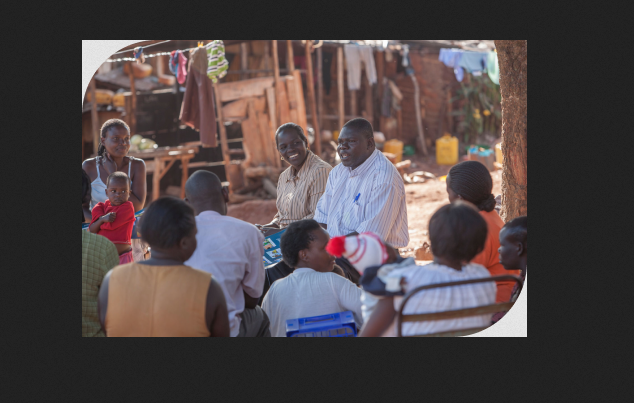
"Sparking community-wide change by transforming imbalances of power is the heart of SASA! Together. It is led by women and men who live and work in the community..."
SASA! Together is a community mobilisation approach that supports communities to create positive and sustainable changes around norms that perpetuate violence against women (VAW). It is a revision of the original SASA! Activist Kit, which was published in 2008 by the Uganda-based non-governmental organisation (NGO) Raising Voices. Some new features include a distinct focus on intimate partner violence (IPV), including sexual decision-making; three strategies that reach across the whole community (individuals, groups, and institutions); and more support to get organisations and communities started and to sustain change. (For further details, see Related Summaries, below.
The evidence- and theory-based SASA! approach is grounded in:
- Benefits-based activism, which reflects social movement and social norms theories - Inspiring community members to take action based on their deep beliefs, with an emphasis on the positive benefits of non-violence rather than the negative consequences of violence.
- A gender-power analysis, which reflects feminist theory - Understanding men's power over women as the root cause of VAW and working explicitly to balance power in relationships and communities.
- Four phases of change, which reflects the transtheoretical model (see below) - Working in four phases according to the stages of change, with different objectives and content that evolve for every phase.
- Holistic community engagement, which reflects the ecological model and diffusion of innovation theory - Building a critical mass of support by using three strategies designed to reach community members at different levels of the circles of influence.

"SASA!" means "NOW!" in Kiswahili, emphasising the urgent need to prevent VAW. SASA! is also an acronym for the four phases of the process:
- Start: Community activists, community leaders, and institutional allies are identified, spend time exploring community norms about VAW, begin their journey of deepening their power within to make changes in their own lives, and start engaging others in the community.
- Awareness: Activists, leaders, and allies - through their respective strategies of Local Activism, Community Leadership, and Institutional Strengthening (see above) - use a variety of provocative and interactive activities to encourage a critical analysis of men's power over women and the community's silence about this.
- Support: More and more people engage with activists, leaders, and allies who are learning new skills and joining their power with others to support women experiencing violence, couples trying to change, and activists speaking out and holding men who use violence accountable.
- Action: Activists, leaders, and allies lead efforts to support community members' power to take action and sustain that change for years to come - solidifying new norms in which VAW is never acceptable and women can live safe, fulfilling, and dignified lives.
Finally, "Together" emphasises that change is possible with collaboration, support, and solidarity.
The SASA! Together resource consists of documents on each of the above four phases, flanked by a set-up guide to introduce the process and a learning and assessment (L&A). The latter includes information and tools to help the user track, analyse, and apply learning about the SASA! Together programme. The set-up guide [204 pages, PDF] and the L&A guide [42 pages, PDF] are publicly available. However, in order to promote safe and ethical use of SASA! Together, Raising Voices requires all who want to access the other components and/or the entire resource to complete a brief form for each download (other than the two PDFs referenced above) or to download the four phase books as a folder. Doing so will grant free access to the full SASA! Together approach.
English; Spanish
Raising Voices website, May 12 2022. Image credit: Raising Voices
- Log in to post comments