











































The Role of Supportive Supervision Using Mobile Technology in Monitoring and Guiding Program Performance: A Case Study in Nigeria, 2015-2016
World Health Organization (WHO) Country Office, Abuja (Tegegne, Braka, Erbeto, Aregay, Rasheed, Alpha, Khedr, Isameldin, Yehushualet, Warigon, Alemu); National Primary Health Care Development Agency, or NPHCDA (Shuaib, Adamu, Damisa, Okposen); WHO Regional Office for Africa (Mkanda, Ubong); Global Public Health Care Solutions (Nsubuga); WHO Headquarters (Vaz)
"Supervision using mobile technology has contributed to producing real-time data."
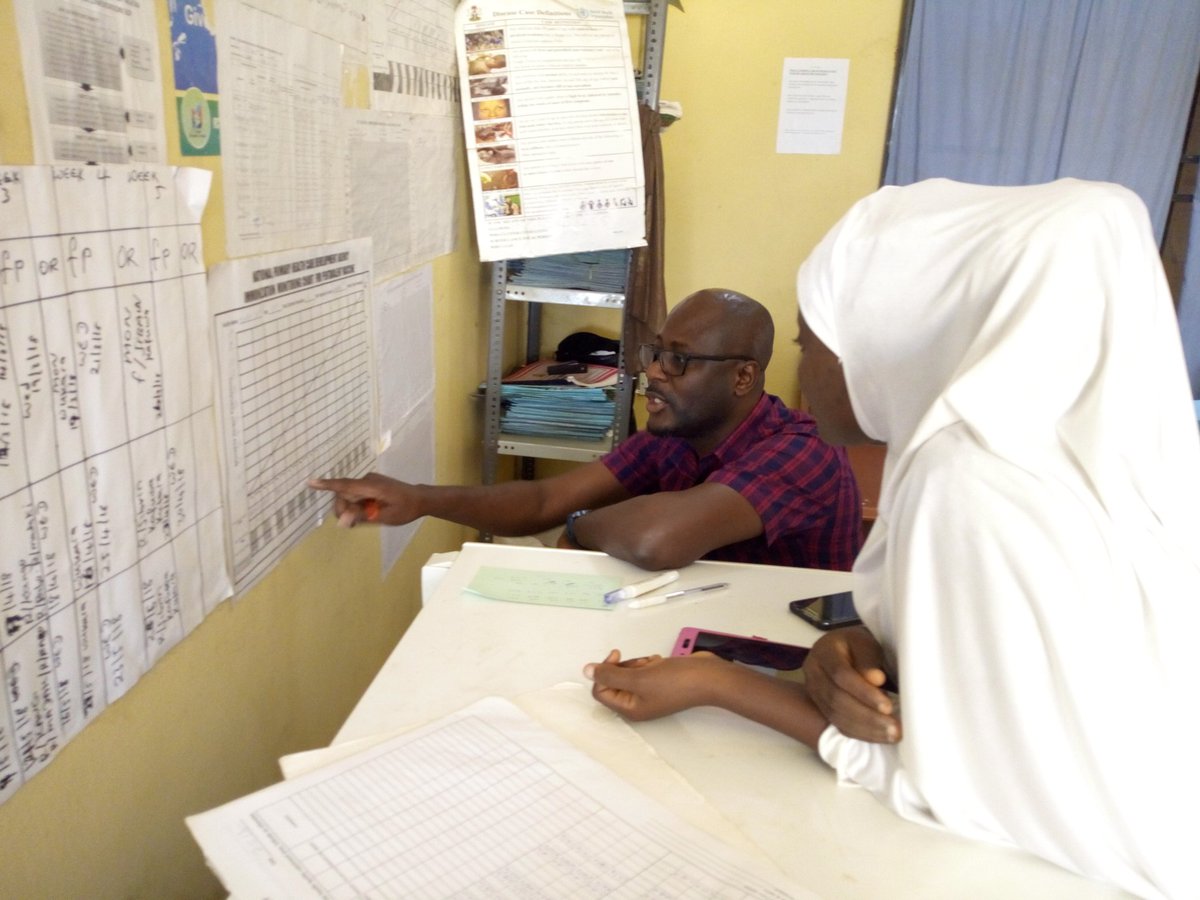
The importance of supportive supervision in public health has been linked with improvements in programme performance. The added advantage of using mobile phones for collecting data during health facility supervision is the availability of the global positioning system (GPS) within current generation mobile phones or smartphones. Using GPS information, it is possible to obtain approximate distances between healthcare facilities, which could inform proper health service provision. However, there is little evidence on technology-assisted mobile data collection for real-time data transfer during supportive supervision. Thus, the authors set out to determine the contribution of supportive supervision using mobile technology in providing timely programme information in the polio programme in Nigeria.
Specifically, they analysed supportive supervision findings collected by mobile phones under the open data kit (ODK) platform from July 2015 to June 2016. ODK is a free and open-source set of tools that provides an out-of-the-box solution for users to build a data collection form or survey, collect the data on a mobile device, send it to a server, aggregate the collected data on a server, and extract it in useful formats. Supervision was conducted across the country by 592 WHO officers. All officers were provided with mobile phones and given access to download a form for use during supervision of health facilities. To understand how to use this technology, they were provided with hands-on training; data managers in the 6 geopolitical zones of the country were trained to assist in the process, including to help with troubleshooting. At the end of each supervisory visit, the officers sent the data to a centrally managed server. The system replaced a paper-based data collection method.
A total of 90,396 facilities were supervised at least once during the study period from July 2015 to June 2016. In short, the study found that supportive supervision, using a handheld mobile data collection tool, was performed on average in 199 minutes and transferred to a central-level server within 5 hours from more than 6,000 health facilities across the country. The evidence suggests that real-time data were available for action at the national and zonal levels on the same day that supervision took place in health facilities. Programme officers used the findings to rectify process indicators in time for a better outcome.
As shown in Figure 1 in the paper, acute flaccid paralysis (AFP) cases were detected in health facilities that benefited from supportive supervision during the study period. The only opportunity for the health workers in those facilities was sensitisation during supportive supervision. Of the total 6,544 AFP cases detected during the study period, 1,778 were in health facilities by focal persons that were not formally trained but were supervised.
In conclusion, the system has been used to locate the actual location of facilities and the distance of a health facility from a given point. This helps to give timely feedback and plan health interventions properly. According to the authors, the system of using mobile phones could be used to monitor programme implementation for other health interventions, such as defaulter tracing in routine immunisation, the sending of alerts for outbreak-prone diseases, investigation of outbreaks, and supervision of any other health interventions.
BMC Public Health 2018 18 (Suppl 4): 1317. https://doi.org/10.1186/s12889-018-6189-8. Image credit: Constant Dedo
- Log in to post comments