










































Rebuilding Public Trust - Assessment of the Media Industry and Profession in Sri Lanka
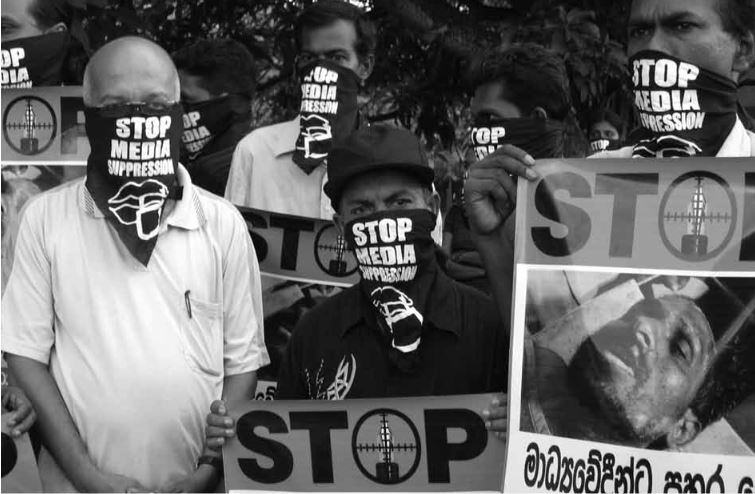
This publication from the Secretariat for Media Reforms, Sri Lanka, is an assessment of the media environment using the Media Development Indicators (MDIs), an international framework developed by UNESCO. The consultative process to assess the state of media in Sri Lanka began in March 2015 and engaged policy makers, media owners, media practitioners, and advocacy groups, as well as the media-consuming public.
The assessment, co-published by International Media Support and led by the Secretariat for Media Reforms, shows that "structural and legal reforms in the media sector are long overdue. Some of these reforms must come from within the media profession and industry itself and stem from serious self-reflection. Other reforms require changes in laws, state policies and the overhauling of state-owned media institutions. Parallel to this, journalism and mass media education courses should be reviewed and updated to meet current industry needs and media consumption patterns. Low media literacy levels in society must also be addressed."
The MDIs are designed to identify strengths and weaknesses and propose evidence-based recommendations on how to enhance media freedom and media pluralism. The MDI's are structured around five categories (see related summaries below for more on the MDI's). Four assigned working groups of stakeholders were selected after an initial workshop on MDI methodology:
- Working Group 1: Promotion of Freedom of Expression
- Working Group 2: Media Pluralism and Regulations: A Diverse Mix of Public, Private, and Community Media
- Working Group 3: Requirements for Fairness and Impartiality, Public Trust, and Confidence in the Media
- Working Group 4: Professional Capacity Building and Media Education
The document details Sri Lanka's legal and policy framework and offers recommendations including an amended Constitution to protect rights of freedom of expression and information, to limit emergency regulations in alignment with international human rights law, and to incorporate language on restrictions of freedoms from Article 19 (3) of the International Covenant on Civil and Political Rights (ICCPR). It recommends reviewing all existing laws pertaining to restrictions on these freedoms and adopting a Right to Information law and guarantees on editorial independence and protection of journalists. In addition, the document offers recommendations on broadcasting regulation; on adopting a law regulating defamation cases against journalists by public figures and liberalising contempt of court laws so that information might flow more freely; on repealing sedition law in the Penal Code, and on removing media censorship, including that of online content and activities.
Media pluralism and cross media ownership are discussed and recommendations given for fostering pluralism and diversity in media, including transparency of ownership, proposed limitations on concentrated ownership of media, and expanded media monitoring by researchers and civil society. A community radio licensing system and a range of reserved broadcast frequencies are recommended, among other spectrum allocation recommendations. Discriminatory advertising practices are discouraged, and government guidelines for fair distribution of advertising are suggested, along with public interest regulation of advertising.
Recommendations on media content include media time and attention to cultural pluralism and gender diversity to ensure "the particular needs of demographic groups like children, women, ethnic and religious minorities, older persons, residents of the estate sector and those with disabilities are served by the media" without use of stereotypical language. As stated in the document, public service broadcasting (PBS) should play a role - recommendations for role, regulation, and funding are suggested.
Media regulation is analysed by categories of government, independent, self-, and co-regulation. Available professional media training is detailed with recommendations on resolving the mismatch of media training needs and the rapidly changing field, including curricular and training reform. As suggested, government, media company, and donor support needs to be aligned to improve existing training, supplying more trainers and texts, possibly through mandating training for licensed media organisations. Media managers, as well as journalists, need capacity building. Industry and university links need to be strengthened, partnerships developed with international media, and participation fostered in international meetings and organisations. The right of forming and joining trade unions should be recognised, and management and union engagement through peaceful negotiation should be mandated. Academic and civil society organisations (CSOs) should be engaged and media literacy and monitoring promoted. Information and communication technology (ICTs), computer networks, and media content should converge to expand readership and promote citizen journalism through a media development fund "and/or a Media Diversity and Development Agency". The document recommends that policy should be developed around pluralistic access and privacy rights regarding ICT, including open data and ICT observatories in universities.
Email from Helle Wahlberg to The Communication Initiative on July 14 2016.
- Log in to post comments