










































RAPID Outcome Mapping Approach (ROMA)
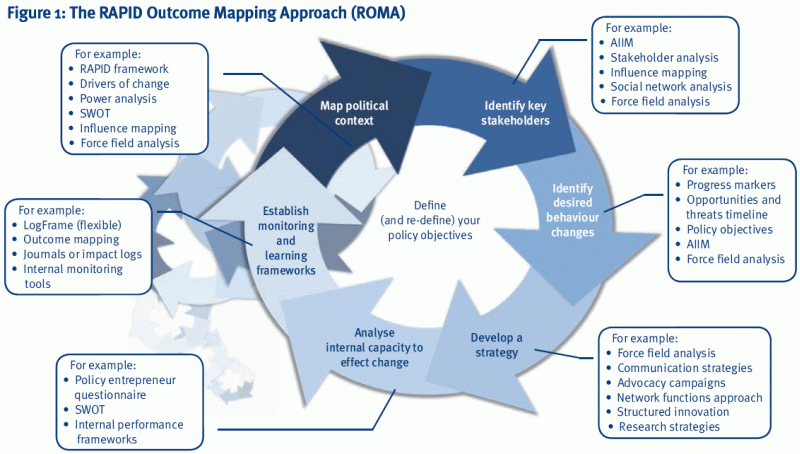
The RAPID Outcome Mapping Approach (ROMA) draws on concepts of complexity, on outcome mapping tools developed by the International Development Research Centre (IDRC) and tools for policy engagement assembled and developed by RAPID, field tested through more than 40 workshops and training courses worldwide. The eight steps of the approach are outlined below and detailed within the source document. ROMA is designed so that each step systematically provides the policy entrepreneur with more information about the context s/he is working in so that s/he will be able to make better strategic choices (and be better placed to take advantage of unexpected policy windows and opportunities for change), though not all steps might be needed in all situations.
- Define a clear, overarching policy objective. Consider: discursive changes (i.e., changes in language usage); procedural changes (i.e., changing how something is done); content changes (i.e., actual changes in written policy); attitudinal changes (i.e., changes in perception of key stakeholders); and behavioural changes (i.e., sustainable changes in the way something is achieved or approached).
- Map the policy context around that issue and identify the key factors that may influence the policy process. The RAPID framework provides a useful checklist of questions.
- Identify the key influential stakeholders. RAPID's Alignment, Interest and Influence Matrix (AIIM) can be used to map actors along three dimensions: the degree of alignment (i.e., agreement) with the proposed policy, their level of interest in the issue, and their ability to exert influence on the policy process.
- Identify the changes needed among stakeholders if they are to support the desired policy outcome – in other words, develop a theory of change.
- Develop a strategy to achieve the milestone changes in the process.
- Ensure the engagement team has the competencies required to operationalise the strategy.
- Establish an action plan for meeting the desired policy objective.
- Develop a monitoring and learning system, not only to track progress, make any necessary adjustments and assess the effectiveness of the approach, but also to learn lessons for the future.

- Log in to post comments