










































Radio Salus
Radio Salus broadcasts 24 hours a day, seven days a week, and organisers say its programming reaches the entire population of Rwanda, as well as neighbouring communities in DRC and Burundi.
The radio station team, which includes professional journalists and journalism students, produces a variety of news, educational, and entertainment programming broadcast in Kinyarwanda, Swahili, English, and French. According to organisers, each week more than 25 different programmes are broadcast on a broad range of topics including education, agriculture, health, HIV/AIDS, Rwandan history, news, conflict management, sports, and coffee (a long-established, but not well understood industry in the country).
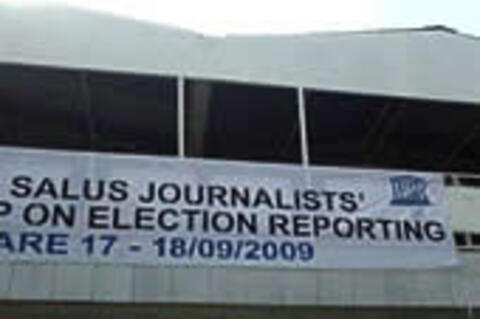
In advance of the August 2009 elections, journalists from the station received training specific to election coverage, including election laws and rules, understanding the Rwandan journalists' code of conduct during elections, the professional standards of free and fair elections, and covering elections independently and professionally.
According to the radio station, the training of students and professionals at the radio station has become a key determinant in diversifying media programming in Rwanda and in building confidence in private radio as a viable means of mass media. Radio Salus has reportedly also managed to empower Rwandan youth, women, and disabled people. Through its educational programmes on economy, environment, HIV/AIDS, health and history, organisers say that it has become a socio-economic development tool for many Rwandans. For example, Radio Salus has contributed to educating local small businessmen and women on how to advertise their products and services. In addition, it has supported and promoted young artists by giving them the opportunity to publicise their new songs.
Democracy, Media Development.
As of November 2008, more than 100 young journalists had received training through Radio Salus, and many students continue to work there as trainee journalists. The station's sports programme has been rated the top radio programme in the country.
United Nations Educational, Scientific, and Cultural Organization (UNESCO).
National University of Rwanda website and UNESCO website - both accessed on January 12 2010.
- Log in to post comments