










































Radio and Pandemics - COVID-19 in East Africa: How Community and Vernacular Radio Are Influencing Social and Behaviour Change
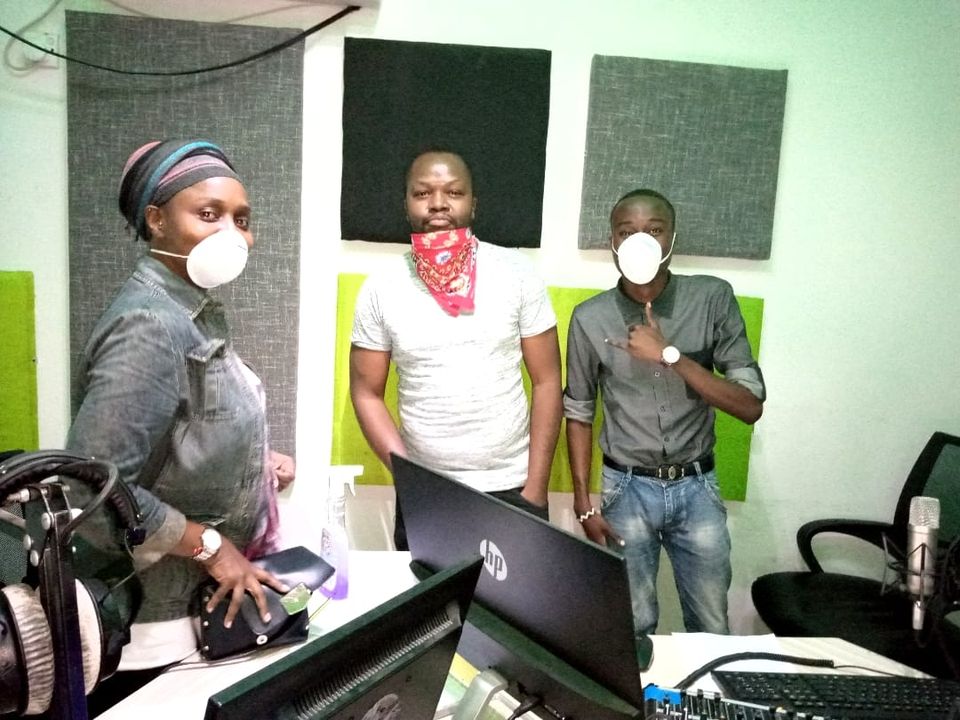
"These are voices they already trust, and when they tell them to do something that will save their lives, they are inclined to listen." - Mr Julius Kyamanywa, Station Manager, Uganda's CGR Radio
Studies on how radio was used during the West African Ebola outbreak, and how it is being used during the COVID-19 pandemic, show that it can be an effective tool in influencing changes in social behaviours that might help in reducing the spread of infectious diseases in East Africa. This is the central argument of this report, which was commissioned by the Konrad-Adenauer-Stiftung (KAS) Media Programme SubSahara Africa. It shares details about research carried out among 9 radio stations across Kenya, Uganda, and Tanzania that sought to find out how local radios are using social and behaviour change communication (SBCC) in the fight against the pandemic.
As author Daniel Ominde Okoth explains, East African populations living in rural areas and urban slums may have not seen what the COVID-19 virus was doing in other parts of the world, due to the unavailability of infrastructure such as electricity and poor internet connection. In these areas, directives from governments and health officials on behavioural changes such as social distancing and discouragement of handshakes and hugs compete with deep-rooted cultural practices, and myths and misinformation spread like wildfire.
Similarly, during the Ebola crisis in West Africa in 2014, many citizens living away from the capitals and big cities were in the dark about the virus that was killing people at an alarming rate. With a majority of the population living in rural areas, radio was the fastest and most effective medium to reach them with accurate information on Ebola. Okoth points to an April 30 2020 webinar hosted by Farm Radio International, "Radio journalism in a time of crisis" (available via the YouTube video below). In it, Jefferson Massah of the Liberia Media and Development Programme, which was founded after the 2014 Ebola outbreak in partnership with Internews, discusses the importance of radio talk shows that interviewed survivors who had recovered from Ebola because they sought early treatment. The goal was to tackle misinformation about the disease, such as the myth that once someone went to the hospital they would die, or that the virus was a man-made effort to wipe out certain ethnic groups.
The study, which involved conducting interviews with station managers, radio presenters, producers, and their listeners at 9 stations, was designed to understand how they go about demystifying myths and misinformation, providing accurate information on COVID-19, advocating for behaviour change, and coming up with innovations that help their listeners cope with the measures put in place by governments to contain the pandemic. Many examples and quotations from those working on the frontlines of community radio are used to illustrate the study's findings.
Before sharing the results, however, Okoth discusses the radio landscape in the region. The 3 East African countries of Kenya, Uganda, and Tanzania collectively have more than 300 radio stations, the majority of which are either vernacular or community radio stations. Their audiences are largely homogenous - that is, bound by ethnic, regional, or group interests. A May 2020 report by Kenya's National Bureau of Statistics indicates that 82% of Kenyans were receiving information on COVID-19 from radio stations. And an April 2020 GeoPoll report indicated that 39% of the continent's residents identified radio as their preferred source of information on the virus.
The radio stations that were part of this study presented their COVID-19 messages in different ways, most of them using more than one format for dissemination. Interviews with experts and government officials, public service announcements (PSAs), adverts, fact-checking programmes, and even music (such as a song recorded by Ugandan musician Bobi Wine titled "Coronavirus Alert") have been used to raise awareness and encourage communities to adhere to official guidelines meant to prevent spread of the disease.
Okoth explains: "One of the things that set community and vernacular radio stations apart from commercial radio stations in big cities is the kind of relationship that their staff has with their communities. The presenters and news anchors, while considered sort of celebrities are still so much part of the communities they live in. They are role models, protectors, and defenders of community interests, and more importantly, voices of authority." These relationships, which enable a radio station to be trusted as a source of reliable information during a pandemic, have been cultivated with communities over the years by making their issues centric to their programming. This focus has been articulated and strengthened over time through community outreach, listeners' clubs, and roadshows. "The kind of loyalty drawn from that commonality of interests is not easily found among listeners of commercial radio stations in the big cities."
This is important, per Okoth, because community attitudes towards COVID-19 were "a real threat to containing the disease." Most of the people working in radio stations whom Okoth spoke to saw themselves playing a key role in ensuring an accurate flow of information to counteract the flurry of rumours, myths, and misinformation. One station manager explained that people who work in community radio are effective in passing information to their audiences because they understand the local customs, languages, and nuances better, and are therefore able to package the messages in a way that is appealing to their audiences.
In addition to passing on accurate information in languages listeners understand, another interviewee, who is Head of News at her station and also host of a weekend magazine show focusing on women and gender issues, explained that having audiences listen to voices of people who had either had a loved one taken into isolation after testing positive for the virus, or farmers who could no longer take their produce to the market because of the lockdown in Uganda, helped her listeners appreciate the gravity of the situation. It also gave those who were facing difficulties a sense of unity.
Furthermore, Okoth writes, "With the restriction on movements, and in the interest of safety for news sources and staff, technology helped in bridging the gap that was created by reduced or non-existent face to face interactions. Phone calls became the primary mode of interaction with sources, either as guests in live talk shows or as news sources." Other uses of radio involve supporting education as schools closed down. In Uganda, for example, the government paid some radio stations to deliver learning materials to their listeners through education programmes. At the Dadaab refugee camp in Kenya, a local radio station, Gargar FM, is providing programming in an effort to ensure that children in the camp continue with their learning in a secure environment.
As much as the stations have been working to provide accurate information, it has been equally significant that this information reaches as many people as possible. To this end, Uganda's Spice FM set up a repeater station at one of the refugee camps in the Mid-Western part of the country. Solar-powered loudspeakers connected to a sub-station inside the camp ensured that the refugees, who were mostly from the Democratic Republic of the Congo (DRC) would be able to listen to programming in their native languages. These programmes included COVID-19 messages.
Despite these advancements, the stations have faced challenges. For example: "At a time when propaganda and conspiracy theories about the virus are spread by influential people in the society; even heads of states like are the case with Tanzania, it becomes difficult to convince the masses otherwise. This is why innovative approaches such as fact-checking should become part of daily programming if radio stations are going to help their listeners fight this virus."
Other recommendations Okoth puts forth include:
- Radio, specifically community and vernacular radio, should take their agenda-setting role more seriously going forward. "This will call for constant analysis of the strategies adopted by governments in their attempts to contain the pandemic."
- There is "a need to have a more structured effort when it comes to using radio as a tool for influencing desired social and behaviour change during 'the new normal,' and for future pandemics. These strategies need to be inclusive, not leaving out other broadcasters especially community radios which are often ignored, at times because they speak to fewer people."
- Because "when the message is not properly structured, radio stations might end up causing more harm than good....Content producers in radio stations need to be trained on how to develop key messaging....This will have to be complemented by constant evaluation on the impact of the messages, something that is currently non-existent in most stations..."
- If radio stations like those interviewed for this study are to continue to play the roles that will be expected of them in the future, they need "to be allocated resources that keep them on-air during these difficult economic times."
Media Development Literature January - June 2020: A selection of new publications at the CAMECO literature database [PDF]. Image credit: Sauti Ya Pwani FM via Facebook
- Log in to post comments