











































Public Libraries: An Underused Resource for Development
Electronic Information for Libraries (EIFL)
"Public libraries in developing countries are using information technology to provide innovative services..."
In this SciDev.net opinion piece, Jean Fairbairn argues that there is untapped potential on the part of the 230,000 public libraries in developing countries to reach people with vital information, often derived from scientific resarch, in areas such as agriculture, health, employment, and poverty reduction - in addition to education. She notes that these places are known and trusted in their communities, staffed by trained librarians, and increasingly connected to the internet. Through the examples provided here, Fairbairn aims to highlight for policymakers the potentials that libraries have for science communication.
As she explains, some national public library networks, funded by governments, operate mobile library services that reach deep into rural areas. For instance, the Ghana Library Board deploys minibuses, some equipped with wifi (wireless communications) and laptop computers, in each of Ghana's 10 regions. Kenya National Library Services uses camels to reach nomadic pastoralists in the country's arid north-eastern region. In some countries, such as Uganda and Ghana, "vibrant community library sectors have mushroomed over the past two decades....These are largely funded with community support - a powerful vote of confidence in libraries as valued and needed institutions."
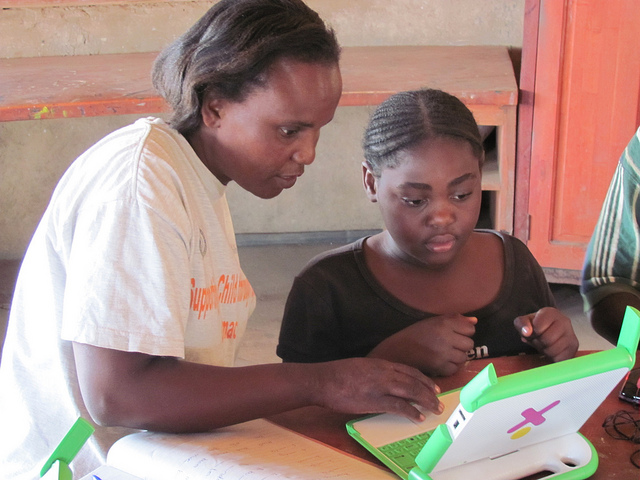
Since 2009, Fairbairn's organisation, Electronic Information for Libraries (EIFL), has invited - through its Public Library Innovation Programme (EIFL-PLIP) - public and community libraries in developing countries and those in transition to apply for small grants to implement innovative services based on information and communication technologies (ICTs). To date, EIFL-PLIP has supported 39 new services in 23 countries. The services use combinations of traditional and modern ICT: print, radio, computers, the internet, websites, video, and, increasingly, mobile phones and smartphones. For example: Ugandan farmers are using smartphones to send photographs of diseased plants to agricultural researchers, who respond with solutions by SMS text messaging; health workers in northern Ghana use library computers to send advice via SMS to pregnant women; and 3 libraries in Uganda have created a database of young people, with information about their career plans and an SMS opportunities-alert service. A key part of EIFL-PLIP is to build the capacity of librarians to assess the impact of the programme, which each must do after 12 months. For example, in 2010, Radislav Nikčević public library in Jagodina, Serbia, launched the AgroLib service - a network of four village libraries where farmers learn ICT skills and now sell their produce through an online market. The village libraries also host lectures and events where farmers can interact with agricultural experts and government support agencies.
In 2010, EIFL-PLIP commissioned research on the perceptions of public libraries in 6 countries in Africa. While an overwhelming majority of stakeholders placed high value on public libraries as educational spaces, only 5% associated libraries with ICT. EIFL-PLIP is now using these findings to support teams of librarians in Ghana, Kenya, and Uganda to advocate for policy change and sustainable funding, so that they can afford ICT and provide new services focused on community needs, especially in rural areas.
Fairbairn concludes: "It is time to raise awareness and change perceptions of public libraries, provide the funding and training they need to offer these services, and encourage partnerships with other local development agencies."
Image credit: Flickr/EIFL: knowledge without boundaries
- Log in to post comments