










































Projet Video Sabou et Nafa
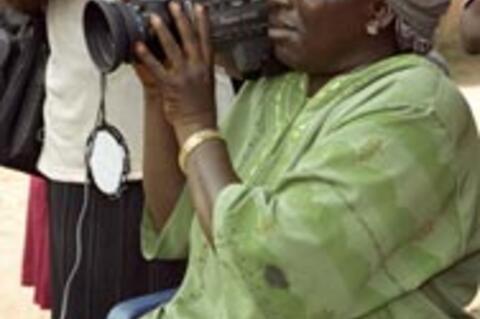
The focus of the project was the establishment of five regional participatory video teams: in Phase I, one team each for the central CPTAFE committee in Conakry and the Middle and Upper regions of Guinea; in Phase II, teams in the Lower and Forest regions. Project activities were initiated in July 2002 with a C4C-implemented training workshop that prepared CPTAFE members and village-based supporters to produce local-language videotapes. Twenty-one people - 7 from each of the designated Phase I regions - participated in the 12-day training. They included a range of CPTAFE personnel and committee members, rural radio journalists, teachers, youth, and several former excisors. Over the first days of training, participants familiarised themselves with video equipment and viewed and discussed various examples of video work that has promoted health, human rights, women's empowerment, literacy, and community development. As the workshop progressed, participants honed their listening and interviewing skills, practiced shot identification and storyboarding, undertook increasingly challenging shooting exercises, and formulated initial plans for production. In particular, participants developed team skills in programme planning in order to help prepare them for sequential shooting and in-camera editing.
Participants then separated into regional 7-person teams. The two teams from the interior returned to Middle and Upper Guinea, each with their own video equipment: a super-VHS camcorder, microphones, headsets, a small TV/monitor for field use, a VCR, a full-sized TV/monitor, a small generator, video tape supplies, and accessories. Nearly all of this equipment had been purchased in-country. Each regional team was accompanied by two members of the Conakry team and a C4C video trainer. Video activities then continued in the 2 interior regions over the course of 8 days, with participants engaging community members in collaborative video productions. These productions range from mini-dramas intended to persuade family members to abandon FGM to a documentary featuring music and poetry that depicts ways in which former excisors are developing alternative sources of income. Many of the videos feature respected individuals within the community.
In addition to producing 3 videotapes, each regional team conducted 3 community "playbacks" followed by team-facilitated discussions. The playbacks elicited highly personal comments from viewers. In Dalaba, one man spoke of the death of his young niece following her excision; a woman described the problems she has experienced with a vesico-vaginal fistula. In Kankan, Upper Guinea, one young woman stood and said that she wished she could restore what had been taken from her when she was excised. One mother expressed deep regret at having excised her daughter; another woman stated, "We were victims, but our daughters won't be." During each playback session, the video teams invited community members' ideas for future videotapes, as well as for outreach activities that could advance CPTAFE's mission and promote community welfare.
At the end of the week of regional fieldwork, team members identified priority topics for upcoming projects, including anti-FGM outreach to village-based traditional excisors and video productions focussed on violence against women, early marriage, and women's literacy. In addition, the Upper Guinea team produced a videotape on various income-generating projects initiated by local women, underscoring the social and economic benefits that resulted for both the individual women and the community.
In December 2004, members of all of the community video teams met in Conakry to exchange experiences of the past year, screen their recent work, and reflect on the project’s effect on their lives and communities.
According to the organisers, since the project’s start, the teams have made over 30 local-language videotapes on topics including family planning, girls’ education, infant nutrition, teen pregnancy and early marriage as well as FGM. In addition, a Video Sabou et Nafa team produced a documentary for the American Refugee Committee on gender-based violence prevention, response and legal aid activities benefiting refugee women in the Forest Region. This videotape was shown during a U.S. Congressional briefing on gender violence in conflict settings. Priority themes for the team's current action plans include children’s rights, prevention of HIV/AIDS, and different forms of violence against women.
Children, Women, Youth, Health, Child Protection, Rights.
C4C is a non-profit training organisation based in New York. For the past 25 years, C4C has worked in collaboration with local partners to develop participatory video projects that enable members of traditionally under-represented groups to represent their own experiences and needs within the community. Established in 1984, CPTAFE - the Guinean affiliate of the Inter-African Committee for the Prevention of Harmful Traditional Practices - works in Guinea to help end female genital mutilation, a practice that is nearly universal in the country. CPTAFE is also committed to supporting positive traditional practices, promoting girls' education, and spreading information on STD/AIDS prevention.
According to project organisers, awareness of the negative effects of FGM is widening throughout Guinea. Participatory video can engage community members across the spectrum of diverse ethnic and linguistic groups, and across the boundaries of illiteracy. The setting, scenarios, language, and local sensibility of the videos reflect the perspective of the community-based video makers. Organisers hope that this local perspective will help change behaviour by disseminating culturally appropriate messages and positive role models. For example, audiences for one drama were impressed by the presence of a highly respected community figure in the role of a grandmother who ultimately renounces FGM.
The project's title was determined by consensus. The words "sabou" and "nafa" are shared by all 3 of the key languages spoken by July 2002 workshop participants - Malinke, Poular, and Soussou - and signify, respectively, "opportunity" and "benefit".
C4C, CPTAFE. Funders to date: the Public Welfare Foundation, the Goldman Foundation, and the UNFPA bureau in Guinea.
Letter sent from Lauren Goodsmith to The Communication Initiative on October 20 2002 and Communication for Change website on November 11 2008.

- Log in to post comments