










































Partnership on Health and Mobility in East and Southern Africa (PHAMESA)
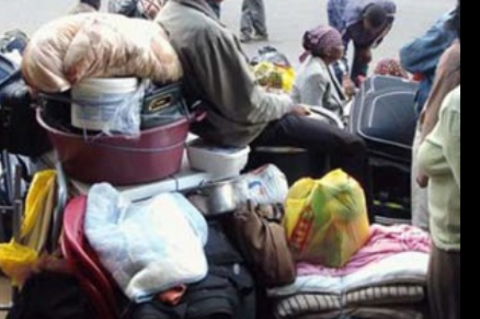
Running from July 2010 to June 2013, the Partnership on Health and Mobility in East and Southern Africa (PHAMESA) works to improve standards of physical, mental, and social well-being of migrants by responding to their health needs throughout all phases of the migration process, as well as the public health needs of host communities. Implemented by the International Organisation for Migration (IOM), PHAMESA focuses primarily on labour migrants and mobile workers, forced migrants, and irregular migrants in the context in which they live and work. PHAMESA follows the implementation of the Partnership on HIV and Mobility in Southern Africa (PHAMSA) and is funded by the Swedish International Development Cooperation Agency (Sida) and the Norwegian Ministry of Foreign Affairs (MFA).
PHAMESA intervention activities are concentrated in areas where migrants are present and where they can be accessed, such as cross border communities, "hot spots" or spaces of vulnerability along transport corridors, workplaces, migrant communities and urban settlements, migrant sending sites, detention centres, and emergency settlements including refugees and internally displaced person (IDP) camps. PHAMESA offers a comprehensive public health approach, addressing health concerns that particularly affect migrants and mobile populations with a focus on HIV prevention, treatment and care, and related conditions like tuberculosis and sexual and reproductive health.
PHAMESA promotes migration health through five programme components:
Service Delivery and Capacity Building
Through projects on the ground, IOM develops and implements interventions designed to be responsive to the unique environment of labour migrants. Through the PHAMESA Health Promotion and Service Delivery model, IOM seeks to address both conditions that increase HIV vulnerability of labour migrants as well as the individual HIV risk factors. They also work to identify gaps in health service delivery and facilitate migrants’ access to health care services.
Advocacy and Policy Development
IOM advocates for regional, national, and sectoral policies that contribute to the wellbeing of migrants and the reduction of HIV incidence and impact of AIDS among migrant and mobile workers and their families. This is done through increasing the awareness on HIV dynamics of labour migration amongst key policy makers in regional economic communities (RECs), governments, and private sector.
Research and Information Dissemination
IOM continuously engages in research to gather strategic information in order to develop effective evidence-based HIV programmes, as well as, influence policy and dialogue. The findings of these assessments and research on population mobility and health are widely distributed in East and Southern Africa in order to improve the understanding of migration health issues.
Regional Coordination
IOM is committed to developing and strengthening partnerships and coordination among RECs and other regional partners (UN and regional/international NGOs) in order to improve harmonisation of programmes and to promote migration health. To this end, IOM regularly organises regional workshops on the health responses in the different labour sectors that employ mobile workers.
Governance and Control
The programme is committed to ensuring transparent, efficient, and effective governance and control through financial control measures, reporting schedules, and standard operating procedures, as well as monitoring and evaluation for results based management, including reviews and evaluations on a regular basis.
Migration, Health
According to IOM’s latest World Migration Report, people are becoming increasingly mobile within and across borders to meet the social and economic challenges of globalisation. Human mobility in East and Southern Africa affects not only migration and development policies, but also related policy domains such as human security and public health. In 2005, there were over 17 million international migrants in Africa, accounting for almost two per cent of the African population. An important feature in Africa is that international migration includes intraregional movements by refugees, undocumented migrants, and seasonal labour migrants. These migrations and circulations involve more than seven million economically active persons and unspecified numbers of undocumented migrants.
International Organisation for Migration (IOM), Swedish International Development Cooperation Agency (Sida), Norwegian Ministry of Foreign Affairs
IOM website and Migration Health Project Information Sheet [PDF] on February 20 2013.
- Log in to post comments