










































Open Jirga: Exploring Governance in Afghanistan
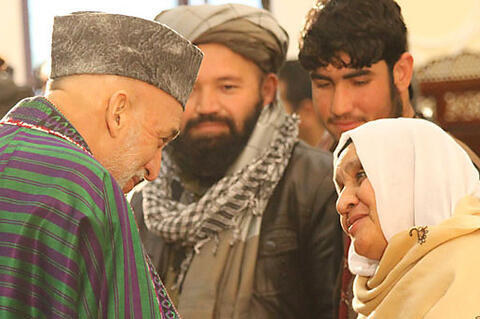
From the document Exploring Governance in Afghanistan: "BBC Media Action, with funding from DFID [Department for International Development, United Kingdom (UK)], is working in Afghanistan to deliver a political debate/ discussion programme on television and radio. The programme’s title is Open Jirga and aims to increase accountability between citizens and government. The debates are produced in partnership between BBC Media Action and Radio Television Afghanistan (RTA) with national coverage."
A jirga is a traditional decision-making gathering, which can last for several days, until consensus is reached. In this format, a presenter hosts members of a panel or individual speaker with the purpose of fielding questions from an audience drawn from a geographical and cultural diversity of Afghans.
The BBC Media Action research team conducted formative qualitative research to understand behaviours and attitudes to governance, media, and accountability in order to inform and support programme development. (See related summaries below for more information.)
The debates are supported by governance-related scenes in the existing radio drama New Home, New Life (NHNL), as well as radio educational feature programmes, produced by Afghan Education Production Organisation (AEPO).
The televised debate draws its studio audience of men and women from all corners of the country in order to include a diversity of ethnicities and language groups in an attempt to represent the broadest possible cross section of Afghan society.
A special episode in 2013 featured President Hamid Karzai interacting with an audience including "teachers and lawyers as well as local cobblers, community elders, housewives, farmers, shopkeepers, tailors, drivers, bakers, and butchers." Despite security concerns, "[i]t was a unique opportunity for people who are otherwise voiceless in the national context to sit face-to-face with their president."
Democracy and Governance, Conflict
In December of 2012, state broadcaster Radio Television Afghanistan (RTA) and BBC World Service aired the first of joint production of Open Jirga with a programme focussed on security post-2014, including panel members: the Minister of Interior, Chief of Operations at Ministry of Defence, and the former head of National Directorate of Security (NDS), taking questions from an audience of nearly 70 Afghans from eight provinces across the country, including Uruzgan, Paktika, Logar, and Kapisa, as well as Kabul.
For BBC Media Action blogs on this project, click here and here.
BBC Media Action, DFID, and Radio Television Afghanistan (RTA)
BBC Media Action website, accessed July 22 2013.
Comments

thanks
thanks
- Log in to post comments