










































One year on from the Nigerian elections: "no violence, just vote"
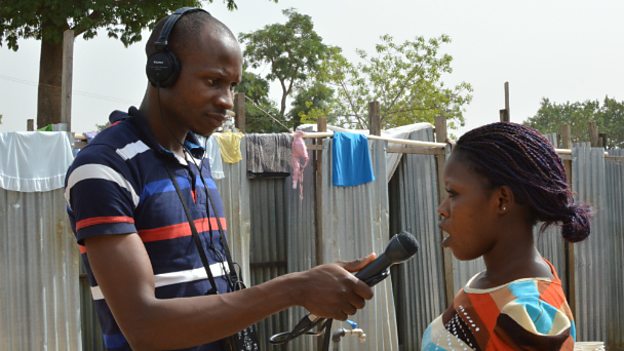
Author: Osebi Adams, April 6 2016 - This time last year, I wasn’t sure what the future held for me as a young Nigerian. Not because I was worried about a job or a family since I was already working as a researcher for BBC Media Action and planning a wedding with my fiancée. Instead, with elections looming, I was worried about my country. In 2011, over 800 people were in killed in post-election violence. In 2015, many people feared even more violence and death - and some even talked about the possible breakup of Nigeria.
I remember my mother calling one morning suggesting I move from Abuja, the capital, to her home town in the south which she believed would be safer until the elections were over.
But with BBC Media Action I was helping work towards peaceful elections with the active participation of groups usually marginalised from the voting process: women, youth and people living with disabilities.
No violence, just vote
One of the ways we contributed was by producing radio and TV public service announcements (PSAs) in English, Pidgin, Hausa, Yoruba and Igbo. These PSAs, ‘no violence - just vote’ and ‘turn up and vote’ encouraged young people to vote peacefully. They were broadcast across Nigeria in the months leading up to the elections, were posted on social media, and even played before movies at cinemas in some big towns.
Thankfully, the elections - which were held in April 2015 and saw the first democratic transition from a sitting Nigerian president to an opposition candidate through voting - were generally peaceful with reports of increased youth voter turnout.
Voter education campaigns, pledges by leaders and political parties, and even the quick concession by the incumbent president were some of the factors contributing to these mostly peaceful elections. I’ve been part of the team evaluating the role our PSAs played.
So far we’ve conducted research in 13 states with men and women 15 years and older who watched or listened to the PSAs. Our quantitative surveys showed that 18.5 million Nigerians saw the "no violence - just vote" PSAs and 6.2 million people saw the "turn up and vote" TV PSAs, while 6.1 million heard the radio versions.
Inspiring young voters
And in qualitative focus groups, young people said they were inspired to vote themselves and encouraged others to vote too. One male participant in Kano state said “I didn’t have intentions of voting but the advert encouraged me [in going out] to vote.” A young woman in Oyo state said “With the advertisement, I was like, me too I will also turn up! And although the queue was very long and very stressful, but I had to wait [I waited].” Sharing how she encouraged others, a teenager in rural Plateau state said “My mum was saying she can’t go and stay under the sun because it will make her dizzy, but because of the advert I encouraged her to go and vote."
Click here to access this BBC Media Action blog and related links on their work in Nigeria.
Image credit: BBC Media Action
Contact:
BBC Media Action
BBC Media Centre, MC3A, 201 Wood Lane
London
W12 7TQ
United Kingdom (UK)
Phone: 44 (0) 20 8008 0001
Fax: 44 (0) 20 8008 5970
Media.action@bbc.co.uk
- Log in to post comments