











































Newspaper Coverage of Health Issues in Nigeria: The Frequency of Reporting Malaria, HIV/AIDS and Polio and the Effect of Seeking Health Information on the Health Behaviours of Newspaper Readers
University of Canterbury
"Despite the evolution of information communication technologies, which have widened the communication platforms in the 21st century, it may be asserted based on the findings of this study that newspapers are still important to members of the public in obtaining health information to improve their health."
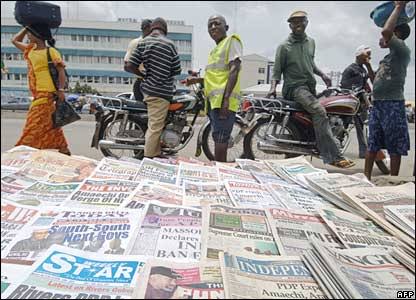
This study examines the coverage of health issues by Nigerian newspapers, emphasising the degree of attention given to HIV/AIDS, malaria, polio, and the northern region. It further examines the relationship between dissemination of health information by Nigerian newspapers and the health behaviours of newspaper readers, as well as the challenges being encountered by health reporters in the field of health reporting in Nigeria. The study is grounded in a comprehensive literature review underpinning priming and framing within the framework of agenda setting theory and a triangular methodological approach of content analysis of 844 editions of 4 national newspapers from 2010-2013, a survey, and in-depth interviews with 13 health reporters, 1 each from 13 national newspapers out of the 20 national newspapers in Nigeria.
The study finds a moderate coverage of HIV/AIDS, malaria, and polio in Nigerian newspapers in relation to other diseases studied, with these 3 diseases among the 10 most frequently reported health issues within the context of the 45 health issues covered in Nigerian national newspapers from 2010-2013 (HIV/AIDS ranked third, polio sixth, and malaria eighth). These 3 diseases are also reported in relation to northern Nigeria more than other regions included in this study. But in general, Nigerian newspapers have not given prominent coverage to health issues in their leads, editorials, and other important pages. This finding suggests that Nigerian newspapers appear to give prominent attention to other issues which, as noted by health reporters interviewed, include politics and economy, over health issues. Given that Nigerian newspapers have not given prominent coverage to health issues, this suggests that Nigerian newspapers may have less influence in directing the attention of the Nigerian government towards making health a top priority in the government agenda.
The study also shows that dissemination of health information by Nigerian newspapers correlates with an improvement in the health behaviours of newspaper readers in the country. The study found that newspaper readers in Nigeria sought health information from Nigerian newspapers, and that those who did seek this information out (especially those with higher education qualifications) also perceived such health information as beneficial to their health lifestyle and a means of improving their general health behaviours. Some of these newspaper readers also reported that they share health information with other people within their family and social networks. This finding further confirms the findings of previous studies that have investigated the relationship between dissemination of health information in newspapers and other forms of media and the health behaviours of newspaper readers.
Furthermore, the interviews of 13 newspapers health reporters across the national newspapers in Nigeria revealed that health reporters generally face a wide range of challenges due to the specialised and technical nature of health reporting. These include non-availability of data, obsolete data, and refusal by health experts and professionals to speak to health reporters. Other challenges include non-professionalisation of the health beat, poor working conditions and inadequate remuneration, general insecurity in Nigeria, and the inability of media organisations to provide timely training courses on health reporting to reporters. Health reporters who were trained in health and sciences demonstrate better expertise and skills in health reporting in Nigeria than health reporters who were trained in the arts and social sciences. This finding suggests that health and science training has a major influence in health reporting in Nigeria. The finding may further imply that health and science background may be considered important in employing health reporters for the field of health reporting given the technical nature and some degree of health and science expertise required for optimal job performance in the field.
"Based on the findings of this study, it may be concluded that health reporting in general is more effectively done by journalists who have a background in health and science training....It may also be concluded that without the ongoing global health campaigns, the consequences of endemic diseases would likely be much worse in Nigeria and many other developing countries across the world. The influence of these global health campaigns in the media coverage of health issues cannot be overemphasised....Both print and electronic media have designated more space and air time for the coverage of health issues because of the influence of global health campaigns. Furthermore, the influence and impact of the ongoing global health campaigns on the coverage of health issues by the media is manifested in the sponsorship of various seminars, workshops and other short courses by international health and funding agencies for the benefits of health reporters across the world. These health empowerment programmes are meant to sharpen the health reporting skills of health reporters. These training sessions also provide a way of setting public agenda by influencing health reporting toward giving more emphasis to various epidemics advocated by the international health and funding agencies."
In short, "[c]onsidering the enduring nature of newspapers and the potential effect newspaper messages can have on readers, it is pertinent to note that they (newspapers) need to strategically give prominent attention to the coverage of HIV/AIDS, malaria and polio, as well as other health issues that are ravaging the socio-economic life of the Nigerian nation....However, this finding does not ascribe powerful or absolute effects to newspapers and other mass media in changing the health behaviours of individual members of society....Therefore, for effective public health campaigns to achieve good health outcomes among people, the practice of integrated health communication approach (combining mass media and other forms of communication, especially interpersonal communication) has been widely advocated, accepted and practised among health communication practitioners."
University of Canterbury Research Repository, accessed on August 1 2016. Image credit: Joseph Olajide Johnson
- Log in to post comments