










































A new Nigeria begins with me
Author: Abosede Olowoyeye, February 14 2014 - It was a typical Sunday morning. I was in the car driving to church and happily humming a tune to myself. But then, as I took a turn off the highway, I found the road ahead blocked - cordoned off for some high-level government official to pass.
Now road blocks and traffic jams are hardly rare in Abuja. For a church service, the road will be blocked. For Friday Jumat prayers, traffic comes to a standstill. And roads are often closed near police stations, banks, hotels and shopping malls.
As I sat behind my wheel, my reaction felt very familiar: a momentary surge of anger quickly replaced by helpless resignation. And it was only then that I suddenly recognised it was a reaction I had witnessed elsewhere - while conducting research on governance issues for BBC Media Action.
State of helplessness
Our research team was trying to find out why the Nigerian authorities appear to lack accountability and also why people don't question their leaders and administrations.
When we first started speaking to people about this issue in 2010, it seemed we were hitting the same wall over and over again. People kept on telling us things like, "I cannot talk [because] they will not listen." Law enforcement agencies, meanwhile, would tell us, "It’s beyond our jurisdiction". And community leaders would blame someone else for the lack of basic services.
We kept on witnessing what we've come to call the "blame game" or a "state of helplessness" at every level of society.
In late 2011, our research identified how detached people felt from the governance process and how unlikely it was for them to consider themselves agents of change. Most people claimed there was nothing they could do to address issues within the country other than to pray.
The 'ordinary citizen'
But as I noticed my own feeling of helplessness in the traffic jam, I asked myself, don't we all have a role in making Nigeria better?
The answer to that question lies in the research we conducted in May 2012 during which citizens talked about participation in civic activities and governance processes as being the responsibility of everyone, including the 'ordinary citizen'.
While talking to people in one to one interviews and focus group discussions, we heard that citizens are afraid to challenge the government - perhaps an inevitable effect of decades of military rule.
Responsibilities
Thankfully, the situation is not entirely hopeless. Our radio programmes Talk Your Own – Make Naija Better (Make Nigeria Better) and Story Story focus on increasing citizens’ participation in the governance process.
And our research has identified subtle changes in how citizens perceive their responsibilities after they've listened to the programmes.
In a recent study one listener told us, "Since I have been listening to Talk Your Own I think that people should find a way that they can help Nigeria and make Nigeria once again a better place."
Through interviews, radio packages and on-air discussions, Talk Your Own explores ways people can participate in governance decisions on issues such as education, electricity, water supplies and roads - informing people, for example, how they can write public petitions or protest legally.
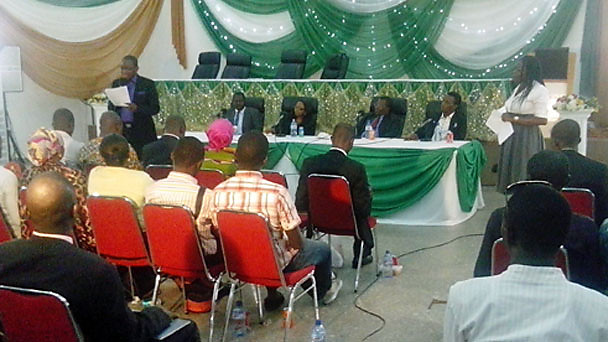
The show has also started to bring people and their leaders together for face-to-face conversations in Town Hall meetings, where citizens can publicly call the authorities to account and leaders can personally respond.
At the first town hall meeting, the topic of debate was youth unemployment, which currently stands at 54% in Nigeria. An invited audience of roughly 60 people asked four panellists tough questions about what they were doing to tackle it.
In this way, our team is tackling that familiar sense of helplessness and resignation that I felt that Sunday morning.
And I, for one, am determined to talk my own and make Naija better.
Click here to access this BBC Media Action blog and related links on their work in Nigeria.
Image credit: BBC Media Action
Contact:
BBC Media Action
BBC Media Centre, MC3A, 201 Wood Lane
London
W12 7TQ
United Kingdom (UK)
Phone: 44 (0) 20 8008 0001
Fax: 44 (0) 20 8008 5970
Media.action@bbc.co.uk
- Log in to post comments