










































The Neglect of Culture in Global Health Research and Practice
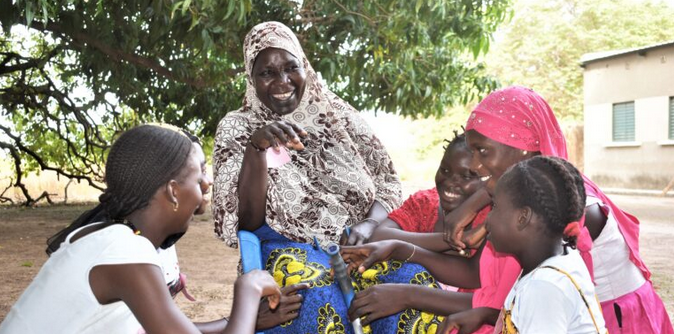
Grandmother Project-Change through Culture (Aubel); London School of Hygiene & Tropical Medicine and Friendship Bench Zimbabwe (Chibanda)
"In spite of numerous appeals, mainly from anthropologists, to accord greater importance to culture in global health, it continues to receive scant attention by major organisations, donors and academics working in this field."
This commentary argues that global research and funding institutions should support more culturally grounded research and programmes to increase their relevance to local communities, their effectiveness, and their subsequent impact.
In the article, Judi Aubel and Dixon Chibanda contend that in global health discussions, it is often stated that "culture is important". However, they argue that "often only lip service is paid to this critical parameter." To cite one example, although elders are most often central players in perpetuating the practice of child marriage, most programmes primarily involve girls (and sometimes their biological parents) instead of actively acknowledging, involving, and building on the culturally designated roles of elders as influential family and community members in relation to this issue.
What explains this "persisting oversight"? Aubel and Chibanda outline seven reasons, one of them being the combined influence of epidemiology and the behavioural sciences, which contributes to the narrow (western) focus on individuals at risk and the assumption that individuals can make rational and autonomous decisions on health-related issues irrespective of culture.
In this vein, the commentary goes on to delve into two interrelated anthropological concepts that have been given limited attention in global health research and practice:
- The medical anthropologist Hazel H. Weidman proposes a two-dimensional framework for health culture, consisting of: (i) the cognitive and conceptual facets - the knowledge, attitudes, and practices (KAP), values, norms, beliefs, traditions, and so on, related to different health issues; and (ii) the social system in which health issues are embedded, which includes the roles and influence of both family and community-level actors, their strategies, health-seeking patterns, and social networks of relationships that influence health status and health behaviour. According to Weidman, social norms are products of the culturally constructed social contexts in which individuals are embedded yet are often overlooked in discussions of health culture. Aubel and Chibandait hold that Weidman's framework could "engender greater understanding of cultural context and, in turn, more cultural-grounded global health initiatives".
- The contrasting structure and values of western and non-western cultures, often described as a continuum between "individualist" and "collectivist" or between "autonomy" and "relatedness". Aubel and Chibanda caution that "Conceptual models of health and illness based on Eurocentric individualist values and the nuclear family overlook numerous culturally determined facets of family systems in non-western cultures", including multigenerational caregiving, gender- and age-specific roles, and culturally designated roles of family advisors and caregivers based on age and experience. To increase the cultural relevance of health research and interventions, as argued here, these (and many other) facets of health culture should be taken into consideration.
Aubel and Chibanda refer to several conceptual lines of thinking that support the need to reorient global health research and practice to give greater attention to cultural context - namely, systems science, socioecological models, and calls for decolonisation. In addition, they note a growing awareness of the need for health researchers and practitioners to recognise the interface between their own cultural backgrounds, values, and training and the cultural contexts in which they work.
Ultimately, the authors argue: "The impact of global health strategies is constrained by the incongruity between critical facets of cultural context, global health practitioners' inadequate understanding of the culturally-grounded worldview of communities and the strategies they develop to promote family and community well-being." They conclude that what is needed in order to increase the attention given to cultural parameters and their inclusion in global health research and practice is "commitment, open-mindedness and courage on the part of global health practitioners both from the North and South to question entrenched Eurocentric frameworks and methods and to create alternatives."
BMJ Global Health 2022;7:e009914. doi:10.1136/bmjgh-2022-009914 - sent from Judi Aubel to The Communication Initiative on November 30 2022; and email from Judi Aubel to The Communication Initiative on December 8 2022. Image credit: Judi Aubel/Grandmother Project
- Log in to post comments