










































Mobilize Against Malaria: Lessons Learned from Ghana
Pfizer Global Health Fellow
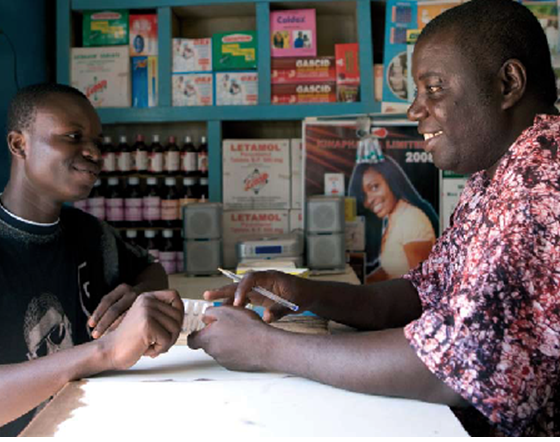
This 24-page report shares lessons learned from the Mobilize Against Malaria (MAM) initiative in Ghana, which worked to improve malaria symptom recognition, treatment, and referral through training activities, while supporting community mobilisation activities to strengthen the demand for prompt and effective malaria treatment. Specifically the programme sought to strengthen private-public partnerships through the training of license chemical sellers. According to the report, in the Ashanti Region of Ghana, over 1,000 Licensed Chemical Sellers received training and professional support to play a greater role in their communities' health care as part of the project. In addition, through public awareness campaigns on the radio and through community meetings, families are learning the facts about malaria and why utilising local healthcare is so critical.
The report is based on 37 interviews conducted in 2010 with representatives from programme sponsors Pfizer Inc, implementation partners Family Health International (FHI) and Ghana Social Marketing Foundation (GSMF), monitoring and evaluation (M&E) partners Health Partners Ghana (HPG), Ghana Regional and District Health Management Team executives, Licensed Chemical Seller (LCS) Association executives, local non-government organisations (NGOs) and community-based organisations (CBOs), and licensed chemical sellers (LCSs).
The core premise of the MAM programme was that LCSs, if trained properly, can play a critical role in managing uncomplicated malaria at the community level and, if trained to recognise the signs and symptoms of complicated malaria early, refer patients promptly to public health facilities for diagnosis and treatment. According to the report, MAM raised the status of LCS and gained them recognition as part of the health care system. The potential role of LCSs in providing health care to communities has been shown to be greater than previously recognised by the Ministry of Health, Ghana Health Services, and other governmental organisations. The MAM programme has trained over 1,100 LCSs in the Ashanti Region, representing 46% of the registered LCS in the region.
The report outlines a variety of lessons learned, based on different phases of the project, from planning to monitoring and evaluation. The following are a few examples:
- Various community sectors and medically affiliated groups expressed anxiety and strong reservations about training LCSs. After bringing various stakeholders together to engage in dialogue, the team split the broad group of stakeholders (local, regional, national & district administrators, medical directors, pharmacist, clinicians, etc.) into technical and non-technical groups for advocacy purposes, thus tailoring the message based on the audience. The resistance the team encountered established the need to convince stakeholders not only of the capacity of LCSs to fulfill their business and health-related roles responsibly, but also to reassure clinicians of the quality of MAM training.
- As part of the planning phase, the team developed various tools, including training manuals, branding materials, posters, billboards, hand-outs, record books, and referral books. According to the report, stakeholders are valuable partners in reviewing programme tools. Responding to their feedback not only ensures smoother implementation, but improves the likelihood that tools can be shared, used, and adapted for other or future initiatives. Piloting implementation and communication tools among small groups of stakeholders helps to fine-tune the programme's understanding of the local context in which it works, and test a range of ideas.
- The need to target new stakeholders, or carry out advocacy activities at a deeper level within stakeholder organisations may emerge throughout programme implementation. During phase one, LCSs from seven districts were trained. When they went back to their shops and began to refer complicated malaria cases to the nearest hospitals, the hospital staff refused to accept the referral forms. In response, the team identified additional stakeholders for advocacy at district level. Once this was successfully completed, the information reached the front-line and the referral forms from LCSs were accepted. The need to promote behaviour change among health care workers was not considered at the onset of the programme, and only became apparent when resistance to LCS referrals was observed.
- At the end of the pilot phase, GSMF conducted a short survey to assess the effect of the community volunteers' work. On average, about a third of the people interviewed remembered messages about symptom recognition and appropriate treatment, but the majority of people surveyed focused more on prevention messages even though the core message of MAM is about seeking prompt and effective treatment with ACTs. This points to the need for the teams to be more clear about the right message at the right time, and to define not only what the project is about, but also what it is not about.
- The FHI team developed draft training modules and partnered with the NMCP and other stakeholders to finalise the manual. Although the review process was time consuming, it resulted in quality materials that were embraced by all stakeholders, including local authorities and the LCSs. The training was rolled out as a pilot and based on input from the participants, the manuals and other materials were updated. An adult training format was used for both the trainers and the trainees, which was deemed to be successful.
The report outlines the following programme successes:
- The MAM programme successfully promoted the enhanced capacity of LCSs to recognise and refer cases of severe malaria to the nearest health facility. According to FHI/GSMF reports, over 600 cases of severe malaria were referred by trained LCSs in 2009. Training LCSs to pay particular attention to the risks of malaria during pregnancy increased the number of pregnant women referred to local health facilities for Intermittent Preventive Treatment (IPT). Over 1,100 pregnant women were referred by trained LCSs in 2009.
- The MAM programme recognised LCSs as a valuable source of community-level data on malaria. By piloting methods to record and gather this previously inaccessible data, MAM has demonstrated how crucial information from LCSs can contribute to a better understanding of the malaria burden as it is managed at community level.
- The MAM programme also worked to secure a high level of ownership and engagement amongst stakeholders, which encouraged ‘crosstalk’ on all aspects of malaria from different sectors, fostering communication between the public and private health sectors and allowing the government to tap into information from the private sector that was not readily accessible in the past.
- At the onset of the MAM programme, the Ghana government was already in advanced discussions regarding the de-classification of ACTs for over-the counter use. Several MAM partners were engaged in these discussions and lobbied in support of declassification. With strong support from the NMCP, ACT declassification made it feasible for LCSs to store and dispense ACTs.
- The MAM team advocated for the increased availability of ACTs at affordable prices so that supplies can reach front-line community providers such as LCSs. MAM advocacy efforts contributed directly to the establishment of a national LCS supply chain from the MoH Central Medical Store to the LCS. The MAM team's strategic advocacy and support for broader policy changes around the supply of ACTs was crucial to increase the number of MAM-trained LCSs who were able to stock ACTs, thus also demonstrating that supply chains between the public and private sector are viable.
FHI 360 website and Mobilize Against Malaria: Lessons Learned from Ghana [PDF] on October 1 2011.
- Log in to post comments