










































A Mobile Cinema Experience in Niger: Reach and Impact
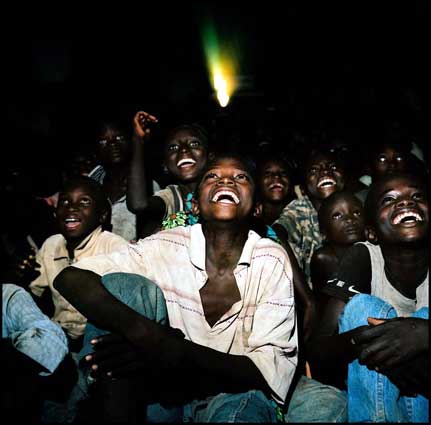
The Cinéma Numérique Ambulant (CNA) is a mobile cinema project operating in Benin, Niger, Mali, and Burkina Faso since 2001. The CNA project shows educational films and African feature films and conducts related debates in rural public settings. The case study discussed in this article is designed to assess the medium-term impact of the CNA project on a rural audience in Niger. It suggests that while there are some limitations, the CNA model has significant potential to convey information in these settings.
The CNA project shows two types of movies, educational and African feature films. The article suggests that along with behaviour-changing communication, the public context in which those films are screened turn the experience into a community one that goes beyond individuals. The African feature films, on the other hand, are embedded in African cinema theory, which has political and social change undertones that could be significant for empowering audiences. The case study focused on a village that had received the CNA 10 times between August 2003 and January 2004. Each show drew an average of about 800 people.
Findings indicate that there was a change in terms of individual knowledge (86.2% of the respondents who went to the screenings said that they learned something new); attitude (88.6% of the same respondents said that these films changed something in their life); and practice (91.8% said that they follow the advice given to them in the films). However, these seemingly positive figures are based on what people say they do, and not on a survey of actual implementation of these practices. Even though these findings should be taken with caution, one could say that there seems to be a better distribution of knowledge about the topics portrayed by the educational films, and greater awareness, because of the screening.
One of the difficulties in assessing impact is explained in the article as follows. While the educational films gave proactive advice as to how to protect oneself against HIV/AIDS (testing or using condoms), most respondents said that they are either faithful or they practice abstinence (21% and 27%, respectively). 19% said they use condoms, 6% said they are careful with cutting objects, and 27% either said that they protect themselves against HIV/AIDS or that they avoid women. However, the researcher observed that, based on the lack of clarity in some responses, it is possible that the educational films could raise awareness but that the individual ultimately chooses his or her implementation strategy according to his or her beliefs, the available options, and the socio-cultural context.
The social function of the CNA gathering seemed to have had a positive, unplanned long-term effect in the form of empowerment and community building that led the village to take an active part in its own development. The respondents mentioned that thanks to the regular gatherings, there was greater solidarity and fraternity among them, which led to the creation of a village association. The president of that association confirmed that the CNA screenings were the starting point for the association. Male and female young people and adults up to 55 years old in the village belong to this association and they meet once a month to discuss their problems. By the time of the survey, they had reportedly managed to build the first and only health care centre in the village as well as two classrooms of the Medersa school.
Despite the limitations of the project, the case study indicates that the CNA seems to have a positive impact and has met its intended objectives, especially with regards to the issues tackled in the educational films. The audience seemed to have understood and made use of the messages diffused in the educational films.
Regarding the African feature films, the author states that they did not quite reach their objectives. The audience perceived them as being pure entertainment and was not able to decode the cinematic text and go beyond the primary meaning of the films. According to the article, the reading of a complex film text is an acquired skill, and it is up to the CNA animators to better explain the hidden meaning beyond the entertaining pictures and actions. If the films were better explained and discussed during the debate phase, audiences would start to reflect on the way they live and on the political situation and the power structures in their own society.
Glocal Times October 2008; and CNA website, February 26 2010.

- Log in to post comments