










































Media Consumption Survey in Ukraine
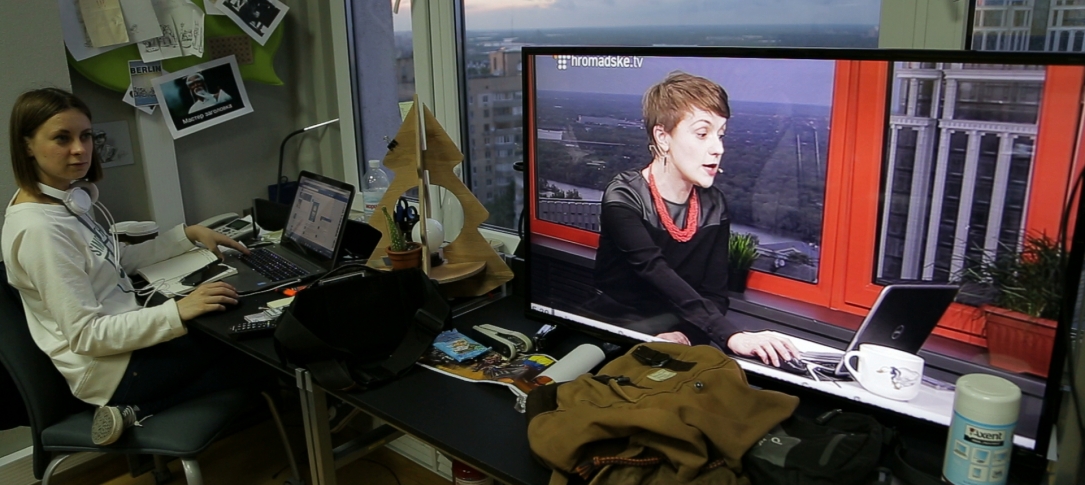
Internews' annual Ukrainian media survey revealed that Ukrainians in 2017 were more critical in their media consumption, demanding better-quality and more reliable content from journalists. The survey of 4,048 people highlights Ukrainians' media habits and measures their trust in media, media literacy, and awareness of Ukraine's reforms process. It was carried out between May and June 2017 by InMind at the request of Internews, as part of the Ukraine Media (U-Media) Program with financial support from the United States Agency for International Development (USAID) (see Related Summaries, below). The report includes comparisons with the past three years, but the U-Media Program has been conducting similar polls for six years. The survey results help Internews partners, mainly media non-governmental organisations (NGOs) and journalists, shape the future of the Ukrainian media landscape and provide Ukrainians with high-quality information.
Internews explains that conflict in the east and Russia's annexation of Crimea has been accompanied by a tidal wave of propaganda and counter-propaganda. Ukrainian audiences also have to pick through various domestic editorial practices such as jeansa stories on radio and TV: pieces that have been paid for by politicians wanting to be portrayed in a positive light. (It's called "jeansa" because the cash ends up in the jeans pockets of participating journalists.) TV is consistently perceived as the main source of these sponsored materials.
The poll revealed a steady drop in the number of Ukrainians consuming Russian media (across all outlets) in Ukraine, a trend seen over the past three years. In 2017, only 1% of respondents said they consume Russian media (down from 4% in 2016), but amongst that group, their trust in Russian media has increased. The poll revealed that out of the 55% of people who know jeansa exists, 63% say they know how to spot a "paid news" report, an increase of 16% from last year. The share of respondents who in a 30-day period read or heard news related to obtaining public officials' declarations of income and assets continued to grow in 2017.
The survey showed a continued strong public demand for reporting on reforms, with more than 50% of respondents reporting that the information they receive about key reforms is "insufficient". Overall, readers and viewers within the 46-65 age group are more likely to consider themselves to "be informed" about the reforms, unlike respondents in the 18-35 age group.
Only 3% of the population declared not using the media at all for news. The poll showed a decline in the popularity and trust of both television and the internet, despite remaining the nation's most loved media. This is true for both national and regional media. Although television remains people's main source of news, it continues to lose its audience (the share of TV viewers decreased by 5% to 77% over the last year). Ukrainians are keen internet users, and 77% surf the web daily. When getting news from the internet, consumers are more likely to use news aggregators like ukr.net. This has been a stable trend over the past three years. The level of satisfaction with national web-based/online media decreased since the previous year.
Perhaps partly due to the restriction of access to a number of popular Russian online sources in Ukraine - VKontakte and Odnoklassniki were banned in Ukraine in May 2017 as part of sanctions and other measures against Russia - the share of the Russian social network audience decreased significantly. Twitter has also lost audience. There has also been a drop in the share of people using these networks for news. Meanwhile, in Ukraine, Facebook saw a 7% growth in membership over the past year.
In addition, the survey found more than 50% of print media readers across all regions enjoy reading regional newspapers, which they prefer to the national print media.
As in previous years, both reliability of the news source and a balance of viewpoints presented in the material remain the key criteria for information credibility.
Internews reports that Ukraine "has become an unlikely laboratory of solutions to defend the truth." For example, the Institute for Mass Information (IMI) conducted a contest called Catch Jeansa to identify fake news for what it was. Ordinary people sent in 1,400 examples, and the spurious content was then debunked with real journalism. The Academy of Ukrainian Press (AUP) has successfully campaigned to build media and information literacy into the national curriculum. Critical thinking and understanding of media structures and content are now fully integrated into a range of social subjects. In January 2017, "UA: First National TV officially became independent of the state and, thus, the country's first public network. Senior broadcasting leaders, not undaunted by the massive change programme they must now lead, also speak of audiences returning to established media institutions with reputable newsgathering operations as an antidote to fake news."
Emails from Internews to The Communication Initiative on September 8 2017 and December 12 2017; and "How Ukraine is tackling its huge fake news problem", by Daniel Bruce, July 10 2017 and "Ukrainians Grow as Critical News Consumers", Internews, September 6 2017 - both accessed on December 13 2017. Image credit: Hromadske TV station in Ukraine. Internews
- Log in to post comments