











































Malaria Action Program for States (MAPS)
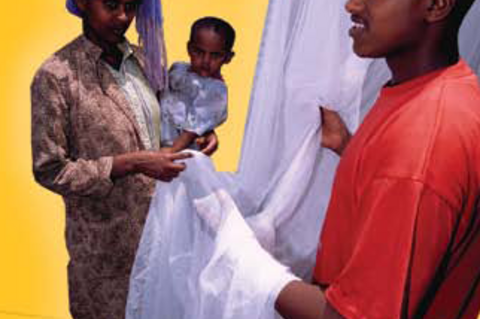
According to MAPS, the Government of Nigeria has adopted a proven malaria control strategy that includes protection against mosquito bites, prompt treatment of malaria cases, and the provision of intermittent preventive therapy (IPT) to pregnant women. However, many structural and behavioural barriers prevent the effective implementation of this national strategy, and the MAPS project is working to help address these in several ways.
Malaria Prevention
MAPS is working with private-sector, national, state, and local-governmental stakeholders to increase the number of long-lasting insecticide treated nets (LLINS) in homes through mass-distribution, "top-up" campaigns, and improved retail networks, as well as ensure correct and consistent use of nets through communications such as radio and community educators. The MAPS project is implementing large-scale communication interventions in two states (Zamfara and Nasarawa) before, during, and after government-supported mass distribution campaigns. MAPS will use interpersonal and mass media channels to promote pre-distribution registration of households, timely pickup of free LLINs at distribution points, and encourage the appropriate and consistent use of LLINs by their owners. MAPS is also tasked with providing technical support to state and local campaign coordination teams to improve LLIN distribution in targeted communities by strengthening procurement systems and the supply chain.
Under the MAPS Project, behaviour change communication will play a key role in motivating families and communities to ensure that pregnant women sleep under LLINs, attend antenatal care (ANC) facilities, and receive and take timely doses of Intermittent Preventive Treatment (IPT). MAPS has noted that that negative perceptions of IPT, inadequate distribution systems, poor health worker training, and low attendance at ANC clinics has resulted in low uptake. MAPS is working to expand the delivery of IPT to pregnant women. This includes increasing the number of women seeking antenatal care and consistent BCC strategies to promote ANC attendance; improving the capacity of ANC facilities to forecast demand, track supply, ensure availability and meet necessary requirements; and implementing training programmes to ensure ANC service providers are able to educate women who come in for regular ANC services.
Malaria Treatment and Diagnosis
The MAPS Project works with policy makers and local health authorities to ensure closer adherence to case management policies. By helping improve knowledge, skills, and performance among both public and private providers, MAPS is supporting programmes to strengthen both pre- and in-service training. MAPS is also collaborating with the Improving Malaria Diagnostics Project to increase the availability of diagnostics commodities and supplies. MAPS is also working with state governments and the National Malaria Control Program (NMCP) to develop and implement a malaria microscopist accreditation scheme, and an external quality assurance programme for microscopy and RDTs, in order to improve post-testing prescribing practices. These efforts will be reinforced by patient-focused communication designed to build demand for diagnostic evidence before treatment.
Affecting Positive Behaviour Change
Using the Social and Behavior Change Communication (SBCC) Framework of the Academy for Educational Development (AED), the MAPS project aims to achieve improvement in the adoption of appropriate prevention and treatment behaviours, including:
- Encouraging recipients to hang LLINs in the home after distribution campaigns
- Promoting the timely replacement of worn-out nets
- Increasing the use of LLINs by pregnant women and children at all times
- Increasing the use of LLINs by everyone during malaria transmission season
- Encouraging treatment-seeking upon recognition of malaria symptoms
- Promoting adherence to artemisinin-based combination therapies (ACT)s
- Discouraging the use of alternative treatments such as monotherapies
- Increasing attendance at ANC clinics and the use of IPT by pregnant women
- Increasing demand for parasitological diagnosis prior to treatment.
Capacity Building in the Public Sector
Through assessments, capacity-building, integrated supportive supervision and regular progress reviews, MAPS is helping State officials acquire a better understanding of relevant activities in their jurisdictions, and work toward programme harmonisation and improved resource allocation. Improving monitoring and evaluation capacity is also a key priority area for MAPS. By the end of the project, decision makers will have access to an improved health management information system and will have received extensive material support and training, in data collection, reporting, and analysis.
Improved Monitoring and Evaluation
FHI 360's GATHERdata cellphone - based data collection and reporting technology will be implemented in at least one state. The system has a wide range of applications, from clinical case management to the tracking of commodities throughout the supply chain. An open-source development, GATHERdata helps reduce cost-related barriers that make information technology out-of-reach for developing country institutions.
Malaria, Maternal Health
Malaria is a major cause of morbidity and mortality in Nigeria, directly contributing to poverty, low productivity, and reduced school attendance. The mosquito-borne illness causes over 100 million clinical cases, and is responsible for nearly 300,000 deaths in children under the age of five, as well as 11 percent of maternal mortality cases reported each year.
United States Agency for International Development (USAID), President’s Malaria Initiative, FHI 360, Health Partners International, Grid Consulting, Malaria Consortium
FHI 360 website and Malaria Action Program for States (MAPS) Fact Sheet [PDF] on January 26 2012.
- Log in to post comments