










































Level and Factors Associated with Uptake of Human Papillomavirus Infection Vaccine among Female Adolescents in Lira District, Uganda
Makerere University (Kisaakye, Namakula, Kisakye, Babirye); African Field Epidemiology Network (Kihembo, Kisakye); Global Public Health Solutions (Nsubuga)
In Uganda, the age-standardised incidence rate of cervical cancer, yet many girls and women remain without routine human papillomavirus (HPV) vaccination and cervical cancer screenings because of lack of awareness and limited availability of vaccination and screening programmes. This study assessed the level and the factors associated with uptake of HPV vaccine by female adolescent girls in Lira district, which is one of the first 12 districts where HPV vaccination was piloted in Uganda in 2012.
A mixed methods approach was employed using a survey of 460 female adolescents aged 12-17 years, as well as 20 in-depth interviews (5 from each category of adolescents who had not received the vaccine and who had received 1, 2, and 3 doses, respectively). The researchers also conducted 5 key informant interviews with district health team members. Uptake was defined as completing 3 doses of the vaccine as per the recommended schedule.
More than half (57.10%, 265/460) of the respondents had heard about the HPV vaccine. Half (50.87%, 234/460) of the respondents knew at least one benefit of receiving the HPV vaccine. More than half of the respondents (61.30%, 282/460) did not know the recommended doses of the HPV vaccine, and the majority (81.09%, 373/460) of respondents did not know the recommended intervals between the HPV vaccine doses. More than half (53.70%, 247/460) of the respondents did not know the targeted age group for the HPV vaccine, and only 51.74% (238/460) of the respondents knew where to access the HPV vaccines. Overall, more than half of the respondents (56.09%, 258/460) had poor knowledge about the HPV vaccine.
The majority 70% (322/460) of the respondents agreed that HPV infections cause cervical cancer. A large proportion (88.7%, 408/460) of the respondents agreed that it is important for young adolescents to receive the HPV vaccine. Most (72.17%, 332/460) of the respondents agreed that the HPV vaccine is effective in protecting against cervical cancer. More than half (55.22%, 254/460) of the respondents agreed that the HPV vaccine has no side effects. Overall, the majority (83.48%, 384/460) of respondents had positive attitudes towards the HPV vaccine.
Of the 460 respondents, 49.6%, (228/460) had not received any dose of HPV vaccine, and only 17.6% (81/460) had completed all 3 doses. (This level of uptake is well below the targeted coverage of 80% required to eliminate common serotypes (i.e., 16 and 18) from targeted populations.) The factors associated with uptake of HPV vaccine were: attaining ordinary level of education (adjusted prevalence ratio (aPR) 1.48, 95% confidence interval (CI) 1.11-1.97), positive attitude towards the vaccine (aPR 3.46, 95% CI 1.70-7.02), receiving vaccine doses from different vaccination sites (aPR 1.59, 95% CI 1.10-2.28), and encouragement from a health worker (aPR 1.55, 95% CI 1.15-2.11) or village health team (VHT) (aPR 3.47, 95% CI 1.50-8.02) to go for the vaccine. Other facors associated with uptake of HPV vaccine included: the existence of community outreach (aPR 1.47, 95% CI 1.02-2.12), availability of vaccines at vaccination sites (aPR 4.84, 95% CI 2.90-8.08), and receiving full information about the vaccine at the vaccination site (aPR 1.90, 95% CI 1.26-2.85).
Reflecting on the findings, the researchers note that the success of HPV vaccine delivery depends on high community awareness through information, education, and communication (IEC) activities as well as counselling. Community health workers can be agents of behavioural change and can play a key role in the extending formal health services. Therefore, engaging community health workers/VHTs in community HPV mobilisation and sensitisation activities can increase acceptability of the HPV vaccine by adolescents and their parents, since they are more trusted by the community members. Furthermore, the finding that there was a 47% higher prevalence of HPV vaccine uptake among adolescents who reported that HPV vaccine community outreach was conducted in their residences is in agreement with results from a project by PATH (2011) in Nakasongola district, Uganda. There, parents reported they were initially reluctant to have their daughters vaccinated because they did not know about cervical cancer or understand the purpose of the HPV vaccines; as they learned more from the community outreach, they became less reluctant.
In conclusion, HPV vaccine uptake was low in Lira district. The researchers suggest that efforts to improve uptake of HPV vaccine should focus on: a consistent supply of vaccines at the vaccination sites, health education aimed at creating positive attitudes towards the vaccine, sensitisation of adolescents about the vaccine, and community outreach.
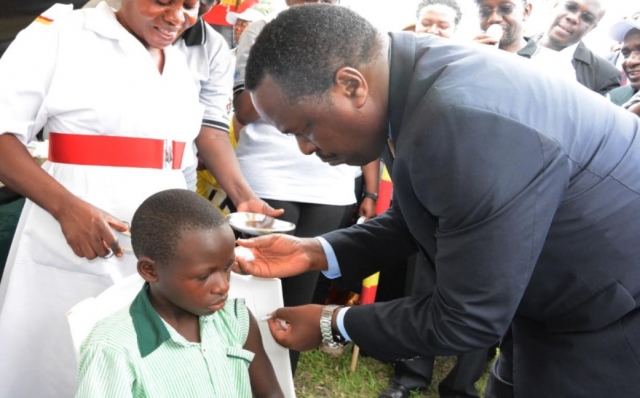
The Pan African Medical Journal. 2018;31:184. doi:10.11604/pamj.2018.31.184.14801. Image credit: World Health Organization Uganda
- Log in to post comments