










































Lessons Learned from the Polio Eradication Initiative in the Democratic Republic of Congo and Ethiopia: Analysis of Implementation Barriers and Strategies
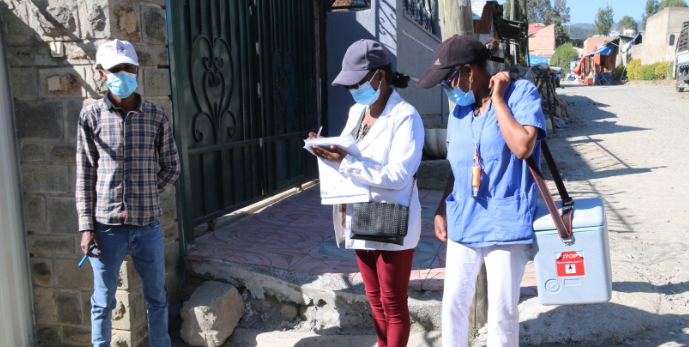
Addis Ababa University (Deressa, Seme); Kinshasa School of Public Health (Kayembe, Mafuta); Johns Hopkins Bloomberg School of Public Health (Neel, Alonge)
"Strategies to strengthen planning, promote accountability and learning, adapt programmatic activities, and engage with local communities were crucial in mitigating...barriers..."
This paper focuses on implementation of polio eradication activities in the Democratic Republic of Congo (DRC) and Ethiopia, which are classified by the Global Polio Eradication Initiative (GPEI) as "outbreak" countries: They have halted indigenous wild poliovirus (WPV) but are experiencing reinfection as a result of circulating vaccine-derived poliovirus (cVDPV). With the hope of illuminating key lessons learned that can inform ongoing polio eradication strategy and future health programmes, the paper describes and compares barriers to implementation, implementation strategies, and intended and unintended impacts of the GPEI within and across the 2 countries. This summary focuses on the communication elements highlighted in the analysis, which is part of a multi-phase implementation science project, the Synthesis and Translation of Research and Innovations in Polio Eradication (STRIPE) project (see Related Summaries, below).
As detailed here, the DRC and Ethiopia joined the GPEI in 1988 and 1996, respectively, and implemented polio eradication using the standard 4-pronged polio eradication strategy recommended by the GPEI (routine immunisation, supplementary immunisation activities (SIAs), mop-up campaigns in high-risk districts, and surveillance). The polio programme has a similar architecture in both countries, even as operational realities vary. For example, in addition to global partners (e.g., the World Health Organization (WHO) and United Nations International Children's Emergency Fund, or UNICEF), the CORE Group Polio Project, a network of non-governmental organisations (NGOs), has played a key role in implementing eradication activities among hard-to-reach populations in Ethiopia, deploying more than 4,000 community volunteer surveillance focal persons (CVSFPs) at the village level to conduct house-to-house case detection and reporting of acute flaccid paralysis (AFP); in the DRC, NGOs are present but have not been engaged as systematically.
The STRIPE project used a sequential, explanatory mixed-methods design to map tacit knowledge, derived from the polio eradication experience from 1988 to 2019. Quantitative surveys were conducted from November-December 2018 in Ethiopia, followed by key informant interviews (KIIs) from December-January 2019. In the DRC, surveys were conducted from August 2018-March 2019, with KIIs conducted from January-March 2019.
Selected findings related to implementation barriers:
- Barriers related to the process of conducting polio programme activities: The majority were related to execution (42.08% in the DRC and 31.17% in Ethiopia), followed by planning (21.51% and 25.97%, respectively). Analysis of the KIIs suggest these processes were directly impacted by barriers at other levels (see below) and are shaped by the characteristics of the individual implementer - e.g., leadership, vision, preparedness, motivations, and attitude. A frontline actor in Ethiopia, said: "There are situations at which the activity was become monotonous for us....To speak truly there was time when one or two person vaccinates large kebele. Within this there was situation in which some children might be missed from vaccination."
- Environmental barriers: Geographic inaccessibility emerged as a key challenge for polio eradication and health delivery equity in both the DRC and Ethiopia, compounded by broader economic and infrastructural challenges that were shaped by the socio-political contexts. For example, conflicts like the Kamwina Nsapu rebellion in DRC's Kasaï region raised issues of mistrust and challenged community acceptance of government-delivered health programmes.
- Health system barriers: For example, the DRC and Ethiopia both encountered challenges related to health worker shortages, limited health worker capacity, high turnover, and in some instances, lack of financial motivation and lack of supervision. In both settings, implementation readiness was partially dependent on the nature and quality of communications, capacity for change, and receptivity to the intervention.
- Community barriers: Acceptability of polio vaccination was generally high in both settings, and social resistance was isolated to small geographical and cultural groups. Still, from the implementer's perspective, this was an outsized barrier to implementation because it was exceedingly difficult to address. Reasons for resistance across contexts were wide-ranging, reflecting how appropriate the community deemed the intervention (e.g., preference for injectable over oral vaccines in Ethiopia) and how the population perceived the implementers (e.g., mistrust of government in the DRC). In both settings, respondents attributed low demand to community fatigue given repeated campaigns and, among some community members, concern that health workers' repeated visits were motivated by self-enrichment, as each visit was an opportunity to generate benefits.
With regard to findings on implementation strategies, environmental-level barriers were addressed, for example, by drawing on peacekeeping troops to deliver vaccines in some insecure areas. This action reflected a larger strategy of engagement and capacity-building, including creating multidisciplinary partnerships and coalitions and leveraging existing collaborations and networks. At the community level, efforts to improve vaccine demand among hesitant communities were found to be most effective where implementers were able to engage locally relevant stakeholders who could understand local norms, anticipate issues, and facilitate community acceptance through ongoing and responsive communication.
Deployment of social mobilisation tactics played a key role in both settings. Specific implementation strategies cited were identifying and preparing champions and early adopters, involving stakeholders in the implementation effort through "health committees", and increasing awareness among the population via community education and sensitisation. In the DRC, respondents noted the importance of advocacy at different levels of the health system, including among local and religious leaders who could encourage immunisation and facilitate delivery efforts. Executing these strategies required extensive, ongoing investment, as did ensuring the health system could adequately support programme activities.
The paper looks at intended and unintended consequences of participation in the GPEI for both DRC and Ethiopia, such as the fact that prioritisation of polio activities and the allocation of financial, human, and time resources that followed came at a cost to routine immunisation. It also created some fissures with communities, who distrusted frequent campaigns.
A few key recommendations for future health initiatives:
- Approach strategy and programmatic development carefully, using multidisciplinary teams within global institutions to conduct systematic assessments to map contextual challenges, evaluate the political economy of the implementing contexts, and determine programme readiness. Socio-anthropological studies and health systems assessments can help detect potential implementation barriers - e.g., issues related to community mistrust, local and national politics, and governance and accountability. Incorporating these factors into global planning processes will be critical.
- Work to leverage programme resources to improve health systems rather than draw internal resources away from other health priorities.
- In seeking to reach consistently inaccessible communities, consider strategies to improve enumeration, microplanning, data utilisation, communication, and outreach.
BMC Public Health 20, 1807 (2020). https://doi.org/10.1186/s12889-020-09879-9. Image credit: @ WHO/Loza Mesfin
- Log in to post comments