










































Knowledge, Attitudes and Practices towards Ebola Virus Disease among Participants in an Ebola Vaccine Trial in Dakar, Senegal
Fann National University Hospital (Lakhe, Mbaye, Diallo, Ka, Deguenonvo, Ndour, Soumare, Seydi); Cheikh Anta Diop University (Sylla); Gaston Berger University (Badiane); Alioune Diop University (Diop)
The 2014 Ebola Virus Disease (EVD) outbreak in West Africa was the trigger to mobilise efforts to promptly obtain a safe and effective vaccine. The objectives of this survey, which was conducted at one of the two Senegalese sites of an Ebola vaccine trial, were to assess the EVD-related knowledge, attitudes, and practices of participants and to determine the association of key sociodemographic characteristics with knowledge of transmission mode, reservoir, stigma, and handwashing behaviour.
Of the 250 subjects at the Infectious and Tropical Diseases Clinic (SMIT) of Fann Hospital who were included in this study:
- 98.8% and 94% reported they first learned about EVD through the TV and radio, respectively. The next most common sources of information about Ebola were interpersonal communication with family or friends (84.4%) and neighbours (79.2%).
- 52 interviewees (60.8%) had knowledge about EVD. The majority of the respondents (88.8%) had knowledge regarding Ebola signs and symptoms.
- For the majority of respondents (92.8%), the role of vaccine was to prevent illness. Less than half (45.6%) knew that another role was to reduce the severity of diseases. For approximately two-thirds of the participants, immunisation was without any risk, and 88% thought that Ebola vaccine was already available. The main motivation for being part of this study was confidence in doctors (79.6%) and the example given by the medical profession (75.6%). Only 2% of participants admitted that their motivation was financial.
- Nearly half of the participants had stigmatising attitudes (49.2%); for example, 157 (62.8%) would avoid citizens from countries affected by EVD whether they are ill or not, and 79 respondents stopped consuming products from these countries. Stigmatisation was higher in female (54.1%) than in male (42.7%) respondents, as well as in the 26-36 age group, those who were married (55.9%), and those with no education (57.1%), but the difference was not statistically significant. Stigmatisation was significantly higher in those expressing fear (58.1%; p=0.000) and in respondents living in suburban and rural areas (52.4; p=0.020). This latter finding is paradoxical, since this same group (those not living in urban areas) had better knowledge of transmission mode of the disease.
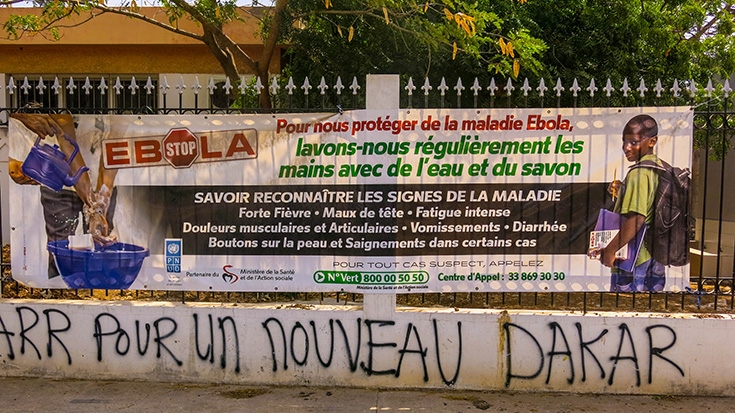
- Handwashing was known nearly by everyone who took part in the study as a means of preventing the spread of of Ebola, yet less than 75% have changed their behaviour by increasing handwashing. At the time, an advertising campaign was broadcast through television and radio on EVD symptoms and emphasising hand-washing techniques. But studies have showed that communicating knowledge about why people should wash their hands with soap is often insufficient to induce behavioural changes in practice, especially in situations where alternative health priorities exist. Also, in the study, fear of death was significantly related to increase of handwashing. Research has found that, when fear is the main factor of a behaviour change, this cannot be sustained.
Among the takeaways of this study are that: Classical media play important roles in increasing awareness of EVD in Senegal; stigmatisation is persistent and is associated significantly with geographic origin; mass media campaigns should continue to ensure that handwashing behaviour change is sustained; and, to further ensure the acceptability of the Ebola virus vaccine, a campaign using medical figures could play a key role.
Journal of Tropical Diseases 2018, 6:4 DOI: 10.4172/2329-891X.1000276. Image credit: World Bank Group
- Log in to post comments