










































Journalism Is a Public Good: World Trends in Freedom of Expression and Media Development - Global Report 2021/2022
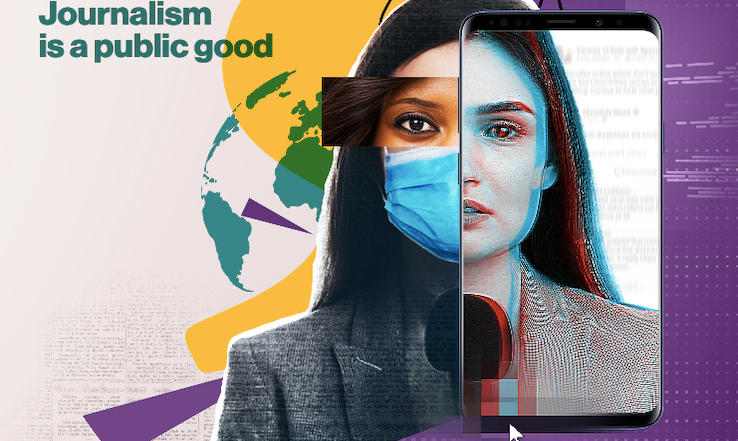
"The benefits of a free, pluralistic, and independent press are widely recognized and valued as a necessary condition of an open society and healthy democracy, as well as being a positive factor for sustainable development."
This edition of the United Nations Educational, Scientific and Cultural Organization (UNESCO)'s flagship series of reports on World Trends in Freedom of Expression and Media Development focuses on understanding the role of journalism as a public good. It discusses trends in media freedom, pluralism, and independence around the world, the importance of media viability in ensuring a free press that is able to serve the interests of the public, and trends around the safety of journalists. The findings are grounded in data-driven analysis, conducted by UNESCO in partnership with the Data-Pop Alliance and supplemented by research by Economist Impact. The report is designed to serve as a resource for UNESCO Member States, international organisations, civil society, media, and academics.
The report begins with a chapter that focuses on understanding the role of journalism as a public good and unpacks the existential challenges facing news media. "For journalism to fulfil its mission as a public good and essential service, media must be not only independent, but also economically viable. If the viability of media is under constant threat, journalism as distinctive communication in the public interest cannot be sustainable." The report then examines global trends in media freedom, media pluralism, and media independence over the past five years, followed by a chapter on trends in the safety of journalists. The issues around mis- and disinformation and the related challenge of internet transparency are woven into all of these sections, and particularly tackled in relation to independence. The final chapter of the report reflects on the use, impact, and need to improve data collection on freedom of expression and media development. In each chapter, the report outlines good practice and measures taken by UNESCO to tackle the issue at hand - be it around media freedom, pluralism, and independence; media viability; the safety of journalists; or data-gathering. All chapters also offer a list of recommendations for the way forward.
The following are some of the key findings highlighted in the report:
- Press freedom
- Press freedom continues its downward trend across the globe. Approximately 85% of the world's population experienced a decline in press freedom in their country over the past five years, according to analysis based on data from the Varieties of Democracy (V-Dem) Institute. Measures responding to the COVID-19 pandemic were also frequently used to justify violations of press freedom.
- New laws and policies restrict freedom of expression online. Dozens of laws have been adopted or amended since 2016 that contain overly vague language or disproportionate punishments that threaten online freedom of expression. In addition, in the last five years, government requests for content removal on major internet platforms have doubled.
- Viability of the media in a digital world
- Audiences and revenue continue to move online, placing news media's traditional business models in danger. The number of social media users worldwide increased from 2.3 billion in 2016 to 4.2 billion in 2021, and advertising revenues have shifted rapidly towards internet companies and away from news outlets. Google and Meta now receive approximately half of all global digital advertising spending, while global newspaper advertising revenue dropped by half in the last five years.
- In the midst of the COVID-19 pandemic, trustworthy, independent media proved itself to be a lifesaving public good. But it is under systemic economic threat and needs support. The impact of the pandemic worsened the already fragile viability of news outlets, which collectively constitute a pluralistic and independent media sector. New policies and measures are urgently needed to ensure that journalism can continue to function as a public good - these include public financing for trusted news outlets, enhanced support for genuine public service media, and a redoubling of donor aid and philanthropic investments in news production.
- A deluge of mis- and disinformation has contributed to years of declining trust in media worldwide. The growing challenge of false and misleading content was brought into sharp relief during the COVID-19 pandemic, so much so as to be dubbed a "disinfodemic". At the same time, according to several reports, trust in media and information sources has continued to decline over the past five years.
- Amid controversies, recent years have seen mounting calls to end the opacity of internet companies' moderation and curation of content. Greater transparency about their operations would open these entities up to public scrutiny and greater accountability. Both independent reports and high-profile whistleblowers have flagged the need for greater transparency across the board, especially regarding the companies' governance and accountability around data holdings and privacy, fact-checking, and community standards and implementation thereof, including moderation of hate speech and mis- and disinformation.
- Gender in the media
- Progress in closing the gender gap in newsrooms, in bylines, and in the news itself has largely stagnated. Women continue to be underrepresented at leadership levels in news organisations and on "hard news" beats like politics, while both qualitative and quantitative studies suggest persistent biases in women's representation in the news and the marginalisation of women as expert sources. During the COVID-19 pandemic, only 27% of health specialists quoted in the media were women, despite the fact that women make up approximately half of health specialists worldwide.
- Safety of journalists
- Journalism remains a deadly profession; nine times out of ten, the murder of a journalist is unresolved. From 2016 to the end of 2021, UNESCO recorded 455 journalists killed for their work or while on the job. Though this figure shows slight improvement compared to the previous five years, at the same time, just 13% of cases recorded by UNESCO since 2006 have been judicially resolved, threatening a continued cycle of violence.
- Other threats against journalists, online and off-line, continue to grow. Journalist imprisonment is at record highs, while online violence and harassment spurs self-censorship and, in some cases, physical attacks. Those threats inordinately affect women journalists and those who represent minority groups: 73% of women journalists responding to a survey by UNESCO and the International Center for Journalists had experienced online violence in the course of their work.
- Closing the data gap
- The burgeoning data ecosystem offers the chance to improve our understanding of and support for the media sector and freedom of expression. However, in the countries and communities where journalism is most at risk, the health of the news system on issues like ownership, pluralism, independence, and viability often remains a black box. Using data to inform policies and solutions must first overcome significant gaps in availability, accessibility, utilisation, and stability.
The conclusion looks into the future at how to meet the challenges facing freedom of expression and media development, and delivering on the promise of the original Windhoek Declaration and Windhoek+30, a roadmap for the future outlining principles that were endorsed by UNESCO Member States in 2021. In brief, the report cites the following measures that are required to ensure that journalism can continue to function as a necessary public good: "new regulations for social media transparency, independent state subsidies to trustworthy news outlets, greater support for genuine public service media, increased media development assistance, and ramped up philanthropic investments. All of these need guardrails and vigilance to protect standards of editorial independence and freedom of expression. For their part, journalists have to uphold the integrity of the profession in the face of pressure, and media outlets need to do better at digital innovation."
Click here to view the highlights from this report (available in French, Spanish, Arabic, Russian and Portuguese).
Click here to access "Threats that silence: trends in the safety of journalists: insights discussion paper", an earlier version of the chapter on journalism safety that was released in 2021. It is available in French, Spanish, Arabic, Russian, and Portuguese.
UNESCO website accessed on March 18 2022. Image credit: © Shutterstock / New Africa
- Log in to post comments