











































Integrating Malaria Education into Primary School Activities
Malaria Consortium
"When the burden of malaria is reduced, children can attend school more regularly, learn more effectively and develop better life skills. Ensuring that children learn about malaria prevention practices will not only help to reduce malaria but also contribute to disease control in their communities."
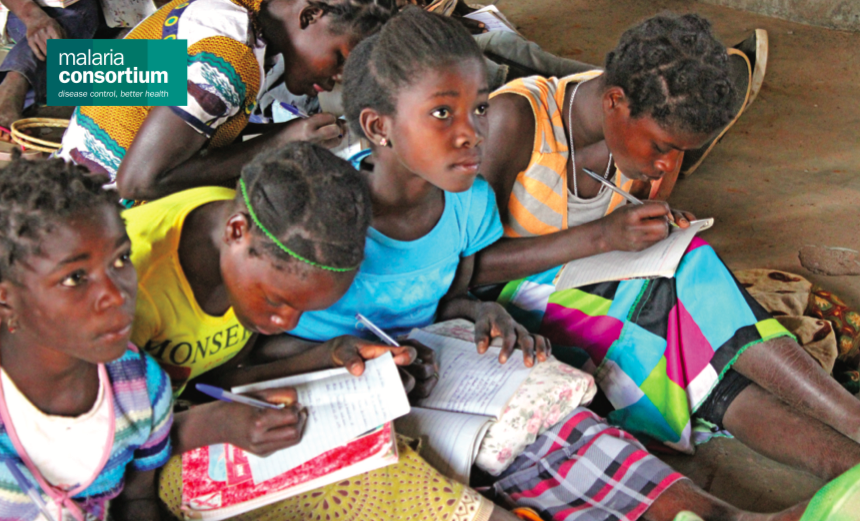
This learning brief looks at how malaria sessions were integrated into primary school classroom activities in Mozambique in order to provide children with basic knowledge around malaria transmission, symptoms, prevention, and care-seeking. The intervention formed part of the Malaria Prevention and Control Project, implemented by Malaria Consortium, which seeks to support the efforts of the Mozambican government to reduce malaria throughout the country through scale-up of prevention and control efforts with community involvement. The learning brief highlights lessons learned, challenges, and next steps to maximise the impact and sustainability of the project's work with primary schools.
The intervention was designed to enrich the existing school health education curriculum package with malaria education activities. The objectives included providing teacher training on how to conduct education activities in the classroom, as well as reaching primary school children with interactive sessions to acquire basic knowledge on malaria transmission, signs and symptoms, and prevention methods, as well as the importance of timely care-seeking.
In order to achieve its objectives, Malaria Consortium developed a package of training and educational resources to assist teachers. These included a teacher training manual, a flipchart, and lesson plans. Teachers used the flipchart to guide interactive discussions to stimulate students' interest in the topics and to encourage them to contribute their own experiences to enrich the sessions. The lesson plans supported teachers in their exploration of the topics and were adapted to suit the paedagogical methods and techniques used by the teachers in the classroom.
The intervention used a decentralised approach to working with government education departments in order to strengthen implementation and awareness of the strategy at local level. In total, 1,682 teachers were trained in 667 schools in the provinces of Nampula and Niassa. Following a one-day training, they received quarterly supervision visits and support from the project field officers. Approximately 31,289 students were reached on a quarterly basis.
The following are some of the results and lessons learned:
- An engaging approach for the education sector - The project's partnership with the Provincial Educational Directorate facilitated a good working relationship between the District Educational Services and the project teams. Overall, district school health technicians participated actively in the planning and selection of schools, and teachers also participated actively, including developing weekly activity plans and reporting on monthly progress and activities.
- Increased knowledge among teachers and students - The results of pre- and post-tests administered during teacher training showed a significant increase in knowledge. For example, the percentage of teachers who knew that malaria is transmitted by mosquitoes increased from 45% to 100%. Research also showed that the knowledge of students increased and that they shared information with friends and family.
- Reduction in school absenteeism - Although this project was not designed specifically to collect data on the impact of malaria prevention activities in reducing school absenteeism, teachers nevertheless reported a reduction in malaria-based absenteeism.
- Challenges - The main challenges were around institutionalising malaria education in schools. The project focused mainly on supporting district-level education authorities to monitor and supervise the schools, and did not allocate resources to school health departments to follow-up and mentor teachers. This resulted in challenges in ownership of the programme. In addition, due to limited paedagogical resources, teachers often perceived health education as an additional non-compulsory activity and therefore not part of their role. The mobility of teachers and lack of systematic handover also meant that there was sometimes no continuity of activities. Limited reporting and coordination mechanisms for integrating teachers and district education authorities also meant that engagement was sometimes limited.
In terms of next steps, the learning brief states that: "In order to maximise the impact and ensure the sustainability of this approach, it is essential to strengthen the ownership of malaria educational activities by the education sector at all levels. It is essential to place the District Education Services at the forefront of this intervention, giving them responsibility for the monitoring and support of trained teachers, and allocating them the necessary resources to conduct regular supervision visits of the school health component. This will be fundamental to change the perception held by some teachers that health education interventions are not part of their role, and will help to ensure that teachers contribute to the expansion of the programme to new schools and teachers."
Click here to download the English version of this brief in PDF format.
Click here to download the Portuguese version of this brief in PDF format.
Malaria Consortium website, November 21 2019.
- Log in to post comments