










































Time to read
less than1 minute
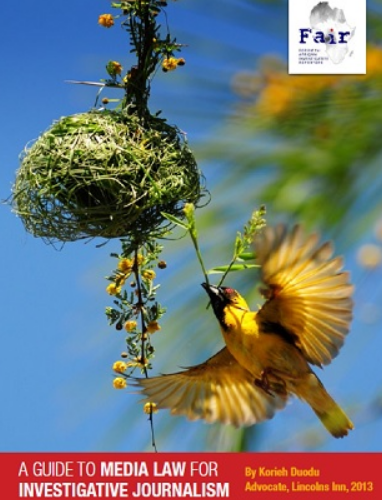
Guide to Media Law for Investigative Journalism
Image
SummaryText
"Doing investigative journalism does not make one many friends amongst the powers-that-be, and the threat most publishing houses fear is a lawsuit for damages by powerful individuals, companies, or institutions."
Produced by the Forum for African Investigative Reporters (FAIR) and the University of Kwa-Zulu Natal’s Center for Civil Society via the Environmental Justice Trade and Liabilities project (EJOLT), this legal guide offers general common law guidance for journalists and editors based on English law, to which law in most English-speaking Commonwealth countries corresponds.
According to the publication, the advice given in this guide is not intended to be definitive, and it is important that legal advice is taken on specific proposed articles. What this document seeks to achieve is to be able to put readers in a position where they can identify "red flags" - those allegations and circumstances which require legal advice, since they may give rise to a successful claim in the event of publication. The guide explains such concepts as defamation, a generic term for libel, slander, and malicious falsehood. It also discusses public interest and fair comment defences, as well as issues such as possible contempt of court, which results from publishing material that creates a "substantial risk of serious prejudice" or impediment to active legal proceedings.
According to the publication, the advice given in this guide is not intended to be definitive, and it is important that legal advice is taken on specific proposed articles. What this document seeks to achieve is to be able to put readers in a position where they can identify "red flags" - those allegations and circumstances which require legal advice, since they may give rise to a successful claim in the event of publication. The guide explains such concepts as defamation, a generic term for libel, slander, and malicious falsehood. It also discusses public interest and fair comment defences, as well as issues such as possible contempt of court, which results from publishing material that creates a "substantial risk of serious prejudice" or impediment to active legal proceedings.
Languages
English
Number of Pages
16
Source
Forum for African Investigative Reporters website on September 5 2013.
- Log in to post comments