











































Global Alliance for Media Innovation
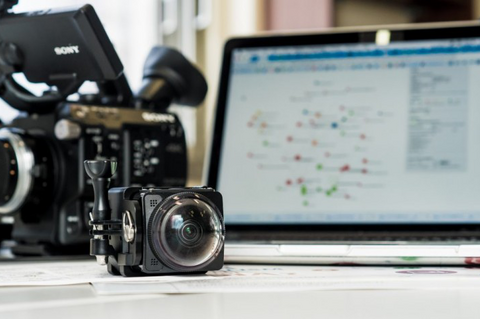
The Global Alliance for Media Innovation (GAMI) is an initiative to create a global, multi-stakeholder network to meet the need for a sustainable innovation ecosystem for the news media industry. Launched by the World Association of News Publishers (WAN-IFRA) in 2014, GAMI's mission is to connect research, new technologies, and the media industry by working together with a variety of stakeholders in the academic, journalism, and technology fields. It does so by finding out what research and innovation efforts are in the works that bring potential value to the news media industry, connecting the various efforts to partners and resources so they might reach their potential, and sharing the results of those initiatives with the wider news media industry.
The Alliance was formed because its members believe that the media industry requires new technologies, products, and business models. "We see the future of news media being invented right now, all around the globe, by hundreds of different companies, universities and entrepreneurs. But their separate efforts, research, prototypes and rollouts receive inconsistent attention and analysis. Many good ideas fail simply due to a lack of development support, while others get hyped beyond their real value. Vital lessons and examples are not being widely enough or rapidly enough disseminated."
Since its inception, GAMI has pursued two main activities:
- Networking and knowledge sharing: GAMI serves as a catalyst and a curator for emerging technology and service providers and research labs with growth potential in the news media sector. It keeps the news publishing international community up to date about trends and actionable research programmes and promotes the adoption of innovative solutions by media companies.
- Applied research and innovation: To harness the potential value of applied research and innovation to the news media industry, WAN-IFRA builds research teams to collaborate on national and international applied research and innovation calls. GAMI provides news organisations with services to access international pre-competitive, multi-disciplinary research and innovation programmes initiated by private and public funding partners - in particular, the European Union (EU)-funded Horizon 2020 research and development (R&D) framework.
Specifically, GAMI's work has focused on the following main topic areas, which it considers relevant to the future of news media companies, news professionals, and news consumers:
- New platforms/distribution channels: mobility, wear-ability, the Internet of Things, or IoT (smart cities, connected homes, connected cars, connected devices);
- New forms of narrative and storytelling: immersive content, virtual reality (VR), 360° video, social media;
- Data exploration: big data, data visualisation, automatic generation of content;
- Technology enablers: privacy, security; and
- Multiple media convergence: interoperability and standards.
The following are some of the research and innovation projects that GAMI has been, or is currently, involved in:
- Media Innovation Mapping (May 2016 - Ongoing): This research project seeks to understand innovation and the organisational structures that exist with news publishers, content producers, research institutions, and clusters and technology providers. It is a collaboration between GAMI, the Media Innovation Studio at UCLan, Ubilab at the Pontifical Catholic University of Rio Grande do Sul (PUCRS) in Brazil, Norway's NxtMedia innovation cluster, and Stibo Accelerator based in Denmark. The project "maps" innovation labs, clusters, and a selection of projects globally to garner insights into factors such as how the media labs are structured, why they were created, what type of methods they use to innovate, their products and services, and stories of their successes and failures. Click here for more information.
- Stars4Media (November 2019 - November 2020): This is an exchange and training programme for young media professionals ("rising stars") between cooperating media organisations that aims to accelerate media innovation and cross-border coverage in Europe. The purpose of Stars4Media is to test ideas, produce content, and develop initiatives around four strategic themes: constructive journalism, fact-checking, data journalism, and artificial intelligence and translation technologies. One focus has been on innovative solutions for journalism around the media response to the coronavirus, trust in media, and data for media. The five most outstanding initiatives that emerged out of this programme were announced in October 2020. Click here to find out more about the finalists and shortlisted initiatives.
- QUEST (QUality and Effectiveness in Science and Technology communication) (February 2019 - February 2021): During this two-year project, researchers and experts from the QUEST consortium are investigating science communication in three strands - journalism, social media, and museums - through three focus areas: climate change, vaccines, and artificial intelligence. Click here for more information.
- CPN (Content Personalisation Network) Project (September 2017 - February 2020): Europe's large and small media companies are culturally diverse, and millions of news content items have to find their way to millions of users. The CPN project sought to tackle the challenge by developing a new approach to personalisation of digital content, allowing media companies of various sizes to better direct content to media consumers. CPN was designed to enable a better delivery of news, insights, and information in the right format at the right time and in the right context to each media consumer. The project combined user data with content metadata through the use of advanced mapping technology in order to create better information distribution, while at the same time respecting user privacy. Click here for more information.
- INJECT (INnovating Journalism: Enhanced Creativity Tools) (January 2017 - June 2018): In 2017, GAMI joined the INJECT consortium, consisting of 14 European partners from media, academia, startups, and technology. The INJECT consortium worked to develop an inspiration tool to help improve the creativity and productivity of journalists in the digital world. It leveraged search algorithms that bring to light articles, individuals, and visuals related to stories to trigger new and original ideas. The role of GAMI was to connect these new techniques to its network of media professionals that could benefit from it. Click here for more information on the INJECT project.
For more information, visit the GAMI website.
Media Development
The core of GAMI is composed of pioneers, media organisations (publishers and suppliers), and academic research labs dealing with technology transfer and research programmes in Europe (Norway, Finland, Sweden, Denmark, United Kingdom, or UK), the Americas (Brazil, United States (US), Canada), and Southeast Asia (Singapore, Japan).
GAMI website on November 4 2020. Image credit: GAMI
- Log in to post comments