











































Evaluation of the Rural Response System Intervention to Prevent Violence against Women: Findings from a Community-Randomised Controlled Trial in the Central Region of Ghana
University of Ghana (Alangea, Addo-Lartey, Adanu); South African Medical Research Council (Chirwa, Sikweyiya, Jewkes); Gender Studies and Human Rights Documentation Centre (Coker-Appiah)
"[T]he Rural Response System (RRS) intervention model has apparently had an impact on experience and perpetration of violence in rural communities in Central Ghana."
Even with the high prevalence and the negative impact of violence against women (VAW), there are relatively few interventions proven to reduce VAW. In Ghana, the Gender Studies and Human Rights Documentation Centre (GSHRDC) designed the Rural Response System (RRS) intervention in 2002 to reduce violence against women and girls (VAWG). As part of a global search for interventions that work to reduce VAWG, the RRS was tested in four districts of the Central Region of Ghana. This paper shares the results.
Given the complex interplay of societal and institutional factors in intimate partner violence (IPV) that operate at the individual, interpersonal, community, and societal levels, the RRS works with a broad range of stakeholders within the community in an effort to: increase knowledge on VAW; change individual and community attitudes towards gender equality and violence; positively change social and gender norms and behaviours that perpetuate gender inequality and VAW; provide counseling and support to couples affected by IPV and other victims of VAW, and assist victims to seek redress from state institutions; develop a referral system between the community-based response systems and state agencies to encourage a consistent and coordinated response; and strengthen appropriate traditional systems of resolution of VAW.
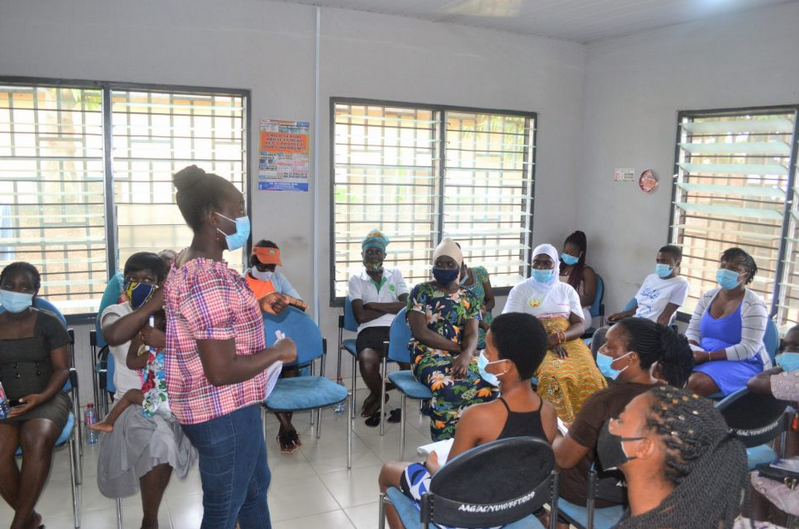
RRS's main mechanism is Community Based Action Teams (COMBATS), whose members are respected male and female members of the community that are nominated by the community to play key roles in realising intervention goals. They were encouraged to use every opportunity, such as community festivals and meetings, weddings, funerals, parent/teachers' association meetings, membership meetings of social associations, religious groupings, and other meetings of family and friends, to carry out this role. The RRS also provided training for staff of some State agencies and community-based organisations and held regular meetings with community traditional and religious leaders and other stakeholders around their roles, responsibilities, and messages in relation to VAW.
The study was an unblinded community-randomised controlled trial (RCT) carried out in two coastal districts (Abura and Komenda) and two inland districts (Agona and Upper Denkyira). There were 3,280 participants, with 1,640 per trial arm.
After 18 months of implementation of the RRS intervention, 48% of women and 25% of men in the two intervention districts had heard of the intervention (the term 'COMBAT'). One-fourth of women and one in ten (11%) men had participated in a sensitisation activity, while 16% of women and 10% of men had received education on VAW from the information centre messages (a megaphone broadcast by COMBATs at dawn). In addition, one in eight (12%) women and one in twenty men (5%) reported having received a home visit. Thus, the findings showed relatively lower engagement and exposure to all intervention activities among men. "Given that exposure to the intervention is necessary to effect change, further research is needed to better understand the pathways to impact, with a goal of the intervention adaptation to enhance the effect on men."
In intervention communities, women's past year experience of sexual IPV reduced from 17.1% to 7.7% versus 9.3% to 8.0% in the control communities (difference in difference (DID) = -9.3 (95% confidence interval (CI); -17.5,-1.0), p = 0.030). The prevalence of past-year physical IPV among women in the intervention communities reduced from 16.5% to 8.3% versus 14.6% to 10.9% in the controls (DID = -4.2(−12,3.6), p = 0.289). The prevalence of severe IPV experienced by women reduced from 21.2% to 11.6% in intervention versus 17.3% to 11.4% in controls (DID = -3.7(-12.5,5.1), p = 0.408). The direction of impact of the intervention on violence perpetrated by men was more towards a reduction, but changes were not statistically significant.
Post-intervention, women's experience of emotional IPV reduced (from 30% to 22%) in the intervention arm but was little changed in the control arm (27.3% vs. 26.6%). There was some evidence that the intervention may have had an impact on women's experience of emotional IPV (DID = -9.6, 95% CI:-20.4 - 1.2, p = 0.0.08) although this difference did not achieve conventional statistical significance. In contrast, the absolute prevalence of men's perpetration of emotional IPV was higher in both intervention and control arms post-intervention than pre-intervention. However, adjusted estimates show a significantly lower prevalence at endline in the intervention arm relative to the control arm (DID = -0.15, 95% CI:-28.5 - 1.7, p = 0.03) at post-intervention.
In addition, women's depression scores and reports of male partner controlling behaviour significantly decreased in the intervention arm compared to those in the control arm (DID = -4.8(-8.0,-1.5), p = 0.005; DID = -2.7(-3.3,-1.0), p = 0.002, respectively). According to researchers, the improvement in women's depression may have resulted from actual support received from the COMBATs or the perceived societal support stemming from the visibility of VAW as a social issue created by the intervention. Women's exposure to information on how to handle cases of VAW and the perceived affirmation of a woman's power to seek help or redress could also have contributed to a reduction in depression. Furthermore, the intervention had an overall direction of positive impact on gender attitudes and norms, except for social norms reported by men in communities that were perceived as more conservative.
In conclusion: "This intervention worked through teams of trained and supported community activists, which seems to have critically provided support to couples experiencing violence as well as its work to sensitise communities to VAW....The findings support the needs for further investment in delivering this intervention to rural communities in Ghana and suggest that much value could be gained from further research aiming to better understand the observed disparities in intervention effects on men and women and the pathways to change, as well as its impact in the context of scale-up."
Global Health Action, 13:1, 1711336, DOI: 10.1080/16549716.2019.1711336. Image credit: GSHRDC
- Log in to post comments