










































Enhancing Community Engagement in TB Research and Communication in Uganda
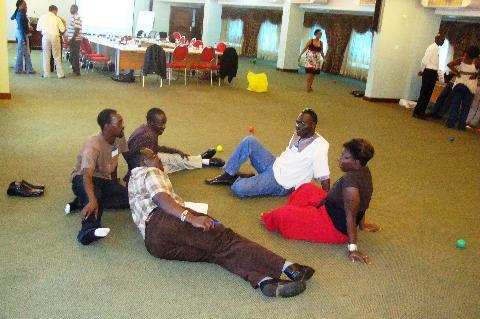
This project aimed to increase the relevance and use of tuberculosis (TB) research by promoting engagement and dialogue among the various stakeholders in TB work in Uganda. The 1-year project, launched in 2011 by Panos Eastern Africa (PEA) project with Wellcome Trust funding, also worked to increase information on TB in the public domain and, therefore, boost efforts to address the burden of TB in Uganda by participating in and influencing the research process and outcomes in TB research and work. In addition, by generating exposure for existing research, the project hopes to encourage further research on TB.
Several public engagement methods were used to highlight TB research in Uganda, as well as to promote engagement, dialogue, and debate. Some of these approaches include participatory rural radio debates, community dialogues, media fellowships, and forums. PEA worked with TB researchers, the media, academia, civil society organisations (CSOs), government policymakers, and the general public.
PEA contends that "by working with the media, reporting of the TB research and issues that have for a long time been neglected shall now be improved and therefore the duty bearers shall be held accountable for the TB disease burden in Uganda." So, PEA conducted a media scan specifically to look at the amount and quality of reporting, investigating whether, for example, the media use stigmatising language, whether people actually affected by TB are included in articles, or whether the media quote research in their articles. The findings were used as a basis for follow up with media, researchers, and community actors to spark discussions among journalists, policymakers, and researchers over the impact this reporting is having on TB and what role the media should play in addressing it.
In order to further ramp up debate and dialogue to the communities through the media, PEA commissioned a consultant to develop "A Media Guide on Reporting Tuberculosis Research and Related Issues in Uganda" [please see Related Summaries below for more information]. Its purpose is to guide journalists/media houses while reporting on TB research and related issues in Uganda. PEA also conducted a 3-day residential training workshop for journalists, researchers, and civil society actors working on reporting TB research and related issues in Uganda to promote informed coverage, as well as to strengthen links between civil society actors and the media. As a result, 4 fellows (3 of whom work in the print media and 1 of whom works in television) were commissioned; and they have produced in-depth features on TB. In addition, PEA worked in partnership with 3 radio stations to clarify certain stereotypes as well as minimise stigma and encourage community support.
PEA also held 14 networking/relationship-building meetings with researchers, media people, CSOs, and policymakers at the ministry level to help in the mapping of the relevant stakeholders, and a database in this regard was set up. In addition, a national TB stakeholders' meeting attracted 44 participants to discuss pertinent issues around TB. The meeting focused on raising the participants' appreciation of the issues as a necessary and very important aspect of TB prevention programmes. Journalists who took part in the meeting undertook to write articles and report on TB issues in Uganda; it is hoped that these articles will inform policymakers and programme planners on issues that they should focus on in planning TB interventions.
Tuberculosis
The National Tuberculosis and Leprosy Programmes reports that at the end of 2010, 45,546 TB new cases were identified in Uganda, and, of these, 54% were confirmed to be HIV-positive. Furthermore, 330 out of 100,000 people get infected per year in every constituency, and, out of 100,000 people infected by TB, 93 die. This number has been accelerated by HIV/AIDS. Dr. Francis Adatu, Manager of the National Tuberculosis and Leprosy Programmes, says: "TB is the single leading killer of people living with HIV. We must detect, treat and cure TB so that people living with HIV/AIDS can live longer." He indicates that TB affects the economically active age group of those between 15-55 years, which he said has also affected the social and economic development of the country.
According to Panos, the project is necessary for the following reasons:
- Many people are undiagnosed because of fear, stigma, poverty, and ailing health systems. The media's role in dispelling fear and providing clear, factual information based on evidence from research is vital.
- Many logistical and medical components of TB programming are relatively robust. The communication part is not. Cure rates are high, but the numbers of people with TB who are seeking medical help are low.
- Good research has been conducted on TB in Uganda, these findings and key recommendations have remained within the circles of the researchers and medical practitioners. By drawing attention to research, making it accessible and raising questions that policy makers and the public engage with, journalists can lead the way in the fight against TB.
Through this project, PEA became a member of the Uganda Stop TB Partnership and provides technical input to the partnership on media issues.
Panos Eastern Africa, Welcome Trust
Panos website on February 10 2012; "International Engagement Awards - Projects Funded in 2011" [PDF], Wellcome Trust; and email from Okubal Peter James Ejokuo to The Communication Initiative on September 17 2012. Image credit: Panos Eastern Africa
- Log in to post comments