











































Engaging School Children as Change Agent to Create a Malaria Control Culture: A Case Study of the Malaria Control Culture Project in Uganda
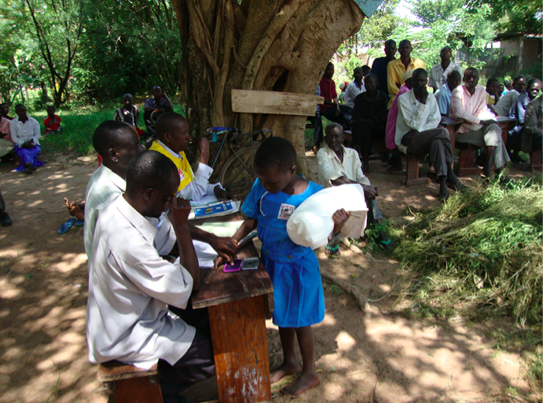
This presentation formed part of the Malaria in the Not So New Millennium technical panel, and was designed to: highlight the contribution of the Malaria Control Culture project in improving performance and attendance in primary schools in Tororo, Uganda, and to share lessons learnt on using innovative SBCC interventions.
As explained in the abstract, the Malaria Control Culture project intends to build a malaria control culture among the school pupils and the whole community in Tororo district, where the population suffers from one of the highest malaria burdens in the country - being exposed to an average 1.5 infectious bites per night. “Following on the heels of a nationwide net distribution campaign which attained universal coverage of long lasting insecticide-treated nets (LLIN), the project is implementing two methods of continuous net distribution (through ante-natal care services at health facilities, and primary schools); a strong communications campaign to strengthen healthy behaviours around malaria prevention (including demand for and use of LLINs) and treatment; and is strengthening diagnosis of malaria and the management of alternative causes of fever at health facilities.” The potential proportion of the population reached through school distribution is high, especially since children constitute about 57 percent of the general population. Schools also have existing infrastructure to support malaria interventions: They are already organised with targeted beneficiaries registered, and their school enrolment and attendance predictable. Schools also have existing structures and personnel (teachers) on which LLIN distribution can leverage. Children constitute about 57 percent of the general population.
The project employs three strategies in primary schools. First, nets are distributed to pupils in class one (P.1) and class four (P.4) consistently every year. Secondly, the schools were tasked to compose an anthem about malaria control which they sing at the school assembly every morning. In this way, children are preaching malaria control behaviours to themselves and to the communities when they go back home. This anthem is also played on radio every day. Thirdly, a social and behaviour change (SBCC) campaign running alongside the schools’ intervention encourages children to sleep under mosquito nets, using the key motivation as “a good night’s sleep” with the benefit of “waking up energized,” thus creating a culture of sleeping under nets, “our way of life.”
Results
A total of 87,602 school pupils received mosquito nets during the past two project implementation years. An evaluation of these interventions was conducted in the schools after two years of implementation. The number of nets distributed through schools that had been used the previous night increased from 78.8 % in year one to 91.6 % in year two. The proportion of those nets used by the children themselves, as opposed to any other member of the household, also increased by 2.8% across the two years. According to interviews with school teachers, the intervention has also had a positive impact on school performance, with 93% of them estimating that it has reduced absenteeism due to malaria, and 99% of them observing a general improvement of school attendance.
The presentation outlines the following lessons learned:
- Working through existing systems fosters a malaria control culture
- Involving children in malaria prevention and advocacy is critical for sustaining gains in malaria control
International SBCC Summit 2016 Abstract Booklet, the Powerpoint presentation on February 16 2016, and email from Julien Atim on March 31, 2016.
- Log in to post comments