










































Deutsche Welle Ebola Special: Radio Series
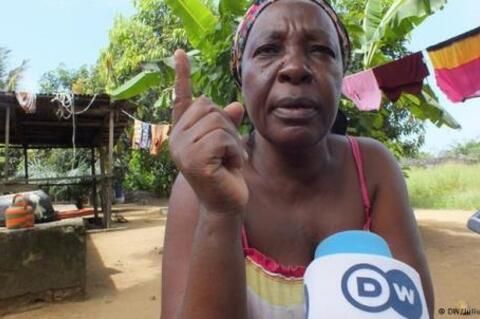
The eight-part series focuses on the most burning questions, myths, and fears surrounding Ebola. The programmes focus on a broad range of issues, including sensitive topics, such as burial customs, rituals in dealing with the dead bodies, hygiene, and sexuality. The topics of the 3-4 minute programmes are as follows:
- Symptoms
- What to do
- Infection and protection
- Prejudices and fears
- Origins of the virus
- Treatment of Ebola
- Dealing with the dead
- Supporting survivors
Each programme features two African journalists and follows their "on-air research" into various aspects of Ebola. The show looks at their own experiences, news agency reports, scientific articles, and social media discussions as the two journalists seek answers to pressing questions. The programme was initially broadcast in English, followed by French, Hausa, Kiswahili, and Portuguese. It can be heard primarily by listeners in Liberia, Sierra Leone, Guinea, Mali and neighbouring states via shortwave, FM, mobile devices, and online.
According to Deutsche Welle (DW), while "there are now various information campaigns, ignorance about Ebola is still widespread. This is fertile ground for rumours, uncertainty, and fear." The radio series seeks out African perspectives and allows for Africans to communicate with Africans. "This allows survivors of the Ebola outbreaks in Gulu, Uganda in 2000 to talk about their experiences in an effort to help the West Africans."
As part of the initiative, DW has created a Ebola - Get the Facts section on their website. The section includes reporting and background information on Ebola, and the 8-part radio series is available for download in MP3 format.
Ebola
Deutsche Welle is Germany's international broadcaster. "DW's radio programming reaches more than 40 million people in Sub-Saharan Africa. In addition to shortwave broadcasts, the programs in Amharic, English, French, Hausa, Kiswahili and Portuguese are re-broadcast by 250 partner stations. DW has over 650,000 Facebook fans in Africa."
Deutsche Welle, Federal Foreign Office
Deutsche Welle website on December 11 2014.
- Log in to post comments