










































Desert Voices
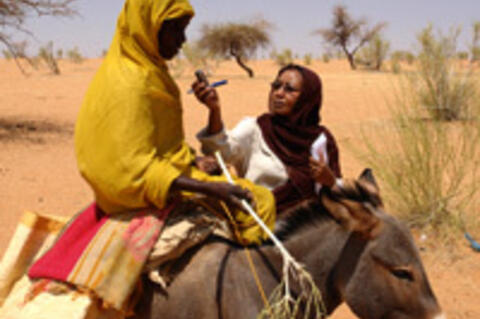
Desert Voices aims to increase understanding and awareness of the impact of desertification by amplifying the voices of the rural economically poor living in desert environments. According to the organisers, Desert Voices brings to life the effects of desertification among Ethiopians and Sudanese through personal stories, songs, and memories. It shares the views and experiences of people living in desert areas, to ensure that their personal accounts are heard as widely as possible.
The personal accounts are narrated in the first person by men and women living in Africa, specifically Sudan and Ethiopia, where climate change has taken a toll on the way people live their live. All interviews for Desert Voices were recorded and transcribed word-for-word from conversations with local people, allowing them to speak in their local language and within settings where they felt relaxed and able to share different aspects of their lives and backgrounds.
According to the organisers, the views and experiences of people living in desert areas have often been neglected by policymakers, and the issue itself has received little media coverage. To address this, Panos London worked with local print and photographic journalists - alongside community development workers - to gather the interviews. Panos plans for a number of feature articles to be published in national newspapers, a selection of which have been translated into English and are also available online.
Each country team comprised two newspaper journalists, one freelance photojournalist, and several community development workers living and working in the areas where the testimonies were collected. The project kicked off with introductory workshops in Sudan and Ethiopia where the teams were prepared for visiting the communities and versed in techniques for testimony collection, including topic development and interviewing skills.
Specific training was provided for the photographers.
- Visit one: With mediation from the community workers, the journalists were introduced to the local communities and their village. This enabled them to better understand the local context, as well as gather testimonies and take photos.
- Visit two: After receiving specialist journalism training back in the capital city, the journalists returned to the community to develop their ideas for feature stories and associated photography. They explored the themes raised in their first set of interviews, and additional testimonies were gathered by the community workers.
- Visit three: Each team ‘returns’ the testimonies to the narrators by sharing the feature articles published in the journalists’ newspapers, putting up a community photo exhibition, and taking part in discussion around the testimonies and the issues they raise.
Along with distribution to media, the testimonies are available on the project website and a project blog and newsletter were used to further disseminate information.
Environment.
In 1991, Panos London, together with SOS Sahel UK, published At the Desert's Edge - a collection of oral histories from men and women living across the Sahel desert. According to Panos, in the intervening years - as environmentalists and policymakers have sought solutions to what Kofi Annan describes as “one of the most serious threats facing humanity” - the voices and experiences of those living in dryland areas have been largely absent from debates, as has media coverage of the issues. This project revisited two of the areas covered by At the Desert's Edge.
Panos London.
EDIE website; PANOS website on July 26 2007; and email from Siobhan Warrington to The Communication Initiative on December 7 2009.
- Log in to post comments