










































COVID-19 Vaccine Hesitancy in South Africa: How Can We Maximize Uptake of COVID-19 Vaccines?
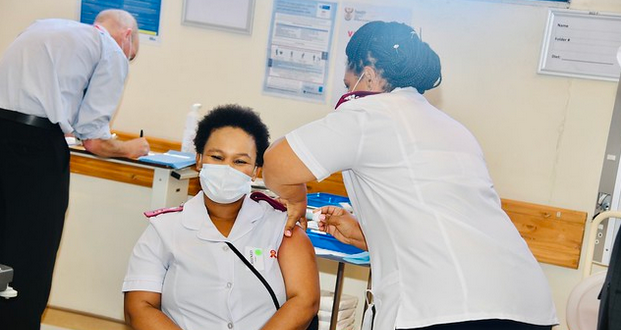
Cochrane South Africa, South African Medical Research Council (Cooper, Wiysonge); University of Cape Town (Cooper, Wiysonge); The Impact Centre, Human Sciences Research Council (van Rooyen); University of the Witwatersrand (van Rooyen); Stellenbosch University (Wiysonge)
"Ultimately, how national and global institutions manage COVID-19 vaccines, and responses to the pandemic more broadly, are likely to have a major effect on public trust and acceptance of COVID-19 vaccination."
A number of national, continental, and global surveys suggest that hesitancy and refusal of COVID-19 vaccines is an emerging problem. Vaccine hesitancy is neither unique to COVID-19 vaccines nor new, including in South Africa. In the context of the official launch of South Africa's national COVID-19 vaccination programme in February 2021, several surveys have been conducted to explore anticipated acceptance of COVID-19 vaccines amongst South Africans. By reviewing the findings from these surveys, this paper hopes to inform the development of contextually relevant and appropriately targeted strategies to address vaccine hesitancy in the country, with a potential positive effect on vaccination demand and uptake during the COVID-19 pandemic and beyond.
The researchers identified nine surveys investigating (potential) acceptance of COVID-19 vaccines amongst South Africans conducted on or before March 15 2021. Acceptance of the COVID-19 vaccine ranged from 52% to 82%. A summary of the surveys, including methodological elements and key findings, is depicted in Table 1 of the paper. Aside from acceptance rates, some of the notable findings of the surveys follow:
- The COVID-SCORE survey, administered between June 16-20 2020, found a discrepancy between, on the one hand, the percentage of South Africans who responded positively (82% "somewhat agree" or "completely agree") when asked if they would take a COVID-19 vaccine that was proven safe, effective, and available and, on the other hand, the percentage who would follow their employer's recommendation to get a COVID-19 vaccine (46%). This discrepancy may relate to people's concerns that a potential mandate by employers could limit employees' freedom of choice and/or be a manifestation of employers' self-interest.
- The Africa Centres for Disease Control and Prevention (Africa CDC) survey, conducted September 17 2020 to October 16 2020, found that reported willingness to accept a COVID-19 vaccine was higher among: those who think vaccines in general are safe; those who do not think that the threat of COVID-19 has been exaggerated; those who do not believe COVID-19-related conspiracy theories; those who know someone with a positive COVID-19 test; and those who do not rely on social media as a trusted source of information.
- Three rounds of Ipsos online surveying (July 24 - August 7 2020; October 8-13 2020; and December 17-20 2020) identified a significant decline from previous survey rounds in willingness to get the vaccine in South Africa (down to 53%) in December 2020. The change in perceptions in South Africa was the largest decline (along with France) recorded in the global survey. The most common reasons given by those who indicated they would not get a vaccine was worry about side effects (65%), followed by doubt about its effectiveness (24%) and the perception of not being enough at risk from COVID-19 (17%). Of those South Africans who said they did not intend to take the vaccine when available, 23% indicated they are opposed to vaccines in general.
- The COVID-19 democracy survey, conducted December 29 2020 to January 6 2021, found that, in addition to issues of race, education, and age, political factors shape COVID-19 vaccination attitudes. The most common explanations given for wanting to vaccinate were the desire to protect oneself (29%) and to protect others (25%).
- The Ask Afrika COVID-19 tracker study, conducted between February 3-11 2021, found that vaccine safety and efficacy were the biggest priority for respondents. The survey also found that the Government's decision to stop the roll-out of the AstraZeneca vaccine in South Africa significantly reduced levels of trust in the safety of the vaccines and confidence in the process.
- The South African Social Attitudes Survey (SASAS) found that the percentage of respondents who believed vaccinations can lead to severe health conditions increased from 28% in March 2020 to 36% in February 2021, while the percentage of people who believed that infection-acquired immunity is preferable to vaccine-acquired immunity increased from 33% to 44%.
- The Council for Medical Schemes (CMS) COVID-19 vaccine survey, conducted from February 4 to March 8 2021, found that 82% of respondents reported they would get vaccinated, 76% indicated they would trust the vaccine if someone close to them would vaccinate, and 71% indicated they trust that the vaccine will prevent them from contracting COVID-19. Amongst those respondents who indicated an intent not to get vaccinated, the main reason (34%) was that the vaccines were too new and they preferred to wait and see how it would work on other people.
In short, despite ample evidence of the safety and efficacy of COVID-19 vaccines that have received emergency use authorisation, this review found that about one-third of the adult population in South Africa is hesitant toward these vaccines. As noted here: "A particularly disheartening finding emerging from many of the surveys was the high levels of vaccine hesitancy in general in South Africa, particularly when compared to global vaccine hesitancy estimates....[T]he findings from the surveys in this review suggest that COVID-19 vaccine hesitancy may be a tip of the iceberg of general vaccine hesitancy in South Africa. The review findings also suggest that the COVID-19 pandemic may be exacerbating current vaccine hesitancy trends in the country."
In response, the researchers suggest that strategies to address hesitancy towards, and promote acceptance of, COVID-19 vaccines need to be responsive to the concerns and associated information needs people have about the safety and effectiveness of COVID-19 vaccines. For example, the stoppage of the roll-out of the AstraZeneca vaccine could have provided an opportunity for clear messaging explaining, for example, that the vaccine was withdrawn because it was shown to be ineffective against the variant discovered in South Africa after the vaccine was purchased. That is, communicating the fact that safety signals are working and that experts are operating in the public interest could have reassured citizens they were being protected and built, rather than dashed, their confidence.
COVID-19 vaccine communication strategies must also involve more than information and factor in the reality that people develop their own beliefs through their life experiences and that culture, personal background, religion, and political leanings all shape people's reactions to facts supplied to them. In accordance, the survey findings reveal the inherently social nature of COVID-19 vaccination views in South Africa - and the complex and multi-layered isuses influencing them. Dominant conceptual models for understanding vaccine hesitancy tend to focus on the individual determinants of vaccine views and practices, drawing heavily on psychological models of decision-making behaviour. The findings from the surveys included in this review give credence to calls for theory on and responses to vaccine hesitancy to place a greater emphasis on more social and community levels of influence. "Individualistic, decontextualized, and 'one-size-fits-all' approaches are unlikely to have much traction."
Relatedly, the researchers argue that strategies need to form part of broader trust-building measures that focus on relationships, transparency, participation, and justice; community involvement and participation in the COVID-19 vaccination programme is recommended. For instance, non-governmental and civil society organisations, as well as influential faith and cultural leaders, could play a role in motivating communities toward trust in and acceptance of COVID-19 vaccination. Ensuring fair decision-making around COVID-19 vaccine allocations, locally and globally, could also go a long way in building trust in the vaccines and those distributing them. The COVID-19 vaccination roll-out programme could also benefit from integration with broader programmes for public well-being. As various Global Polio Eradication Initiative (GPEI) activities in the 1990s and 2000s showed, acceptance of more targeted health promotion efforts may depend on how these are used to simultaneously address the wider range of socio-economic issues that citizens prioritise.
The researchers caution that: "The current climate is one of rapidly changing knowledge about the disease and strategies to manage it, including in the realm of vaccination. Variations in public acceptance of COVID-19 vaccines is therefore to be expected....Ultimately, all of this suggests that reported levels of COVID-19 vaccine acceptance, particularly those obtained at a point in time, need to be interpreted and acted upon with a fair degree [of] caution....More research in this area is...needed for more definitive conclusions to be drawn. This is important so that better targeted strategies can be developed, which focus on hesitancy-prone population subgroups (and potentially specific vaccines) and are tailored to their specific concerns."
In conclusion, the pandemic provides:
- An opportunity to positively intervene in the growing trends of vaccine hesitancy in South Africa and elsewhere. "For example, discussions that were previously confined mostly to the realm of the medical and scientific community...are now being widely discussed in public fora" - providing an "unprecedented opening for public participation in the politics of knowledge around vaccination specially and science and scientific evidence more broadly."
- An occasion for "reflexive self-scrutiny amongst scientific and governmental bodies...with potential positive effect on (re)building public trust."
- An impetus "to fuel demand for vaccination and social mobilization or advocacy around more equitable access to COVID-19 vaccines and vaccination more generally."
"Ultimately, these kinds of initiatives, if properly supported, hold great potential to bolster acceptance of and demand for vaccines during and beyond the COVID-19 pandemic."
Expert Review of Vaccines https://doi.org/10.1080/14760584.2021.1949291. Image credit: GCS via Flickr - Attribution-NoDerivs 2.0 Generic (CC BY-ND 2.0)
- Log in to post comments