











































Community Theater for Improved Nutrition: A Guide for Program Managers and Theatre Groups
Infant & Young Child Nutrition Project
This 12-page guide for programme managers outlines community theatre as an effective way to support positive changes in health knowledge and behaviour, as well as social norms, related to children's nutrition. Published as part of the Infant & Young Child Nutrition Project (IYCN), and funded by the United States Agency for International Development (USAID), this guide explains how theatre engages the audience, focusing their attention and actively involving them in an experience. As stated in the guide, theatre can creatively explore common beliefs and multiple viewpoints, as well as encourage discussions around sensitive topics. The emotional response is key to influencing attitudes and behaviours, but it must be coupled with clear messages that encourage specific action. Theatre performances also provide an opportunity for repeated exposure to key messages, which can intensify their impact, especially when delivered through multiple channels.
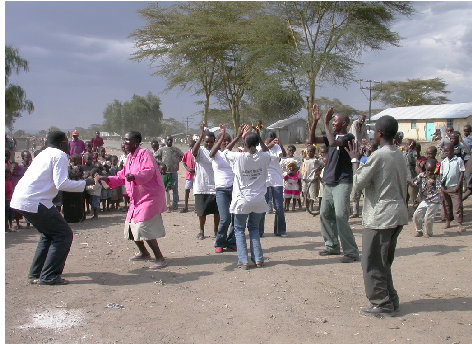
The document uses the example of how IYCN in Zambia enhanced the activities of community health workers by training local theatre groups to integrate nutrition messages into their performances. The theatre group performers reported that mothers followed up with them after the performance to ask additional nutrition questions, and community members reported learning more about good nutrition practices. Performers also said they felt motivated with their new knowledge on infant and young child feeding, and that they could correctly interpret growth cards for children younger than five years of age, as well as counsel mothers.
According to the guide, improving maternal, infant, and young child nutrition requires positive changes at all levels, including mothers and caregivers, families and households, communities, and health facilities. Community theatre can help address individual behaviours and create an atmosphere of support for recommended practices. However, in order for theatre to effectively encourage changes in behaviour and social norms, it needs to be part of a comprehensive strategy that includes multiple interventions promoting key messages that are linked and reinforced.
The guide explains that behaviour change communication theory and programmatic experience suggest that individuals need more than technical information about recommended health practices to bring about sustained positive changes in behaviour. Individuals need to recognise and believe the benefits of the behaviour, be committed to perform the new behaviour, have the skills to perform the behaviour, believe they can perform the behaviour, believe that the behaviour will produce a positive outcome, perceive the behaviour to be consistent with their self-image, and feel there is support for, and even pressure to, perform the behaviour. It is important for individuals to have the opportunity to reflect on the recommended behaviour, see it modelled, and feel support to try it.
The guide outlines the Magnet Theater approach developed by PATH. Magnet Theater engages communities and promotes social and behaviour change by providing a forum for community members to reflect on common practices, discuss barriers, identify solutions, and engage in discussions. This participatory, interactive community theatre approach can be used to explore a wide range of public health and social development issues, including maternal, infant, and young child nutrition.
The guide goes on to state that it is important that the content of the performance reflects a realistic understanding of the knowledge, attitudes, and practices of the intended audience and that it is based on an analysis of the barriers that audience members believe impede behaviour change. Formative research findings can be used to ensure that performances express existing attitudes, beliefs, and practices, and the social context in which these practices exist, as well as the barriers that prevent the adoption of recommended practices (e.g., social, cultural, cost, availability of services). Facilitated discussions can then explore how these barriers and challenges can be overcome. When sharing key messages with the audience, it is important that the messages call for and motivate audience members to carry out a specific action, address barriers convincingly, offer meaningful benefits, and are memorable.
- Log in to post comments