

























Media development action with informed and engaged societies

After nearly 28 years, The Communication Initiative (The CI) Global is entering a new chapter. 

Following a period of transition, the global website has been transferred to the University of the Witwatersrand (Wits) in South Africa, where it will be administered by the Social and Behaviour Change Communication Division. Wits' commitment to social change and justice makes it a trusted steward for The CI's legacy and future. 

On the transfer, co-founder Victoria Martin expressed her pleasure to see this work continue under Wits' leadership, knowing that co-founder Warren Feek (1953–2024) would have felt deep pride in The CI Global's Africa-led direction. 

As Wits, we honour the team and partners who sustained The CI for decades and look forward building from that strong base. This includes co-founders Warren Feek (1953-2024) and Victoria Martin as well as La Iniciativa de Comunicación (CILA), which continues independently at lainiciativadecomunicacion.com with links to The CI Global site. We are also eager to forge new partnerships and entertain new ideas as we consider how best to contribute to social and behaviour change in our rapidly evolving environment.

If you are joining the International Social and Behaviour Change Communication (SBCC) Summit in Panama, please join Wits and CILA on Monday, 22 June, to share your thoughts and suggestion for the relaunch of the Communication Initiative. We will be in Pacifica 5 from 12-1:25 for the Refuel, Reflect, and Renew Lunch Series: The Communication Initiative: celebrating a driving force for Communication for Social Change and the way forward. We will reflect on the legacy of Warren Feek and family in creating the Communication Initiative, consider the contributions of CI over the years and then turn our attention towards the future in this dynamic session. 

If you are unable to join us in Panama, we still want to hear from you. Please contribute your thoughts by following this link: https://redcap.link/CommunicationInitiative2026 or reaching out to ci_surveys@commint.com

You can also follow the QR Code:

 https://redcap.link/CommunicationInitiative2026

Time to read
1 minute
Read so far

Children and Media Initiative
0 comments
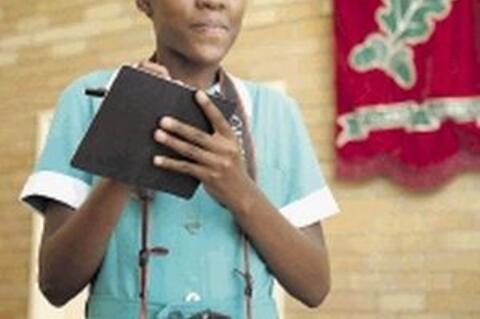
Launched in February 2011, the Children and Media Initiative is working to change the way news agencies report on children in South Africa and Zambia. As part of the project, 600 children from across South Africa will be involved in drafting best practice guidelines for reporting on children, monitoring the media to ensure ethical reporting on children, and practicing as child journalists. The project is implemented by Media Monitoring Africa (MMA), Media Network for Child Rights and Development (MNCRD), and Save the Children, and is supported by the European Union and Swedish International Development Agency (SIDA).
Communication Strategies

According to Media Monitoring Africa (MMA), the project will see experiences and skills shared between Zambia and South Africa. MMA in South Africa has already been training child media monitors, and in Zambia, MNCRD is already running a Children's News Agency. Each country will now build on these projects, working to achieve three key goals over the next three years: the training of 540 children in both countries; the adoption of child approved ethical guidelines by 15 media houses in South Africa and 10 in Zambia; and mainstream media publication of over 300 articles written by 60 child journalists.

The project will engage with 24 Zambian and South African print and electronic news media with a daily audience of at least nine million, organisers explain, to increase media's coverage of children's rights and enhance the space for children to voice their opinions. In the weeks and months after the launch, training will begin for children involved in all three elements of the project. In each country there will be new elements, and previous projects will be expanded upon and improved. The project is is designed to provide opportunities for children to work with the media to gather more influence, and to change the way the world views them, so that they are consulted more in the decisions that directly affect their lives.

Development Issues

Children, Youth, Media

Key Points

According to organisers, media recognise three critical steps that newspapers need to take to ensure they are protecting and empowering children on their pages. These are to do no harm, encourage achievement, and bring youth in to the media. One identified missing link is content generated by children for mainstream media.

Partners

Media Monitoring Africa (MMA), Media Network for Child Rights and Development (MNCRD), Save the Children, European Union, and the Swedish International Development Agency (SIDA).

Sources

Times Live website on June 6 2011; and press release from Media Monitoring Africa on February 24 2011.