











































Catalyzing Change for Girls: Grandmothers Support Girls' Holistic Development
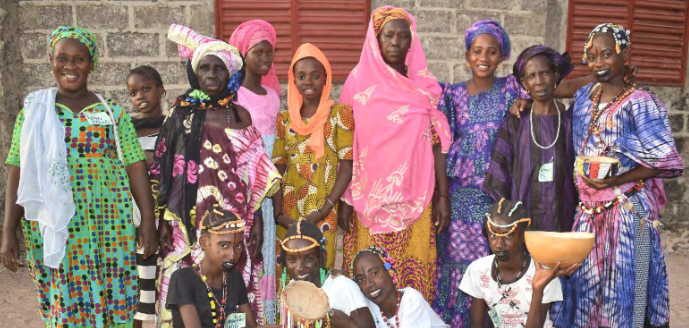
Grandmother Project - Change through Culture
"When all members of the community, old and young, are involved in advancing the rights and wellbeing of young girls they are less likely to be at risk of harmful practices like early and forced marriage and female genital mutilation/cutting."
The Grandmother Project - Change through Culture is an American and Senegalese non-profit organisation working to promote the health and well-being of young girls through the Girls' Holistic Development Program (GHD). GMP and the GHD are grounded in the recognition that grandmothers are a powerful and under-utilised resource in African communities. This report shares the experiences - and the data - that bear out the conviction that elders, especially grandmothers, can be a resource for programmes promoting the health and well-being of women and children in African communities. It is hoped that this document could be useful to others as they rethink programmes supporting adolescent girls so as to make them more culturally grounded and, ultimately, more effective at bringing about change.
GMP's Change through Culture approach is driven by the belief that promoting change requires building on the roles and values that underpin communities. Elders - especially senior women - are key pillars of African families and societies and should be involved as key partners in all programmes, particularly those working toward the well-being of mothers, children, and adolescent girls entering womanhood. While girls and their mothers are often powerless to prevent arranged marriages from taking place, or to prevent the harmful practice of female genital mutilation (FGM), grandmothers can influence fathers and other men in the community and dissuade them from perpetuating these traditions.
As detailed at Related Summaries, below, the GHD addresses issues including girls' education, child marriage, teen pregnancy, and FGM, as well as other aspects of girls' development prioritised by communities related to the moral, cultural, and social development of girls. Having begun in 6 communities, the GHD has to date been implemented in 77 villages and 2 urban neighbourhoods. In doing so, the programme has mobilised nearly 2,000 grandmothers and over 10,000 primary and secondary school pupils. GMP-supported activities include: intergenerational forums; Days of Praise of Grandmothers; all-women forums; grandmother-teacher workshops; under-the-tree participatory learning sessions on GHD topics with girls, mothers, and grandmothers; grandmother leadership training; discussion groups with boys and men; and Days of Dialogue and Solidarity with community elders.
GHD activities promote gender equality, respect for people of all ages, and a voice for everyone. In all group activities, debate is encouraged on the positive aspects of tradition - those that bind and reinforce local culture and identity - as well as those that can be harmful to girls (such as FGM, child marriage, or teen pregnancy). In all these activities, grandmothers play a central role. They participate in dialogue and debate along with other community members; beyond that, the GHD strategy engages natural grandmother leaders, who are identified by their peers, to improve their knowledge of adolescence and their collective support for girls. According to GMP, that training has promoted the collective empowerment of grandmother leaders, strengthening their capacity and commitment to catalyse discussion and action for positive change.
A series of studies were carried out between 2015 and 2020 to determine the results of GMP's GHD programme and to ensure ongoing learning. For example, in 2020, the Institute of Reproductive Health (IRH) at Georgetown University compared attitudes and behaviour in communities within the GHD programme and outside of it. The central conclusion of the IRH evaluation is that the GHD has contributed to shifting deep-rooted social norms and practices related to girls' education, child marriage, teen pregnancy, and FGM. The IRH research, and other complementary studies by Newman (2017), Newman & Soukouna (2017), Diallo (2018, 2019), Lulli (2018, 2020), and Saavedra (2020), have elucidated the factors contributing to the creation of a supportive environment for shifting social norms in favour of girls' rights and development. This includes the GHD's meetings, forums, and consensus-building exercises. Particularly significant is the fact while at the outset significant breakdown in communication was observed in all communities, all of the studies conducted on GHD have reported increased social cohesion.
In addition to changing social norms, the studies point to:
- Changes at the community level - e.g., increased respect for the experience and wisdom of elders, especially for older women; greater confidence in the active role grandmothers can play in promoting girls' development and in children's education; strengthened community leadership; greater pride in cultural values and identity; and opportunity to tackle sensitive issues, such as FGM, openly.
- Changes within families - e.g., shifts in attitudes within families related to the rights and development of adolescent girls; stronger communication between the three generations; more inclusive decision-making within families; and restoration of grandmothers to their traditional role as family advisors and advocates for young girls.
- Changes that benefit girls - e.g., increased confidence of girls to express their feelings; and increased motivation on the part of girls to continue to secondary school.
Lessons learned from the GHD include:
- When interventions listen and seek to address issues of concern to communities, they are more likely to gain their support and involvement. To that end, given that families themselves are concerned with all aspects of girls' upbringing and development, communities are more receptive to programmes that address various aspects of girls' development, rather than those that propose single-issue strategies.
- Communities are more open and engaged with programmes that adopt an assets-based approach, in which positive roles, values, and practices are encouraged and reinforced, while harmful ones are discouraged.
- When programmes respect and seek to build on cultural and religious roles and values that communities cherish, community members are more receptive and more engaged. (The opposite is also true.) For example, programmes are more effective and supportive when they acknowledge and build on grandmothers as a cultural resource in non-western contexts in which extended family networks are strong and engaged in all aspects of the upbringing and development of children, especially girls.
- Harmonious shifts in attitudes and practices within family and community systems are best achieved by catalysing communication and dialogue between generations (elders, adults, and adolescents). Focusing attention on only one group (such as girls) can unintentionally create conflict between generations.
- When approached respectfully and through dialogue, elders are not automatically opposed to change.
- Both formal and informal leaders, representing different generations and both sexes, should be involved in all efforts to promote change in communities. Given their influence with their respective peer groups, they are powerful gatekeepers who can either support or block new ideas and behaviours.
- When school programmes reflect local cultural values, pupil motivation increases, relationships between schools and communities are strengthened, and family support for children's education is greater.
GMP asserts that the intergenerational and grandmother-inclusive approach used in the GHD could be beneficial in other non-western cultures across Africa, Asia, and Latin America, where intergenerational relations and hierarchies still characterise family and community life.
The experience implementing GHD and the results of the research on the programme leads GMP to conclude: "Deeply entrenched social norms are changing. Communities can come together in dialogue, affirm their traditions, and embrace change where needed. Girls can anticipate a future of greater possibility and reach."
Editor's note: On June 24 2021, this report will officially be launched in a webinar. Following a short presentation of the GHD programme by Judi Aubel from GMP, Anjalee Kohli of Georgetown University will present highlights of the research conducted by the IRH. Dixon Chibanda of the London School of Hygiene & Tropical Medicine will provide comments on the cultural relevance of intergenerational and holistic programming for girls that builds on local values, roles, and traditions while ensuring that young people can grow up with equitable opportunities for the future. Contributions from webinar participants will be elicited to expand the discussion to other African contexts.
Click here for the document in French in PDF format (22 pages).
Emails from Judi Aubel to The Communication Initiative on May 11 2021, June 15 2021, and June 19 2021. Image credit: Ibrahima Sy
- Log in to post comments