










































Bridging the gap
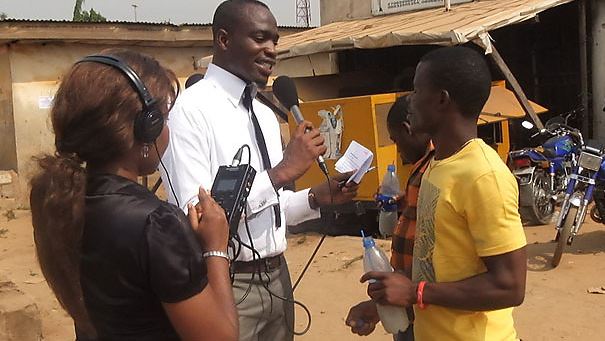
Author: Osebi Adams, July 15 2013 As a young researcher for BBC Media Action in Nigeria, I've been involved in conducting research and evaluating a number of our radio and television programmes which aim to educate and involve Nigerians in the governance of their country.
One thing I've often noticed is the reaction you get whenever you ask questions of people about how our country is run - whether it's got to do with electoral processes, service delivery, accountability, corruption or the performance of public office holders.
An otherwise easy-going discussion suddenly changes into something far more rowdy. People start to clamour for the opportunity to talk first, interrupting each other and arguing the facts amongst themselves.
They often see it as an opportunity to vent their frustrations and anger over the actions - and inactions - of their public office holders at all levels of government.
It’s easy for me to observe in these arguments that Nigerians seem to know a lot about the governance of their country and what they expect from their leaders.
They want government to provide amenities, security, and infrastructural development among other things, and they want government to be accountable and transparent in their dealings.
One respondent in Lagos said, "I will say the fault is the government. In the aspect of education, electricity and health, they all have plans and promise for it but they embezzle the money. They are not honest. They look for their pocket first."
But there is a gap between people’s knowledge about how governance can work and what they can do themselves to affect how their country is run, such as actively attempting to hold their leaders to account.
Through our research, many factors have been identified to explain this this gap. But some seem particularly important.
For example people feel distant from their leaders and too weak to affect any change. This divide is visible in an emerging slang term for referring to politicians and public office holders as "our ogas at the top" ("our bosses at the top").
People often feel powerless and incapable of challenging these "ogas" and just accept the fallout of their decisions. Many people also report a feeling of fear about confronting leaders on accountability or corrupt practices.
For some, there are also difficulties in accessing existing channels and platforms for addressing governance issues and malpractices.
The result is a feeling of apathy as citizens prefer to cope with whatever lot they have.
But "No wahala" - "no problem" - as many Nigerians would say.
BBC Media Action in Nigeria is using media to try and address some of these issues. For example, BBC Media Action is using a radio magazine show called Talk Your Own - Make Naija (Nigeria) Better to increase people’s knowledge about governance-related issues and encourage dialogue between citizens and their public officials.
We are also using a popular drama show titled Story Story to try to increase knowledge and encourage discussion of governance-related issues so as to improve the governance systems in Nigeria.
While we are still studying the impact of these programmes, previous research, alongside initial findings, suggest that Nigerians are benefiting from these platforms.
As a young Nigerian interested in how my country is run, this is something I’m very happy about.
But the most exciting aspect for me is the fact that I am part of the research team that assesses how these strategies are actually impacting Nigerians. Our findings are then fed back to our programme producers to improve the whole process.
Anyone may say we have an uphill challenge on our hands. But I know it’s possible and being part of reducing that gap between the governors and the governed in Nigeria drives my work every day.
Click here to access this BBC Media Action blog and related links on their work in Nigeria.
Image credit: BBC Media Action
Contact:
BBC Media Action
Broadcasting House, Portland Place
London
W1A 1AA
United Kingdom (UK)
Phone: 44 (0) 20 8008 0001
Fax: 44 (0) 20 8008 5970
Media.action@bbc.co.uk
- Log in to post comments