










































Behavioural Study Report: HIV Vulnerability Among Female Sex Workers Along Ghana’s Tema-Paga Transport Corridor
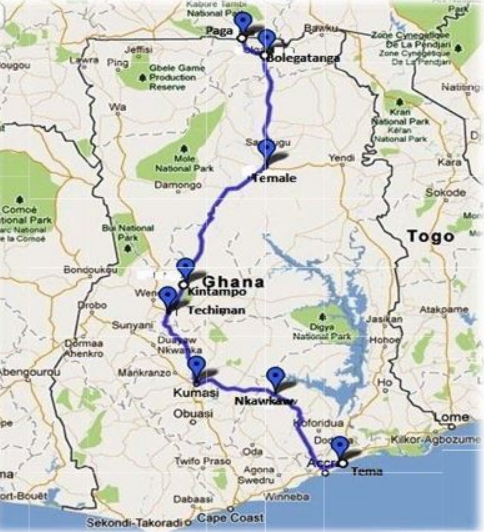
This 67-page report shares findings of a study that looked specifically at the association between mobility and the risk of HIV infection among female sex workers (FSWs) in Ghana. According to the report, mobility and migration are not by themselves definitive HIV risk factors, but migration can make migrants vulnerable to high risk sexual behaviours because of the conditions they face during the migration process. The study was funded by UNAIDS and conducted by the International Organisation for Migration (IOM), in partnership with Management Strategies for Africa (MSA) and the West African Programme to Combat AIDS and STI (WAPCAS).
The study was conducted in eight sites along the Tema-Paga transport corridor. In Ghana, two types of FSWs are commonly described: roamers and seaters. Roamers are those who move around within or between cities/towns and actively seek clients in bars, night clubs, hotels, popular eating and drinking spots, recreational spaces and on the streets. Seaters are home or brothel-based and may live in a community with some form of structure and hierarchy.
The following are some of the research findings:
- A total of 559 FSWs aged 16 years and above were interviewed of which 419 (75%) were roamers and 140 (25%) were seaters. Kumasi had the highest proportion of the total number of the respondents interviewed followed by Tema. The majority of the respondents entered into sex work due to poverty related reasons (58.9%), 75% of them were introduced into sex work by friends and 86.6% continue with sex work because of economic hardship. Nearly all respondents had the intention to stop sex work (91%) and about 83% of those with intention to stop sex work cited the need for financial assistance to stop sex work. There were few married individuals in this sample, with only five married respondents (0.9%). Thirty-two per cent of the total respondents were divorced, separated, or widowed. While most of the respondents had children, the mean was one child per respondent.
- Slightly over two-thirds (35.4%) of the respondents had one non-paying partner and 18% had two or more non-paying partners. More than half (53.3%) of the respondents with non-paying partners reported inconsistent condom use with their non-paying partners. The most common reasons given for inconsistent condom use with non-paying partners were "I trust my partner" at 63.6% and "partner objects to use of condoms" at 26.0%. There were 42.7% of the respondents with non-paying partners in a relationship with intent to marry, 41.3% were in casual/boyfriend type relationship, 15.4% were cohabiting with their non-paying partners, and 0.7% were married.
- About 57% of the respondents perceived that they had no or a small risk of getting HIV infection. The majority of respondents (82.8%) had tested for HIV within the past 12 months before interview. About 82% of the respondents perceived that condoms should be used every time when having sex with any one as opposed to 18% who thought otherwise.
- About 46% of the total respondents travelled during the three months before interview. Among those who travelled, 31.3% travelled at least once every week, 43.0% travelled at least once every month while 25.8% travelled once during three months before interview. About half of the respondents(51%) worked in one city/town excluding the city/town where they were interviewed. Slightly less than a third (30.5%) worked in two cities/towns, 15.6% worked in three cities/towns while 3.1% worked in four or more cities/towns. There were cross-border movements among the respondents during the three months before interview. Of the 17 respondents who had travelled outside Ghana, 76.5% went to Burkina Faso in their most recent travel, and an equal number of respondents had also travelled to Togo and Benin (11.8%).
A minority of the respondents (16.5%) still believe HIV can be transmitted through mosquito bites, while about 40.8% also believed HIV can be transmitted through witchcraft/supernatural means.
The study findings indicate that, behaviour wise, roamers are more vulnerable to HIV infection than seaters. Roamers travel more frequently than seaters to maximize their sex business opportunities and in the process meet different clients and establish multiple non-paying partnerships. Seaters were older, less mobile, had more dependents and earned less income from sex work than roamers.
The report offers the following recommendations for HIV interventions among FSWs:
- Roamers: behaviour wise, they are more vulnerable to HIV infection than seaters, they form the majority of FSWs population (90%) and have lower HIV prevalence (6.6%). In view of the UNAIDS global drive towards zero new HIV infections, innovative and integrated approaches are required to simultaneously target roamers, their partners, and clients with behaviour change communications. Places of contact and interaction between FSWs, their partners and clients could be optimal points of interventions.
- Seaters: they form a minority of FSW population (10%), live in fairly well-defined communities or locations, are easier to reach, have higher HIV prevalence (21.4%) and have more dependents. A greater proportion of seaters than roamers indicated intention to quit sex work and cited the need for financial assistance. Further exploration and/or scale up of special HIV prevention services such as income generating activities should be considered.
International Organization for Migration website on August 1 2013.
- Log in to post comments