










































Assessment of Reasons for Oral Polio Vaccine Refusals in Bebeji Local Government Area, Kano State, Northern Nigeria, 2013
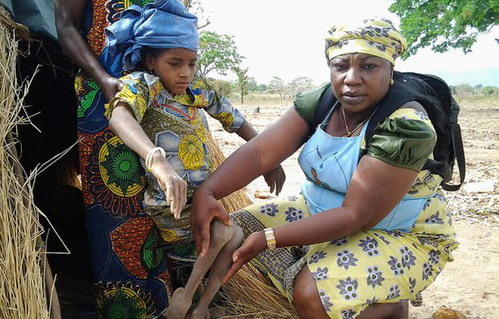
African Field Epidemiology Network, or AFENET (Bawa, Waziri, Haladu, Ohuabunwo); Ahmadu Bello University Teaching Hospital (Mamman); Kano State Ministry of Health (Getso)
"Better understanding and targeting of communication and operational efforts to address OPV refusals and missed children in Nigeria is pivotal to the successful eradication of polio from Nigeria."
In 2012, Nigeria had the majority of the world's polio cases. Polio campaign monitoring and post-campaign surveys showed a high proportion of oral polio vaccine (OPV) refusals and missed children in selected wards and local government areas (LGAs). In September 2012, the 24th Polio Expert Review Committee (ERC) meeting in Abuja, Nigeria, mandated the Nigeria Polio Programme to develop protocols for rapidly conducting social research in the worst-performing LGAs and wards to reduce "child absence/non-compliance" through more targeted social mobilisation efforts and improved vaccinator performance. This qualitative cross-sectional study explored the underlying reasons for OPV refusals in Bebeji LGA of Kano State and identified methods for reducing the incidence of OPV refusals in future polio supplementary immunisation activities (SIAs).
The researchers explain that OPV refusals are more common during polio SIAs, which are meant to ensure administration of the OPV to every child aged under 5 years in households of communities, irrespective of previous immunisation. SIAs are primarily organised by government officials with support from United Nations (UN) partners, mainly the World Health Organization (WHO) and the United Nations Children's Fund (UNICEF). SIAs are intended to complement, not replace, routine immunisation (RI) against polio. Public announcements through media coverage, posters, and banners are used to create awareness about upcoming SIAs and encourage participation. Social marketing and community mobilisation efforts are organised by UNICEF, and the staff of WHO's Polio Eradication Initiative (PEI) assist local health officials in organising, implementing, and monitoring SIAs. A large cadre of vaccinators, health workers, and community volunteers administer OPV to eligible children through visits to all households and at fixed health facilities.
Study participants were parents/caregivers who had refused OPV for their children at least once in the previous SIAs. Seventeen parents, 13 (76.5%) of whom were males, took part in in-depth interviews (IDIs) in 7 of the 14 wards of Bebeji LGA.
On the question of who in the family decides whether polio vaccine can be given to the children, 17 (100%) of respondents answered "father of the child" and explained that the culture presents husbands (fathers) as the final decision-makers on family issues. On the question, "Is polio a significant health problem in the community?" 14 (82.4%) answered "no" and cited what they consider other, more serious and prevalent diseases (e.g., malaria, which 100% cited). On why they refuse OPV, 9 (52.9%) of respondents believed "there are other, more important community needs", 5 (29.4%) believed that there is "no felt need for OPV" and cited "lack of trust in Government", 6 (35.3%) responded "worried vaccine may be harmful", 2 (11.8%) responded "husband did not allow", and 1 (5.9%) responded "child was too young", "don't believe vaccination is helpful", and "attitude of the health worker was not good".
In response to the question, "What, if anything, would persuade you to accept polio immunization to your children?" 9 (52.9%) responded "more awareness", 5 (29.4%) said "Government should provide essential needs of people", 1 (5.9%) said "husband", and 2 (11.8%) replied, "nothing except force". When asked, "What would you suggest [for] making Polio campaign[s] more successful?" 9 (52.9%) responded "more/proper awareness", 6 (35.3%) said "government should provide essential needs of people", 1 (5.9%) pointed to "good attitude of vaccination teams", and 1 (5.9%) said "nothing".
Based on these findings, the researchers conclude that misconceptions about OPV are a major cause of OPV refusals in Bebeji LGA, Kano State, Nigeria. Public enlightenment and aggressive awareness campaigns on OPV should be scaled up, they argue. In addition, the government should seek to meet other essential community needs.
Texila International Journal of Public Health, Volume 7, Issue 4, Dec 2019. Image credit: Flickr/Center for Disease Development
- Log in to post comments